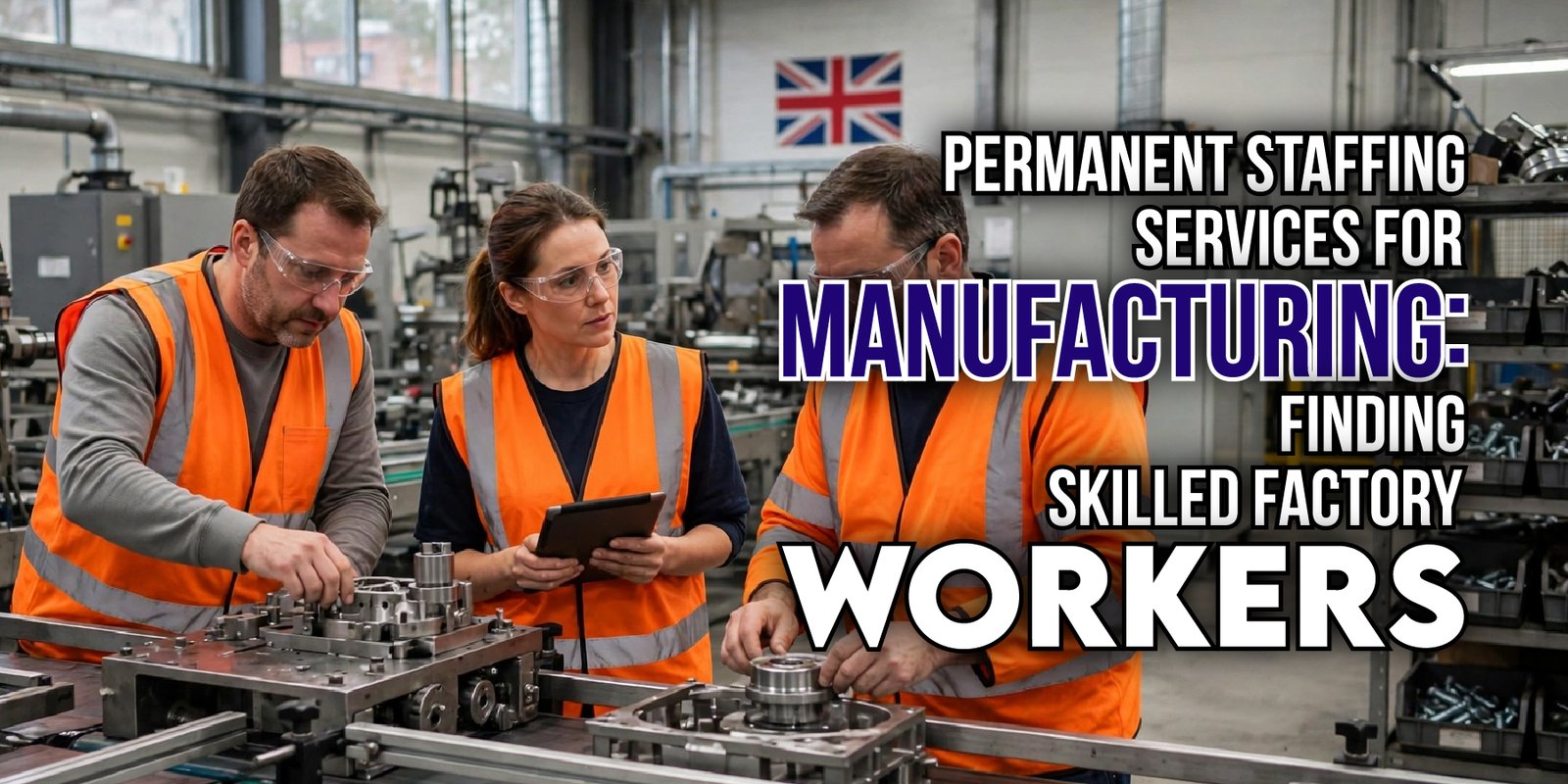
Permanent Staffing Services for Manufacturing: Finding Skilled Factory Workers
Manufacturing businesses depend on reliable teams to maintain production schedules, meet customer expectations and support long-term growth. However, finding suitable candidates with the right skills, availability and operational understanding can become challenging as production requirements change.
Permanent staffing services help manufacturing companies recruit employees for ongoing roles by connecting business requirements with suitable candidates. Instead of focusing only on filling an immediate vacancy, permanent recruitment considers long-term operational needs, role expectations and future team development.
For factories, production facilities and industrial businesses, successful hiring requires more than advertising a position. Companies need a clear understanding of the role, required experience and the type of candidate who can contribute to their operations.
1st Workforce supports businesses requiring recruitment support across operational environments, including warehouse, logistics and manufacturing requirements. Through structured recruitment approaches, companies can review options that align with their staffing needs.
What Are Permanent Staffing Services?
Permanent staffing services help businesses recruit employees for long-term positions by identifying suitable candidates based on operational requirements, role expectations and company needs. These services typically involve candidate sourcing, recruitment coordination, screening and support throughout the hiring process.
Unlike short-term recruitment approaches, permanent staffing focuses on helping businesses build ongoing teams. Therefore, employers often use this approach when they need employees for roles that support continuous operations.
Manufacturing companies may use permanent staffing services when they need support with:
- Production roles
- Factory operations
- Skilled operational positions
- Long-term team expansion
- Replacement hiring
Additionally, a structured recruitment process allows businesses to consider both immediate requirements and future workforce planning.
Why Manufacturing Businesses Need Permanent Staffing Services
Manufacturing environments rely on consistency, technical understanding and organised processes. Therefore, businesses often need employees who can understand production requirements and contribute to long-term operations.
Permanent staffing services can support manufacturers that are looking to strengthen their teams by helping them identify candidates who match specific role requirements.
Common reasons manufacturing businesses explore permanent recruitment support include:
Building Stable Production Teams
Production environments often require employees who understand daily processes, safety expectations and operational procedures.
Furthermore, permanent roles can support businesses that need continuity within their teams.
Managing Recruitment Challenges
Finding suitable candidates can require time, industry understanding and a clear recruitment process.
Additionally, manufacturing roles may require specific experience, technical knowledge or operational skills.
Supporting Long-Term Growth
As manufacturing businesses expand, their recruitment requirements may change.
For example, increased production capacity, new contracts or operational changes may create additional staffing needs.
Therefore, companies benefit from reviewing recruitment strategies that support future growth.
Manufacturing Recruitment For Factory Teams
Manufacturing recruitment focuses on connecting businesses with candidates who match production requirements, operational expectations and workplace needs.
A successful recruitment process starts with understanding the role itself.
Before beginning recruitment, companies should consider:
- Required experience
- Role responsibilities
- Production environment
- Working patterns
- Essential skills
- Team structure
- Long-term business needs
Additionally, clear role information helps recruitment partners understand which candidates may be suitable.
1st Workforce supports businesses looking for recruitment support across operational sectors. Manufacturing companies can use recruitment partnerships to review candidate sourcing approaches and identify suitable options for their hiring requirements.
Factory Staff Recruitment For Growing Production Sites
Factory staff recruitment requires an understanding of how production environments operate.
Factories often rely on coordinated teams where different roles contribute to the overall production process.
Depending on business requirements, recruitment needs may involve roles connected with:
- Production operations
- Assembly environments
- Manufacturing processes
- Quality-focused activities
- Operational support
Furthermore, employers should consider how each role fits within their wider production structure.
A clear recruitment brief helps businesses communicate expectations, while candidates gain a better understanding of the position they are applying for.
As manufacturing requirements change, companies may need recruitment approaches that support both current vacancies and future team planning.
Finding Skilled Production Workers
Production workers play an important role in maintaining manufacturing processes, completing operational tasks and supporting production targets.
However, businesses should focus on matching candidates with suitable requirements rather than simply increasing headcount.
Effective recruitment considers factors such as:
- Relevant experience
- Understanding of production environments
- Required skills
- Availability
- Ability to follow operational procedures
Additionally, employers should create realistic job descriptions that clearly explain responsibilities and expectations.
When businesses communicate their requirements clearly, recruitment partners can focus on finding candidates who better match the role.
Industrial Staffing For Manufacturing Operations
Industrial staffing supports businesses that need recruitment solutions for operational environments where reliability, consistency and suitable experience matter.
Manufacturing sites often require teams that can adapt to structured processes, production schedules and workplace requirements. Therefore, industrial staffing should focus on understanding the environment, the role expectations and the skills required.
When planning recruitment, manufacturers should consider:
- The type of production environment
- Required operational experience
- Team responsibilities
- Shift requirements
- Long-term staffing needs
- Future business growth
Furthermore, recruitment support can help businesses organise their hiring approach by creating a clearer process for identifying suitable candidates.
1st Workforce provides recruitment support for businesses requiring operational staffing solutions. This includes helping companies review their requirements across warehouse, logistics and manufacturing environments.
Permanent Recruitment vs Temporary Manufacturing Staffing
Manufacturing businesses often need to decide whether they require long-term employees or short-term staffing support. Both approaches serve different operational purposes.
Permanent staffing focuses on building ongoing teams, while temporary staffing can help businesses manage changing requirements, short-term demand or operational fluctuations.
| Factor | Permanent Staffing | Temporary Staffing |
|---|---|---|
| Main purpose | Building long-term teams | Supporting short-term requirements |
| Workforce planning | Supports future growth and team structure | Supports changing demand and immediate needs |
| Recruitment focus | Long-term role suitability | Flexible staffing requirements |
| Business need | Ongoing operational requirements | Temporary workforce changes |
However, there is no single recruitment approach that suits every situation. Manufacturing companies should consider their production requirements, business plans and operational priorities before choosing between permanent and temporary hiring.
For example, a factory expanding its production capacity may require permanent recruitment, while a business managing a short-term increase in orders may require temporary support.
Additionally, some businesses use a combination of recruitment approaches depending on their changing requirements.
Logistics and Manufacturing Recruitment for Growing Operations
Manufacturing businesses often work closely with logistics networks, distribution teams and supply chain operations. Therefore, recruitment planning needs to consider how different departments support each other.
As production increases, companies may need additional support across operational areas.
Growth-related recruitment considerations can include:
- Increasing production capacity
- Supporting new operational requirements
- Expanding teams
- Replacing important roles
- Developing stronger internal structures
Furthermore, businesses should review recruitment requirements before demand creates unnecessary pressure.
1st Workforce supports businesses that require recruitment solutions across operational environments. Companies planning growth can explore scalable recruitment solutions to understand how recruitment support can align with changing staffing requirements.
This approach allows businesses to consider their current needs while preparing for future changes.
Scaling Manufacturing Teams With Recruitment Support
Manufacturing growth often creates new recruitment challenges. A company may need additional team members, different skill sets or a more structured hiring process.
Therefore, businesses should review recruitment strategies as their operations develop.
Effective scaling involves:
- Understanding future staffing requirements
- Defining important roles
- Planning recruitment timelines
- Identifying suitable candidate requirements
- Reviewing operational changes
Additionally, companies should avoid waiting until recruitment pressure affects production performance before planning their hiring approach.
Businesses managing expansion or changing operational requirements can explore adaptable staffing solutions through recruitment planning. A structured approach helps employers review how recruitment support can fit their future objectives.
Planning Your Manufacturing Recruitment Requirements
Manufacturing businesses often need recruitment support when they are building teams, replacing important positions or preparing for operational changes.
Before beginning recruitment, employers should consider:
- The number of roles required
- Essential skills and experience
- Production responsibilities
- Working patterns
- Recruitment timelines
- Long-term operational goals
At 1st Workforce, businesses can discuss their staffing requirements and review recruitment options based on their operational needs.
Companies looking for support with their hiring plans can discuss their staffing requirements with 1st Workforce through their recruitment enquiry process.
How To Choose A Manufacturing Recruitment Partner
Choosing the right recruitment partner requires more than finding a company that can advertise vacancies.
A suitable partner should understand the business environment, recruitment requirements and the type of candidates needed.
Manufacturing companies should consider:
Sector Understanding
A recruitment partner should understand the requirements of manufacturing environments and the importance of matching candidates with suitable roles.
Clear Communication
Furthermore, regular communication helps businesses explain changing requirements and review recruitment progress.
Candidate Matching Approach
Successful recruitment depends on understanding both employer expectations and candidate suitability.
Understanding Business Needs
Every manufacturing operation has different requirements. Therefore, recruitment support should consider the company’s processes, team structure and long-term goals.
Common Manufacturing Hiring Challenges
Manufacturing businesses can face several recruitment challenges when building permanent teams.
1. Finding Suitable Candidates
Identifying candidates with relevant skills and experience can require a structured approach.
2. Managing Recruitment Timelines
Production requirements may create pressure when businesses need suitable candidates within specific periods.
3. Meeting Production Requirements
Furthermore, recruitment decisions should consider how roles support wider production operations.
4. Building Skilled Teams
Long-term team development requires attention to role suitability and operational requirements.
5. Supporting Business Growth
As companies expand, recruitment needs may change.
6. Planning Future Workforce Needs
Additionally, businesses should review future staffing requirements instead of only focusing on immediate vacancies.
Permanent Staffing Services: What Should Manufacturing Businesses Prepare Before Hiring?
Before using permanent staffing services, manufacturers should prepare clear information about the role, business requirements and expected candidate profile.
A practical recruitment brief should include:
- Job title
- Main responsibilities
- Required experience
- Essential skills
- Working environment
- Reporting structure
- Shift expectations
- Location details
- Recruitment timeline
- Interview process
- Long-term role objectives
Furthermore, clear information helps recruitment partners understand what type of candidate may suit the position.
Employers should also consider how the role contributes to wider production goals. Therefore, recruitment becomes more focused when businesses define expectations before beginning the hiring process.
1. What are permanent staffing services?
Permanent staffing services help businesses recruit employees for long-term roles by supporting candidate sourcing, screening and recruitment coordination. For manufacturing companies, these services can help identify candidates who match production requirements, operational expectations and long-term team needs.
2. Why do manufacturing companies use permanent recruitment?
Manufacturing companies use permanent recruitment when they need employees for ongoing roles and want to build stable teams. Additionally, permanent hiring can support businesses that require continuity, operational knowledge and long-term workforce planning.
3. How does manufacturing recruitment work?
Manufacturing recruitment usually begins with understanding the employer’s role requirements, skills expectations and operational needs. Then, recruitment partners identify suitable candidates, review applications and support the hiring process based on business requirements.
4. What roles can factory staff recruitment support?
Factory staff recruitment can support different operational roles depending on business requirements. These may include production-related positions, operational roles and other manufacturing support positions where suitable candidates are required.
5. How can businesses find production workers?
Businesses can find production workers by clearly defining role requirements, identifying required skills and using suitable recruitment channels. Additionally, recruitment partners can support candidate sourcing and help businesses review suitable applicants.
6. What is industrial staffing?
Industrial staffing focuses on supporting businesses that require recruitment solutions for operational environments such as manufacturing, production and logistics. It considers factors such as role requirements, operational processes and candidate suitability.
7. Why use a recruitment partner for manufacturing?
A recruitment partner can help businesses organise their hiring process, understand role requirements and connect with suitable candidates. Furthermore, external recruitment support can help companies manage recruitment activity alongside their daily operations.
8. How can businesses request permanent staffing support?
Businesses can request permanent staffing support by discussing their recruitment requirements, role expectations and operational needs with a recruitment partner. The exact recruitment approach depends on the company’s requirements and available opportunities.
Build Your Manufacturing Team With 1st Workforce
Building a reliable manufacturing team requires careful planning, clear role expectations and recruitment support that understands operational requirements.
1st Workforce supports businesses looking for recruitment solutions across warehouse, logistics and manufacturing environments. Whether a company is planning growth, replacing roles or reviewing future staffing needs, recruitment requirements can vary depending on operational goals.
Businesses can discuss their staffing requirements and explore suitable recruitment options with 1st Workforce through their enquiry process.
Leave a Reply