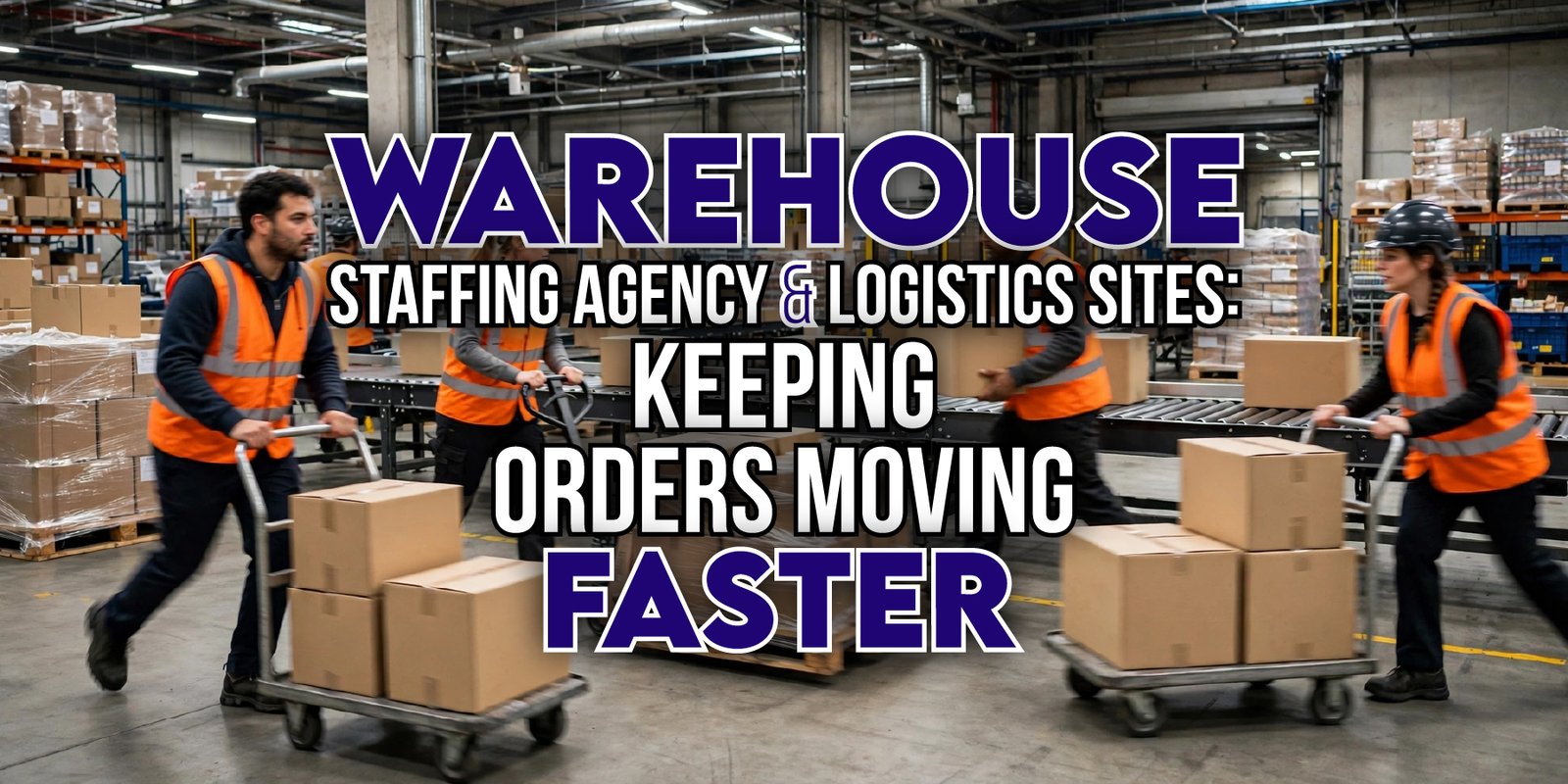
Warehouse Staffing Agency for Logistics Sites: Keeping Orders Moving Faster
Warehouse and logistics operations depend on having suitable personnel available when demand changes. From increased order volumes to seasonal peaks, businesses often need reliable recruitment support that matches their operational requirements. A warehouse staffing agency can help logistics companies identify suitable candidates for warehouse roles while supporting changing business needs.
Modern distribution environments require careful planning because delays in recruitment can affect picking, packing, dispatch and wider supply chain activities. Therefore, many businesses explore staffing support when they need additional recruitment capacity, temporary support or help managing changing operational requirements.
A warehouse staffing agency does not replace internal management teams. Instead, it provides recruitment support by helping businesses connect suitable candidates with available roles based on experience, availability and operational needs.
What Does a Warehouse Staffing Agency Do?
A warehouse staffing agency helps businesses find suitable personnel for warehouse and logistics roles based on operational requirements, demand levels and recruitment needs. The support may include understanding job requirements, sourcing candidates, reviewing experience and helping coordinate the recruitment process.
In practice, a warehouse staffing agency works alongside employers to understand the type of support they require. This may involve temporary staffing during busy periods or recruitment assistance when businesses need to strengthen their operational teams.
Additionally, the right staffing approach depends on factors such as warehouse size, order volumes, working patterns, required skills and business objectives. Every logistics operation has different requirements, so recruitment support should reflect the individual site.
Why Logistics Businesses Use Warehouse Staffing
Logistics businesses often experience changing staffing requirements throughout the year. Order volumes can increase, new contracts can create additional demand and seasonal periods can place extra pressure on warehouse operations.
Therefore, logistics staffing can help businesses prepare for changing requirements without relying only on internal recruitment resources. A staffing partner can support employers by helping them identify suitable candidates when additional operational support becomes necessary.
For example, online retail peaks, promotional campaigns and increased distribution activity may require businesses to review their staffing plans. Additionally, companies expanding their warehouse operations may need recruitment support to build teams across different functions.
A warehouse staffing agency can help businesses approach these situations with a clearer recruitment process. However, staffing requirements always depend on the employer’s actual needs, available roles and suitable candidate availability.
Warehouse Roles Supported Through Recruitment
Warehouse operations involve several different roles, each contributing to the movement and preparation of goods. A warehouse staffing agency can support recruitment for operational positions where businesses require suitable candidates with relevant experience or availability.
Depending on employer requirements, warehouse recruitment may cover roles such as:
- Warehouse operatives
- Pickers and packers
- Dispatch operatives
- Loaders and unloaders
- Stock handlers
- Inventory assistants
- Forklift roles where applicable
- Warehouse supervisors
Furthermore, each role requires different responsibilities and expectations. A picker and packer role may focus on order preparation, while dispatch operatives may support the final stages before goods leave the site.
At 1st Workforce, recruitment support focuses on helping businesses manage staffing requirements across operational environments, including warehouse, logistics, manufacturing and related sectors. The recruitment approach should always match the employer’s role requirements rather than using the same method for every business.
How Distribution Centre Staff Help Keep Orders Moving
Distribution centre staff play an important role in maintaining smooth warehouse operations. Their responsibilities can include activities such as picking orders, preparing shipments, moving stock and supporting dispatch processes.
A well-organised distribution centre depends on clear processes and suitable personnel across different operational areas. Therefore, businesses often review staffing levels when order volumes change or when operational demands increase.
For example, during busy trading periods, additional support may help businesses manage increased activity across areas such as:
- Order picking
- Packing operations
- Stock movement
- Dispatch preparation
- Goods handling
However, recruitment planning should always consider the specific needs of the site. A large distribution centre may require different staffing considerations compared with a smaller warehouse operation.
Seasonal Warehouse Demand and Recruitment Planning
Seasonal demand can create additional pressure for logistics businesses. Periods such as Christmas trading, promotional events and increased customer ordering can affect warehouse activity and staffing requirements.
Therefore, businesses often review recruitment plans before expected demand increases. Preparing early can help employers understand what roles they may need, what experience is required and how temporary support fits within their wider operations.
A warehouse staffing agency can support this planning process by helping businesses connect with suitable candidates when additional staffing requirements arise.
For businesses managing changing order volumes, understanding a seasonal logistics workforce approach can help explain how recruitment planning may change during peak periods.
Additionally, seasonal requirements do not always follow the same pattern every year. Businesses should review their own operational history, expected demand and recruitment needs before making staffing decisions.
Warehouse Labour Supply for Changing Operations
Warehouse labour supply refers to the availability of suitable personnel required to support warehouse activities. However, effective staffing is not only about numbers. Businesses also need candidates who match the role requirements, working environment and operational expectations.
When operations change, employers may need to review their recruitment approach. For example, expansion, new product lines or increased order volumes can create different staffing requirements.
Therefore, workforce planning becomes an important part of warehouse management. Employers should consider:
- Current operational demands
- Expected changes in workload
- Required skills
- Shift requirements
- Recruitment timelines
- Long-term business plans
A warehouse staffing agency can support this process by helping businesses review recruitment requirements and identify suitable staffing options.
Why Dispatch Operatives Matter in Logistics
Dispatch operatives support the movement of goods from warehouse operations towards delivery processes. Their work can involve preparing orders, checking dispatch requirements and supporting accurate movement of products.
Because dispatch is closely connected with customer delivery expectations, businesses often focus on having suitable personnel available during busy periods.
Furthermore, effective dispatch operations rely on coordination between different warehouse functions. Picking, packing, stock handling and dispatch activities must work together to maintain efficient processes.
A warehouse staffing agency can help businesses recruit candidates for operational roles where their experience and availability match the employer’s requirements.
Warehouse Staffing Agency vs Internal Recruitment
Businesses can choose different approaches when building warehouse teams. Some companies manage recruitment internally, while others use a warehouse staffing agency to support parts of the hiring process.
Both approaches have different advantages depending on the organisation’s resources, recruitment needs and operational demands.
| Area | Staffing Agency | Internal Recruitment |
|---|---|---|
| Candidate sourcing | Agency-supported candidate search and recruitment assistance | Managed directly by the business |
| Recruitment workload | Shared support during the hiring process | Internal teams manage the full process |
| Peak demand | Can provide additional recruitment support depending on requirements | Internal processes manage increased demand |
| Recruitment expertise | Specialist recruitment knowledge may support hiring activities | Depends on internal recruitment resources |
| Hiring control | Employer maintains role requirements and final decisions | Employer manages the complete recruitment journey |
A warehouse staffing agency can be useful when businesses need additional recruitment capacity, especially during periods where internal teams are managing multiple priorities.
However, internal recruitment may work well for businesses with established hiring processes and sufficient resources. The right approach depends on operational requirements, recruitment volume and business goals.
Planning Your Warehouse Staffing Requirements
Warehouse operations can change quickly. Therefore, businesses should review staffing requirements before demand increases rather than waiting until recruitment pressure affects daily operations.
At 1st Workforce, recruitment support helps businesses discuss their operational requirements and consider suitable staffing approaches based on their needs.
Before arranging recruitment support, businesses should consider:
- The number of roles required
- The type of warehouse positions needed
- Required experience or skills
- Expected working patterns
- Short-term or ongoing staffing needs
- Business growth plans
Additionally, companies looking for recruitment support can discuss their staffing requirements with 1st Workforce.
A clear recruitment brief helps create better communication between the business and recruitment partner. As a result, candidates can be matched more effectively with the operational requirements of the role.
Choosing the Right Warehouse Staffing Agency
Selecting a recruitment partner requires more than simply finding available candidates. Businesses should consider how well the staffing provider understands warehouse environments, operational pressures and recruitment requirements.
A suitable warehouse staffing agency should focus on understanding the employer’s needs before recommending recruitment options.
When reviewing a potential staffing partner, businesses should consider:
Understanding of Warehouse Operations
Warehouse environments involve different processes, responsibilities and skill requirements. Therefore, recruitment support should consider the actual working environment rather than treating every warehouse role the same.
Clear Communication
Good communication helps businesses explain their requirements and helps recruitment partners understand expectations. Additionally, clear updates can support a smoother recruitment process.
Candidate Matching Approach
Suitable recruitment focuses on matching candidates with role requirements, availability and experience. A strong process considers whether a candidate fits the position rather than simply filling a vacancy.
Ability to Support Changing Requirements
Warehouse demand can change due to business growth, seasonal activity or operational adjustments. Therefore, businesses may value recruitment support that can adapt alongside changing needs.
Common Warehouse Recruitment Challenges
Warehouse and logistics businesses can experience different recruitment challenges throughout the year. A warehouse staffing agency can help businesses review available recruitment options when these challenges occur.
1. Sudden Demand Increases
Order volumes can change quickly, especially during busy trading periods. Therefore, businesses may need to review staffing requirements before operational pressure increases.
2. Seasonal Peaks
Seasonal demand can create temporary recruitment needs. Additionally, businesses may need extra support during specific periods without changing their long-term team structure.
3. Recruitment Delays
Finding suitable candidates can require time and internal resources. A recruitment partner may help businesses manage parts of the sourcing and screening process.
4. Short-Notice Requirements
Some businesses experience unexpected changes in operational demand. Therefore, having a recruitment process in place can help companies respond more effectively.
5. Finding Suitable Personnel
Recruitment is not only about availability. Businesses also need candidates who meet the required skills, experience and role expectations.
6. Managing Operational Changes
Growth, new contracts or changing processes can affect staffing needs. As a result, businesses should regularly review their recruitment approach.
How Can Businesses Prepare for Warehouse Recruitment?
A clear recruitment plan helps businesses communicate their needs effectively. Before contacting a warehouse staffing agency, employers should prepare important details about the roles they need to fill.
A practical recruitment brief may include:
- Job titles
- Main responsibilities
- Required skills
- Preferred experience
- Working hours
- Shift patterns
- Site location
- Start dates
- Number of positions required
- Recruitment timelines
- Interview process
- Key operational requirements
Furthermore, businesses should consider how new personnel will fit into existing warehouse processes. Good planning helps recruitment partners understand the role and identify more suitable candidates.
The Role of Temporary Staffing in Warehouse Operations
Temporary staffing can provide businesses with flexibility when operational requirements change. For example, companies may need additional support during seasonal periods, short-term projects or increased demand.
A warehouse staffing agency may support employers by helping identify suitable temporary candidates based on the role requirements.
Temporary recruitment does not replace permanent hiring. Instead, both options serve different business needs.
For example:
- Temporary staffing may support short-term demand changes.
- Permanent recruitment may support ongoing roles.
- Businesses may use both approaches at different stages of growth.
Additionally, understanding how temporary staffing solutions work across different industries can provide useful context when businesses review flexible recruitment options.
How Warehouse Staffing Supports Business Growth
Business growth often creates new recruitment requirements. As companies increase production, expand distribution operations or take on additional demand, they may need to review how they build their teams.
Therefore, recruitment planning should support both current needs and future objectives.
A warehouse staffing agency can help businesses consider recruitment options when they require additional operational support.
For growing businesses, scalable recruitment solutions can help employers review how recruitment requirements may change over time.
Furthermore, employers should regularly evaluate:
- Current staffing levels
- Future operational plans
- Skills required
- Recruitment timelines
- Business growth expectations
This approach helps businesses make informed recruitment decisions rather than reacting only when shortages appear.
7. FAQs
What does a warehouse staffing agency do?
A warehouse staffing agency helps businesses recruit suitable candidates for warehouse and logistics roles. The agency may support candidate sourcing, screening and recruitment coordination based on employer requirements. However, businesses remain responsible for defining their operational needs and selecting candidates who match their requirements.
Why do logistics companies use staffing agencies?
Logistics companies use staffing agencies because demand can change due to seasonal peaks, business growth and operational requirements. A recruitment partner can help businesses manage parts of the hiring process and identify suitable candidates when additional staffing support is required.
What roles can warehouse staffing agencies provide?
A warehouse staffing agency may support recruitment for roles such as warehouse operatives, pickers and packers, dispatch operatives, stock handlers and other operational positions. Available roles depend on employer requirements, candidate availability and the specific needs of the warehouse environment.
How does logistics staffing support peak demand?
Logistics staffing can help businesses prepare for periods where warehouse activity increases. For example, seasonal trading periods or higher order volumes may create additional recruitment requirements. Employers should review their needs early and consider what staffing support matches their operational plans.
What is seasonal warehouse recruitment?
Seasonal warehouse recruitment involves hiring additional personnel during periods when businesses experience increased demand. These periods may include promotional activity, holiday seasons or temporary increases in orders. The exact staffing requirements depend on each business and its operational needs.
How can businesses choose a warehouse staffing partner?
Businesses should consider factors such as recruitment experience, communication, understanding of warehouse operations and the ability to match candidates with role requirements. A suitable staffing partner should understand the employer’s needs before suggesting recruitment options.
Can staffing agencies support distribution centres?
Yes, staffing agencies can support distribution centres by helping businesses recruit suitable candidates for operational roles. The exact support depends on the size of the site, required roles, business demand and available recruitment requirements.
How can businesses request warehouse staffing support?
Businesses can begin by reviewing their staffing requirements, including roles needed, expected timelines and operational priorities. Companies that require recruitment assistance can speak with 1st Workforce to discuss suitable staffing options and recruitment support.
Discuss Your Logistics Recruitment Requirements
Warehouse operations depend on planning ahead, especially when demand changes, new projects begin or businesses need additional operational support.
A warehouse staffing agency can help employers review recruitment requirements, identify suitable staffing approaches and connect with candidates who match their operational needs.
At 1st Workforce, recruitment support focuses on helping businesses manage staffing requirements across warehouse, logistics and related operational environments. Employers can discuss their requirements, review available options and request recruitment support from 1st Workforce.
By understanding site requirements, role expectations and business objectives, companies can create a more structured approach to warehouse recruitment.
Leave a Reply