
Category: Staffing

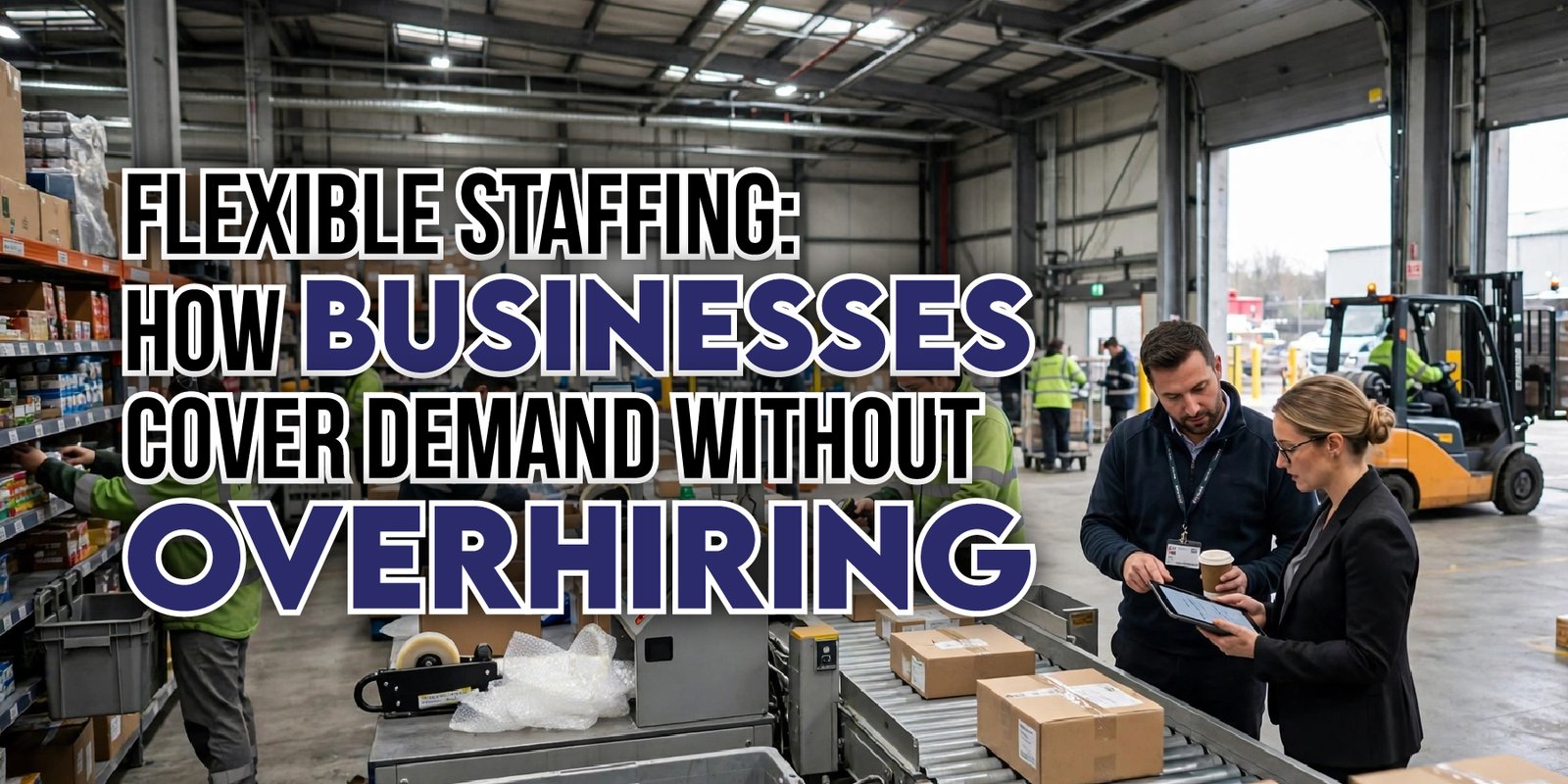
  • Flexible Staffing: How Businesses Cover Demand Without Overhiring

    Flexible Staffing: How Businesses Cover Demand Without Overhiring

    Flexible Staffing: How Businesses Cover Demand Without Overhiring

    Order volumes rise, staff take annual leave, sickness affects rotas, and new contracts can create extra shifts before managers know whether demand will last. Hiring permanently for every short-term increase can leave a business carrying more fixed headcount than it needs later. Flexible staffing gives employers another way to match capacity to changing workload.

    At 1st Workforce, we support employers that need temporary or permanent staffing across warehouse, factory, logistics, manufacturing and production environments. Flexible staffing works best when the business separates stable demand from temporary demand and gives the staffing provider a clear role, shift, location, headcount and start-date brief.

    What Is Flexible Staffing?

    Flexible staffing is a workforce model that lets employers adjust staffing capacity according to workload, seasonal demand, absences or short-term requirements. It often combines a stable permanent team with temporary personnel, contract support or seasonal cover instead of increasing permanent headcount whenever demand rises.

    The right mix depends on the operation. CIPD describes workforce planning as balancing the number and skills of people available against what the organisation will need, which makes demand evidence more useful than a fixed headcount assumption.

    Why Businesses Overhire

    Overhiring often begins with a real operational problem. A busy month, new customer, product launch or repeated rota gap can make permanent recruitment feel like the obvious answer.

    However, demand may fall once the peak passes. A variable staffing model gives employers time to test whether extra capacity is recurring before every increase becomes permanent headcount.

    Common causes include reacting to one peak, hiring around seasonal volume, filling every rota gap permanently and failing to separate absence cover from genuine growth.

    Why Understaffing Is Not the Answer Either

    Avoiding overhiring does not mean running permanently below operational need. Chronic understaffing can increase overtime, leave shifts uncovered and place more pressure on supervisors and experienced team members.

    The aim is appropriate capacity. A mixed staffing model should help the business cover genuine peaks while keeping enough stable people and skills for normal operations.

    Flexible Staffing: Separate Core Demand from Variable Demand

    A practical flexible staffing model starts by classifying demand before choosing the hiring route.

    Demand TypeExampleStaffing ApproachWhat to Review
    Core demandYear-round warehouse or production activityPermanent core teamStable roles and skills
    Seasonal demandChristmas fulfilment or annual peakPlanned temporary coverDates, shifts and volume
    Variable demandWeekly order changesRecurring temporary coverActual workload pattern
    Unexpected demandSickness or sudden absenceShort-term coverRole, shift and urgency
    Growth demandNew contract or extra lineTemporary support, then reviewWhether demand becomes consistent

    Flexible Staffing for Growth Demand

    Flexible staffing can be useful when a new contract, shift or service is promising but long-term workload is not yet proven. Temporary capacity can support the trial period while managers gather real demand data.

    If the same role remains continuously required across several planning cycles, permanent recruitment may become more appropriate.

    Flexible Workforce: Build Around a Stable Core Team

    A flexible workforce usually combines permanent personnel for stable core duties with temporary or contract support for genuine peaks. This gives the operation continuity without assuming every increase is permanent.

    For example, a warehouse may keep experienced supervisors and core operatives permanently while using temporary support for defined fulfilment peaks. A flexible workforce should therefore be designed around demand type, not around one preferred employment model.

    Temporary Staffing for Short-Term Demand

    Temporary staffing can suit seasonal peaks, annual leave, sickness, product launches, short projects, weekend work, night shifts and recruitment gaps. It adds capacity without immediately creating another permanent role.

    Within flexible staffing, temporary assignments should still have clear duties, shift times, expected duration, induction and supervision. Candidate availability depends on the role, location, shifts, experience required and notice provided.

    1st Workforce currently supports temporary requirements for seasonal demand, sickness, holiday cover, short-term projects and increased workloads, alongside permanent recruitment for longer-term roles.

    Flexible Workforce Solutions for Seasonal Peaks

    Flexible workforce solutions are particularly useful when demand rises at roughly the same time each year. Warehouses, logistics operations, food-production sites, packing teams and manufacturing environments can all experience predictable peaks.

    Employers can prepare temporary capacity requirements using expected peak dates, previous order or production levels, required roles, headcount by shift, start date and assignment length.

    CIPD recommends analysing current supply, future demand and the gap between them, then reviewing the plan as conditions change.

    A second use of flexible workforce solutions is short micro-peaks caused by promotions, large orders, returns or customer deadlines.

    Scalable Recruitment Solutions for Business Growth

    Scalable recruitment solutions can help employers respond to growth without assuming every increase in activity requires an immediate permanent hire. They may suit new contracts, trial shifts, temporary project work or expanded operating hours while demand is still being tested.

    The important question is whether the workload is temporary, variable or becoming permanent. A second use of scalable recruitment solutions is staged expansion, where headcount is reviewed after each phase.

    How to Decide Whether a Role Should Be Temporary or Permanent

    The hiring route should follow the workload. Flexible staffing may suit uncertain or time-limited demand, while permanent recruitment may suit stable duties expected to continue.

    QuestionTemporary Staffing May SuitPermanent Recruitment May Suit
    Is demand tied to a peak?YesLess likely
    Is the role needed year-round?Possibly as interim coverOften
    Is the requirement project-based?OftenIf it continues afterwards
    Is the same shift repeatedly short?InitiallyIf the gap is structural
    Is growth still being tested?OftenOnce demand is established
    Does the role need long-term development?DependsOften stronger fit

    How to Forecast Staffing Demand

    Forecasting does not need to be perfect. Employers can improve flexible staffing decisions by reviewing historical order volume, production schedules, seasonal trends, holiday calendars, absence patterns, planned projects, contract start dates, overtime and vacancies.

    CIPD describes workforce planning as an iterative process that uses current workforce information, future demand and gap analysis to shape action. Forecasts should therefore be reviewed rather than treated as fixed annual numbers.

    Avoid Using Overtime as the Only Flexibility Tool

    Overtime can solve a short gap, but repeated reliance on the same people may signal a capacity problem. Temporary cover provides another option when extra work lasts beyond isolated shifts.

    Managers should review overtime frequency, fairness, availability and the roles creating repeated pressure. Persistent overtime may justify temporary cover, permanent recruitment or a different shift plan.

    Flexible Staffing in Warehouses and Factory Operations

    Warehouse and production environments can use flexible staffing differently because the duties are not interchangeable.

    EnvironmentVariable Demand ExamplePossible Staffing UseEmployer Brief
    WarehousePromotional fulfilment peakPickers, packers, warehouse operativesOrders, shift, equipment
    LogisticsDispatch surgeOperational supportSite, hours, duties
    ManufacturingExtra production runProduction or machine operativesMachinery, experience, PPE
    Food productionSeasonal volume increaseProduction personnel or packersHygiene, shift, site needs
    Quality controlOutput increaseQuality-support personnelChecks and reporting

    1st Workforce currently supports warehousing, manufacturing, logistics, food production, distribution, packing, fulfilment and quality-control requirements. Its role pages also list machine operatives, food-production personnel, packers and line-management roles.

    How Flexible Staffing Can Support Workforce Stability

    Temporary cover can reduce pressure on permanent teams during seasonal peaks, absence, recruitment gaps or temporary order increases. Flexible staffing may therefore support stability when the same core team would otherwise absorb every fluctuation.

    However, temporary cover cannot fix unclear roles, poor management or persistent workplace problems. Our guide to reducing staff turnover covers onboarding, rota communication, supervision and retention in more detail.

    How to Choose a Flexible Staffing Partner

    Compare sector experience, role coverage, screening, shift understanding, communication, commercial terms and onboarding coordination. When reviewing providers for flexible staffing, check how they handle role matching, Right to Work processes, timesheets, notice and temporary versus permanent requirements.

    FactorWhy It MattersWhat Employers Should Check
    Sector experienceHelps with role understandingRelevant environments
    ScreeningSupports matchingHow suitability is assessed
    Shift understandingAffects candidate fitNights, weekends and rota
    CommunicationRequirements changeUpdate and escalation process
    Commercial termsRates are not the whole agreementTimesheets, notice, cancellation
    Permanent recruitmentDemand may stabiliseWhether both models are supported

    1st Workforce’s staffing solutions for operational employers resource recommends comparing agencies by process, screening, shift communication, charges and temporary or permanent capability rather than slogans.

    How 1st Workforce Supports Flexible Staffing

    At 1st Workforce, we support employers that need temporary or permanent personnel across warehouses, factories, manufacturing, production, logistics, food production, packing, fulfilment and quality-control environments. Current role pages include warehouse operatives, pickers and packers, machine operatives, food-production personnel, packers and line-management roles.

    Our team reviews the role, site location, shift pattern, required headcount and preferred start date before discussing flexible staffing options. Employers can also explain PPE, induction and role-specific requirements through the quote process.

    What Information Should You Give a Staffing Agency?

    A precise brief turns a staffing strategy into a workable requirement.

    RequirementWhy It MattersEmployer Detail
    Role and dutiesSupports matchingActual tasks
    Site locationAffects travelFull site/postcode
    HeadcountDefines scalePeople per shift
    Start dateShapes sourcingRequired date
    Expected durationGuides planningEnd or review point
    Shift patternAffects suitabilityStart, finish, nights, weekends
    ExperienceFilters candidatesEssential requirements
    PPE and inductionSupports onboardingSite-specific needs
    ObjectiveClarifies modelTemporary or permanent

    1st Workforce’s Get a Quote process asks employers for role, shift, location, headcount and start information, with PPE or induction requirements where relevant.

    Discuss Your Staffing Requirement

    Employers can share their role, site location, shift pattern, headcount, start date and expected duration with 1st Workforce. This gives the team a clearer basis for discussing flexible staffing, temporary cover or permanent recruitment.

    Use the discuss your flexible staffing requirement route to provide the operational brief. Candidate availability, timing and rates depend on the specific requirement.

    When Should Flexible Staffing Become Permanent Recruitment?

    Flexible staffing should be reviewed when temporary demand stops behaving like a temporary requirement. Permanent recruitment may become more appropriate if the same duties remain continuously needed, stable shifts require core coverage or business growth becomes predictable.

    Other signals include repeated assignment extensions and persistent gaps in baseline headcount. The staffing model should change when the evidence changes.

    How to Measure Whether Your Staffing Model Is Working

    A flexible staffing model should be monitored against filled shifts, unfilled shifts, overtime, vacancy duration, absence cover, temporary use by department, turnover, quality indicators and manager time spent solving rota gaps.

    A high temporary headcount is not automatically a problem, and low temporary use is not automatically a success. The better question is whether staffing capacity matches real demand.

    Common Flexible Staffing Mistakes

    Avoid these common mistakes:

    • Hiring permanently for one temporary peak
    • Waiting until shifts are already empty
    • Using vague role descriptions
    • Ignoring seasonal patterns
    • Relying only on overtime
    • Leaving temporary assignments unreviewed
    • Changing shifts without informing the provider
    • Ignoring onboarding
    • Comparing agencies only by price
    • Treating all temporary personnel as interchangeable
    • Ignoring travel practicality for early or night shifts
    • Failing to track where headcount gaps occur
    • Adding permanent roles before growth is proven
    • Keeping temporary cover when core demand is clearly stable

    Flexible Staffing Checklist

    Use this flexible staffing checklist before changing headcount:

    • Identify core demand.
    • Identify seasonal demand.
    • Identify variable demand.
    • Review absence patterns.
    • Review overtime.
    • Forecast known peaks.
    • Define the required roles.
    • Confirm headcount by shift.
    • Confirm shift times.
    • Decide temporary or permanent.
    • Set expected assignment duration.
    • Prepare onboarding.
    • Define required experience.
    • Give reasonable notice where possible.
    • Compare staffing providers.
    • Review commercial terms.
    • Monitor filled and unfilled shifts.
    • Review temporary assignments regularly.
    • Move suitable long-term needs into permanent recruitment.
    • Update the staffing plan as demand changes.

    Frequently Asked Questions

    What is flexible staffing?

    Flexible staffing adjusts staffing capacity to changing workload instead of relying entirely on fixed permanent headcount. A business may keep permanent personnel for stable core duties and use temporary or contract support for seasonal peaks, absence or short projects. The right mix depends on demand patterns, role requirements, shifts, location and longer-term business plans.

    How does flexible staffing work?

    Flexible staffing starts by separating stable demand from temporary or variable demand. Employers decide which roles need permanent continuity and which requirements can use temporary cover. The model should then be reviewed as workload changes. If a temporary requirement becomes consistent, permanent recruitment may become the better fit.

    What is a flexible workforce?

    A flexible workforce combines staffing models so the organisation can respond to changing demand. Permanent personnel may cover stable daily operations, while temporary or contract personnel support peaks, projects or absences. The model should still include clear roles, onboarding, supervision and workforce planning rather than simply adding people whenever workload rises.

    What are flexible workforce solutions?

    Flexible workforce solutions are staffing approaches used to match capacity with demand. They can include temporary assignments, seasonal cover, contract support and permanent recruitment when needs become stable. Employers should choose the model according to workload pattern, role, location, shifts, required experience and expected duration rather than using one approach for every department.

    How can flexible staffing prevent overhiring?

    Flexible staffing can reduce the need to make an immediate permanent hire when extra workload may be short-lived. Employers can cover a defined peak or trial period, monitor actual demand and then decide whether permanent headcount is justified. This does not guarantee lower costs; it supports a more evidence-based hiring decision.

    Is temporary staffing part of flexible staffing?

    Yes. Temporary staffing is one common part of a broader model. It can cover seasonal peaks, sickness, annual leave, temporary vacancies, short projects or changing order volumes. However, a strong flexible staffing plan also identifies which roles should remain permanent and when a temporary requirement has become a stable long-term need.

    When should a temporary role become permanent?

    A temporary role may justify permanent recruitment when demand stays consistent, the same duties continue across planning cycles, a shift needs stable core coverage or the business expects the workload to continue. Flexible staffing should include regular assignment reviews rather than allowing temporary arrangements to continue automatically.

    How can warehouses manage seasonal staffing?

    Warehouses can review previous order volumes, promotional calendars, returns, planned contracts and holiday periods before setting headcount by shift. Flexible staffing can then add picking, packing, fulfilment or other suitable capacity during defined peaks. Clear start dates, shift times, duties and reasonable notice make staffing discussions more precise.

    How can factories cover production peaks?

    Factories can compare planned production increases with existing shift capacity and identify which roles create the gap. Flexible staffing may support production, packing, machine or quality requirements where suitable personnel are available. Employers should explain actual duties, machinery, experience, PPE, induction and supervision needs.

    How should employers forecast staffing demand?

    Review historical workload, seasonal trends, planned projects, customer demand, holiday calendars, absence, vacancies, overtime and shift utilisation. Then compare available capacity with likely headcount and skills. Flexible staffing decisions improve when forecasts are updated regularly rather than treated as fixed annual numbers. CIPD recommends iterative workforce planning built around supply, demand and gap analysis.

    Can flexible staffing reduce reliance on overtime?

    It can provide another capacity option when overtime repeatedly covers peaks or absences. Flexible staffing does not automatically remove overtime, because occasional overtime may still be practical. However, persistent overtime can signal that the business should review temporary cover, permanent staffing, shift design and baseline headcount.

    How can 1st Workforce support flexible staffing?

    1st Workforce supports temporary and permanent staffing across warehouse, factory, manufacturing, logistics, production, food-production, packing, fulfilment and quality-control environments. For flexible staffing, employers can provide the role, site, shift, headcount and preferred start date so options can be discussed against the actual requirement. Availability depends on role, location, shifts and current demand.

    Match Headcount to Real Demand

    Effective flexible staffing separates stable work from seasonal, variable and unexpected demand. Keep core roles stable, forecast peaks, review overtime and use temporary support where the requirement is genuinely time-limited.

    As demand becomes more predictable, revisit the staffing mix. Temporary staffing can cover changing workloads, while permanent recruitment may suit requirements that have become a lasting part of the operation.

    Plan Staffing Around Your Actual Demand

    Share your role requirements, site location, shift pattern, required headcount, start date and expected duration with 1st Workforce to discuss suitable temporary or permanent options. Use the share your staffing requirements with 1st Workforce route when you are ready to plan staffing around the demand your operation actually needs.

  • Contract Staffing Meaning: What Employers Should Know Before Using Contract Workers

    Contract Staffing Meaning: What Employers Should Know Before Using Contract Workers

    Contract Staffing Meaning: What Employers Should Know Before Using Contract Workers

    A warehouse, factory or logistics operation may need extra people for a seasonal peak, sickness cover, a short project or a new shift. Yet employers often hear temporary staffing, agency staffing, fixed-term employment and contractor used as though they mean the same thing. Understanding contract staffing meaning matters because those labels can describe different commercial and legal arrangements.

    In simple terms, contract staffing usually means bringing in personnel for a defined assignment, period or project instead of filling an open-ended permanent role. In the UK, however, that may involve agency personnel, a fixed-term employee or a genuinely self-employed contractor. Those arrangements are not legally identical.

    1st Workforce supports temporary and permanent staffing across warehouse, factory, logistics, production, manufacturing and food-production environments.

    Contract Staffing Meaning: Simple Definition

    Contract staffing meaning generally refers to engaging someone for a defined business requirement rather than an indefinite permanent vacancy. The assignment may cover a project, a period of increased demand or temporary absence. Depending on the arrangement, the person may be agency personnel, a fixed-term employee or a genuinely self-employed contractor.

    GOV.UK defines an agency worker as someone contracted with an agency who works temporarily for a hirer. A fixed-term employee, by contrast, has an employment contract with the organisation they work for that ends on a set date, task or event.

    How Does Contract Staffing Work?

    In practice, contract staffing meaning becomes clearer once the assignment is defined. A provider can then consider candidates against the role, site, hours and experience.

    1. Identify the requirement.
    2. Define duties and experience.
    3. Estimate assignment duration.
    4. Confirm location and shifts.
    5. Brief the staffing provider.
    6. Review suitable candidates.
    7. Agree commercial terms.
    8. Prepare onboarding.
    9. Start the assignment.
    10. Record hours through the agreed process.
    11. Review changing requirements.
    12. End, extend or alter the assignment under agreed terms.

    1st Workforce’s current enquiry process asks for staffing category, timing, shift details, headcount and site location.

    Contract Staffing vs Temporary Staffing

    Temporary staffing and contract staffing often overlap commercially, but providers may use the terms differently. Therefore, employers should confirm contract staffing meaning rather than assume the label determines duration or status.

    FactorTemporary StaffingContract StaffingWhat to Confirm
    PurposeShort cover or variable demandDefined assignment or periodBusiness need
    DurationOne shift to ongoing coverOften linked to an expected periodReview or end date
    RelationshipCommonly agency assignmentCan describe several modelsWho contracts with whom
    FlexibilityUseful for changing demandUseful for defined capacityNotice and cancellation
    End pointEnds when need changesMay have stated end pointExtension process

    Temporary and Contract Staffing: What Is the Difference?

    Temporary and contract staffing can both address non-permanent needs. One-day absence cover or seasonal packing may be temporary staffing, while a defined project may be described as contract staffing.

    However, contract staffing meaning changes with the model. Fixed-term employees work directly for their employer and GOV.UK says they should generally receive comparable treatment to permanent employees, while people contracted with an agency are not fixed-term employees of the hirer.

    Contract Staffing vs Permanent Recruitment

    Contract staffing meaning is easier to understand beside permanent recruitment. Contract or temporary arrangements usually answer a defined or changing need, while permanent recruitment fills roles expected to continue without a predetermined end.

    FactorContract StaffingPermanent Recruitment
    DurationDefined or temporaryOngoing
    Main objectiveCover demand, project or absenceFill lasting headcount
    PlanningReviewed against workloadBuilt into long-term structure
    CommitmentLinked to assignment modelDirect permanent hire
    Often suitsPeaks, projects, temporary gapsStable continuing roles

    1st Workforce supports both temporary staffing and permanent recruitment where appropriate.

    Agency Staff vs Independent Contractors

    An agency-supplied person and an independent contractor are not automatically the same. This distinction is central to contract staffing meaning in the UK.

    ArrangementTypical RelationshipKey QuestionAdvice May Be Needed?
    Agency personnelContract with agency, assignment at hirerWho directs the work?Sometimes
    Fixed-term employeeDirect employment contractWhen does it end?Sometimes
    Self-employed contractorBusiness providing servicesIs the person genuinely in business on their own account?Often if unclear

    Employment status can involve factors such as control, personal service, substitution and financial risk. The label written on a contract is not enough by itself.

    Why Businesses Use Contract Staffing

    Businesses often investigate contract staffing meaning for seasonal demand, holiday cover, sickness, temporary vacancies, new shifts or projects.

    In this context, contract staffing meaning is about matching a defined need to the right staffing model. However, availability, skills, location and contract terms still shape what is practical.

    Flexible Contract Staffing for Changing Demand

    Flexible contract staffing can align assignments with workload, seasonal activity or temporary absences, subject to agreed terms.

    However, contract staffing meaning does not imply instant scaling. Availability, notice, location and role requirements still matter.

    Contract Staffing Solutions Across Operational Environments

    Contract staffing solutions can suit variable operational demand. 1st Workforce currently covers warehousing, manufacturing, factories, logistics, food production, distribution, packing, fulfilment and quality-control environments.

    Our team considers the role, location, shift pattern, headcount and start requirement, making contract staffing meaning specific to the assignment.

    Warehouse Contract Staffing

    Warehouse contract staffing can support picking, packing, stock handling, dispatch and shift cover. Define duties, equipment, hours and duration so contract staffing meaning reflects the real assignment.

    Our warehouse staffing solutions page explains how temporary and flexible staffing can support absences, seasonal peaks and changing order volumes.

    For warehouse managers, contract staffing meaning should include the task and shift, not simply headcount.

    Contract Staffing for Factory and Production Operations

    Factories may use contract staffing solutions for production personnel, machine operatives, packers, food-production operatives, quality-control roles and supervisory support where suitable roles are available.

    Before requesting staff, clarify machinery, experience, shifts, PPE, induction and quality requirements.

    Hospitality Staffing Is a Separate Operational Category

    Hospitality staffing should have its own role brief, duties and suitability requirements.

    1st Workforce also provides hospitality staffing support for hotel and event environments. They are not interchangeable with warehouse or factory assignments, so contract staffing meaning must stay tied to the actual sector.

    What Should Employers Define Before Requesting Contract Staff?

    A clear brief converts contract staffing meaning into an actionable requirement.

    RequirementWhy It MattersWhat to Confirm
    Role and dutiesImproves matchingActual tasks
    SiteAffects travelReporting location
    HeadcountDefines scalePeople required
    Start and durationShapes planningStart and review point
    Shift patternAffects suitabilityDays, nights, weekends
    ExperienceFilters matchesEssential requirements
    PPE and inductionSupports onboardingSite requirements
    SupervisorGives reporting routeNamed contact
    TimesheetsSupports hours approvalApproval process

    How Contract Staffing Rates May Be Structured

    Staffing-agency costs can reflect pay, applicable statutory costs, holiday pay, pension obligations, agency margin, skills, location, shifts, duration and overtime. Contract staffing meaning should therefore not be reduced to one headline rate.

    Ask what the charge rate includes and how overtime or night work is treated. Agency personnel have National Minimum Wage and Working Time protections, while additional Agency Workers Regulations rights may arise after the qualifying period.

    What Should Employers Check in a Staffing Agreement?

    Employers should check role, location, shifts, duration, charge rate, overtime, timesheets, notice and cancellation terms. PPE and conversion terms may also matter.

    Because terms vary, contract staffing meaning cannot determine extension, replacement or cancellation rules. Read the actual commercial documents before starting an assignment.

    Agency Workers Regulations: What Employers Should Know

    For employers, contract staffing meaning must be checked against the actual arrangement. Agency personnel have day-one rights and additional equal-treatment rights after the relevant qualifying period; different rules may apply to fixed-term employees or genuinely self-employed contractors.

    From day one, agency personnel have rights relating to access to certain shared facilities and vacancy information. After 12 weeks in the same job with the same hirer, equal-treatment rights extend to pay and basic working conditions such as working time, rest breaks and annual leave.

    Where contract staffing meaning creates uncertainty, check current GOV.UK or Acas guidance and seek professional advice if needed.

    Discuss Your Staffing Requirement

    Employers can share the role, site, shift pattern, headcount, start date and expected duration with 1st Workforce before discussing temporary or permanent staffing support.

    Use the request a staffing quote route to explain your requirement and how contract staffing meaning applies to the assignment.

    Contract Staffing Onboarding Checklist

    A useful contract staffing meaning discussion should end with a clear onboarding plan. Once contract staffing meaning has been translated into a real assignment, employers should prepare the workplace before personnel start.

    1. Confirm assignment details.
    2. Name the supervisor.
    3. Prepare site induction.
    4. Confirm PPE.
    5. Explain work instructions.
    6. Identify restricted areas.
    7. Confirm shifts and breaks.
    8. Explain quality expectations.
    9. Set reporting routes.
    10. Confirm timesheet procedures.
    11. Explain emergency procedures.
    12. Review training requirements.
    13. Confirm access arrangements.
    14. Record assignment changes.

    Acas explains that the hiring organisation directs agency personnel during an assignment, while GOV.UK confirms hirers retain workplace health-and-safety responsibilities.

    How to Compare Contract Staffing Providers

    Compare sector experience, role coverage, screening, Right to Work processes, shift planning, rates, onboarding and terms. This makes contract staffing meaning practical.

    Comparison AreaWhat to Review
    Sector experienceRelevant operational settings
    Role coverageRoles matching the brief
    ScreeningSuitability and experience process
    Right to WorkChecking responsibilities
    Shift planningHow changes are communicated
    RatesWhat the charge includes
    TimesheetsApproval process
    TermsNotice and cancellation
    CommunicationEscalation process
    Permanent recruitmentOptions for continuing vacancies

    For contract staffing solutions, compare the complete service rather than headline rate. 1st Workforce states that supplied personnel undergo identity and Right to Work checks.

    Questions to Ask a Staffing Agency

    Before choosing a provider, ask:

    1. Which roles do you regularly recruit for?
    2. Which locations do you cover?
    3. How do you screen candidates?
    4. How do you verify Right to Work?
    5. What does contract staffing meaning mean in your service model?
    6. What information do you need from us?
    7. How are rates structured?
    8. How are overtime and night shifts handled?
    9. How are hours approved?
    10. What notice or cancellation terms apply?
    11. How are assignment changes managed?
    12. What onboarding information should we provide?
    13. Can you support temporary-to-permanent recruitment where relevant?
    14. How do you support longer-term requirements?
    15. What does the quotation include?

    Common Contract Staffing Mistakes

    Avoid these common mistakes:

    • Assuming every contractor is self-employed: status depends on the real arrangement.
    • Using vague job descriptions: define duties clearly.
    • Leaving duration unclear: add an expected review point.
    • Omitting shift details: state actual hours.
    • Ignoring status questions: seek guidance where necessary.
    • Skipping agency terms: review notice and cancellation.
    • Comparing rates without scope: check what each rate includes.
    • Failing to clarify overtime: agree treatment early.
    • Leaving induction too late: prepare site information.
    • Not naming a supervisor: give personnel a reporting contact.
    • Ignoring PPE: communicate requirements.
    • Failing to update headcount: tell the provider when demand changes.
    • Assuming temporary personnel need less onboarding: local procedures still matter.
    • Confusing temporary and permanent recruitment: choose against the real need.
    • Choosing only by headline rate: compare the full arrangement.

    Contract Staffing Meaning Checklist for Employers

    Use this contract staffing meaning checklist before agreeing an arrangement:

    • Define the staffing model.
    • Confirm the role.
    • Confirm the assignment purpose.
    • Set expected duration.
    • Confirm headcount.
    • Set shift times.
    • Define required experience.
    • Clarify employment-status considerations.
    • Confirm the staffing provider’s role.
    • Review rates and overtime.
    • Check timesheet procedures.
    • Check notice and cancellation.
    • Prepare induction.
    • Confirm PPE.
    • Assign supervision.
    • Review Right to Work processes.
    • Define reporting lines.
    • Review the arrangement regularly.
    • Seek professional advice where status is unclear.

    Frequently Asked Questions

    What is the contract staffing meaning?

    Contract staffing meaning usually refers to engaging personnel for a defined assignment, project or period rather than an indefinite permanent vacancy. In the UK, that could involve agency personnel, a directly employed fixed-term employee or a genuinely self-employed contractor. Those categories are not legally identical, so employers should identify the real working relationship.

    What does contract staffing mean in recruitment?

    In recruitment, contract staffing meaning generally describes sourcing personnel for a defined period or temporary business requirement. A staffing agency may supply someone for an assignment, while another business might directly hire a fixed-term employee. Employers should confirm who employs or engages the individual, the expected duration, shift requirements and commercial terms before comparing options.

    Is contract staffing the same as temporary staffing?

    Not always. Temporary staffing may include single shifts or short absence cover, while contract staffing can describe a more defined assignment or project. Contract staffing meaning still depends on the provider’s model and actual legal arrangement, so employers should ask how the term is being used.

    What is temporary and contract staffing?

    Temporary and contract staffing broadly refers to staffing used for requirements that are not necessarily open-ended permanent vacancies. Examples include seasonal cover, projects, sickness, additional shifts and temporary vacancies. Depending on the structure, personnel may work through an agency or be directly employed on fixed-term contracts. Employers should not assume identical rules apply to every model.

    What does flexible contract staffing mean?

    Flexible contract staffing usually means using defined assignments while allowing headcount or duration to respond to business demand under agreed terms. It can suit seasonal orders, projects or temporary absence. However, candidate availability, role requirements, notice, location and shift patterns affect how flexible the arrangement can actually be in practice.

    Why do companies use contract staffing?

    Businesses may use contract staffing for seasonal demand, sickness cover, holiday gaps, projects, temporary vacancies or new shifts. Understanding contract staffing meaning helps managers decide whether the requirement is temporary or whether permanent recruitment would fit better. The decision should reflect the operational need, not an assumed saving or output gain.

    How long can a contract staffing assignment last?

    There is no single duration that defines every contract staffing assignment. One requirement may cover a few shifts, while another may continue for a longer defined period. Rights and obligations can also depend on the arrangement and length of service. Employers should confirm review dates, termination terms and applicable rights rather than using duration alone to determine status.

    What is the difference between contract staff and permanent staff?

    Contract personnel normally support a defined assignment or temporary requirement, while permanent recruitment fills roles expected to continue indefinitely. However, contract staffing meaning can cover different arrangements, including agency assignments and direct fixed-term employment. Employers should compare duration, relationship, commercial terms and long-term headcount plans before choosing an approach for their business.

    Is an agency worker the same as an independent contractor?

    No. GOV.UK defines agency personnel as people contracted with an agency who work temporarily for a hirer. A genuinely self-employed contractor operates under a different relationship. Factors including control, personal service, substitution and financial risk can affect status, so businesses should obtain appropriate guidance when the position is unclear.

    What information should an employer give a staffing agency?

    Provide the role, duties, site location, headcount, start date, expected duration, shift pattern, required experience, machinery or qualifications where relevant, PPE, induction requirements and supervisor details. Also explain overtime, weekend work, access and timesheet procedures. A detailed brief helps the provider discuss suitable contract staffing solutions against the real assignment.

    What affects contract staffing costs?

    Costs may depend on basic pay, statutory employment costs where applicable, holiday pay, pension obligations, agency margin, skills, location, shift type, assignment duration and overtime. Employers should ask what the charge covers rather than compare headline figures alone. Contract staffing meaning does not create one universal pricing model, and different arrangements can involve different cost components.

    What should employers check before using contract staff?

    Check the staffing model, role, duration, shifts, employment-status considerations, commercial rates, overtime, timesheets, notice, cancellation terms, induction, PPE and supervision. Employers using agency arrangements should also understand relevant agency-worker rights. A clear contract staffing meaning discussion should then be supported by written commercial and assignment details before the assignment begins.

    Can 1st Workforce support temporary staffing?

    Yes. 1st Workforce currently supports temporary staffing for seasonal demand, sickness, holiday cover, short-term projects and increased workloads across warehouses, factories, logistics, production, manufacturing, food production and related environments. Permanent recruitment is also supported for suitable continuing roles. Specific options depend on the role, location, shift, headcount and current requirement.

    How do I request a staffing quote from 1st Workforce?

    Share the role, site location, shift pattern, headcount, start date, expected duration and relevant experience requirements. Add PPE, induction or access details where applicable. This gives 1st Workforce a clearer basis for discussing temporary or permanent staffing options. Availability and rates depend on the actual assignment rather than a generic contract staffing meaning label.

    Understand the Arrangement Before You Commit

    A clear contract staffing meaning starts with the real working relationship, not the label. Define the role, assignment purpose, duration and shifts, then review status considerations, rates, terms, onboarding and supervision.

    Ultimately, temporary and contract staffing can support changing operational demand, while permanent recruitment may better suit continuing roles. Employers should compare providers carefully and obtain professional guidance whenever legal or tax status is unclear.

    Discuss the Right Staffing Approach for Your Business

    Employers can share their role, site location, shift pattern, headcount, start date and expected duration with 1st Workforce to discuss relevant temporary or permanent staffing support. Use the share your staffing brief with 1st Workforce route to start a focused discussion about your operational requirement.

  • Reducing Staff Turnover: Practical Fixes for Warehouse, Hospitality and Factory Teams

    Reducing Staff Turnover: Practical Fixes for Warehouse, Hospitality and Factory Teams

    Reducing Staff Turnover: Practical Fixes for Warehouse, Hospitality and Factory Teams

    Unfilled shifts, repeated recruitment and constant retraining can disrupt an operation long before a vacancy appears on a management report. Order delays, inconsistent service and production mistakes often follow. Meanwhile, dependable team members absorb more overtime and supervisor attention.

    Reducing staff turnover requires more than offering a quick incentive after resignations rise. Retention problems usually come from several connected issues, including recruitment, unclear expectations, weak onboarding, shift planning, management behaviour, pay administration and limited development. Employers need to identify which causes affect each team before choosing the remedy.

    What Does Reducing Staff Turnover Mean?

    Reducing staff turnover means lowering avoidable employee departures by improving recruitment, job matching, onboarding, communication, scheduling, management and the overall employee experience. It does not mean preventing every departure. Instead, the goal is to retain suitable people for longer, reduce disruptive churn and create stronger workforce stability.

    Voluntary turnover occurs when someone chooses to leave. Involuntary turnover follows an employer decision, while unavoidable turnover can result from relocation, retirement or changing personal circumstances. Seasonal workforce changes may also be planned.

    Therefore, reducing staff turnover should focus mainly on preventable resignations, poor early retention and repeated vacancies in the same role or shift. The CIPD similarly advises employers to understand why people leave and use that knowledge to develop suitable retention initiatives. Turnover Matters in Operational Roles

    Turnover disrupts shift-dependent operations because new starters need site knowledge, training and safe working instructions. Warehouses depend on picking accuracy, hotels on service consistency and factories on process knowledge.

    Experienced colleagues often train replacements while maintaining output. Consequently, reducing staff turnover protects supervisor capacity, quality and operational continuity.

    Operational disruption can include:

    • Unfilled shifts
    • Longer order-processing times
    • Inconsistent customer service
    • Production interruptions
    • Additional overtime
    • More training activity
    • Higher supervisor workload
    • Reduced team morale
    • Quality or accuracy problems
    • Pressure on dependable employees

    Why Do Warehouse Employees Leave?

    Warehouse employees may leave because the actual duties, hours or physical demands differ from what they expected. Other causes can include poor rota communication, weak induction, transport difficulties, inconsistent supervision, limited recognition and unrealistic performance pressure.

    Not every warehouse has these problems. Therefore, managers should investigate their own teams rather than assume that one explanation applies everywhere.

    Night work and early starts can become difficult when public transport is limited. During peak periods, repeated overtime and poorly managed workloads may also exhaust dependable staff.

    For this reason, retaining warehouse staff starts with accurate job descriptions and realistic shift information. Reducing staff turnover also becomes easier when targets, safety procedures and reporting lines remain clear.

    Why Is Staff Turnover High in Hospitality?

    Hospitality staff turnover can rise when unsociable hours, last-minute rota changes and guest-facing pressure combine with uneven workloads. Seasonal uncertainty, limited training, inconsistent earnings and weak recognition may add further pressure.

    Although every hotel or venue differs, managers should examine scheduling, staffing levels and supervisor behaviour alongside pay.

    Employee retention becomes difficult when busy services repeatedly operate below planned headcount. Dependable employees then cover more rooms, tables or guest requests, which can increase burnout.

    Consequently, reducing staff turnover in hospitality often requires better rota planning, clear service expectations, fair workloads and more consistent front-line support.

    Why Do Factory and Production Employees Leave?

    Factory and production employees may leave because of repetitive work, physical fatigue, rotating shifts or poorly explained targets. Weak training, safety concerns, transport barriers, inconsistent overtime and limited development opportunities can also affect factory worker retention.

    Production teams need clear instructions and fair workload allocation. Likewise, rules should remain consistent across shifts and supervisors.

    For this reason, reducing staff turnover in factories requires attention to training, communication, shift planning, workplace culture and development opportunities.

    Retention Challenges Across Operational Sectors

    The causes overlap, but reducing staff turnover requires a response matched to the working environment.

    Retention ChallengeWarehouse TeamsHospitality TeamsFactory TeamsPractical Response
    Unclear dutiesPicking, loading or packing differs from the advertService or housekeeping duties are unclearLine or machine tasks are poorly explainedUse realistic job descriptions and practical demonstrations
    SchedulingNight shifts, weekends or overtime changeRotas move around bookings and eventsShift rotations and overtime varyPublish schedules early and confirm changes directly
    Workload pressurePeak orders increase picking volumeHigh occupancy or service rushes overload teamsProduction targets increase without enough supportForecast demand and add planned cover
    Weak onboardingSite access, scanners or safety are unclearStandards, uniforms and reporting lines are unclearMachinery and quality training is incompleteUse a documented induction with a named contact
    Limited progressionNo route beyond general operative workFew visible supervisory opportunitiesSkills development is not explainedPublish realistic cross-training opportunities
    Management issuesFeedback varies by supervisorInstructions or criticism are inconsistentRules and workloads are applied unevenlyTrain managers and review turnover by team

    The Real Cost of High Staff Turnover

    Reducing staff turnover can limit repeated costs from advertising, screening, interviewing, onboarding and temporary cover. Turnover also creates indirect costs through supervisor time, lower early-stage productivity, overtime, errors, complaints and pressure on experienced employees.

    UK benchmarking published by the CIPD in 2024 used Office for National Statistics Annual Population Survey data covering 2022 to 2023. It reported average UK worker turnover of 34%, while hospitality recorded 52%, the highest industry figure in that analysis. These figures provide broad benchmarks rather than appropriate targets for every employer. mmends tracking resignation administration, recruitment, vacancy cover, induction and training. Therefore, use business-specific costs instead of applying a universal cost-per-hire figure. s may include:

    • Vacancy advertising
    • Agency or recruitment costs
    • Interview time
    • Induction and training
    • Temporary cover
    • Overtime
    • Lower new-starter productivity
    • Supervisor time
    • Quality problems
    • Customer complaints
    • Missed deadlines
    • Loss of workplace knowledge

    Reducing Staff Turnover Starts With Better Recruitment

    Reducing staff turnover starts before a candidate accepts the role. Accurate recruitment helps people decide whether the duties, hours, location, pay and working environment suit them.

    Job adverts should explain duties, physical demands, shifts, contract status, workplace conditions, transport, experience, pay and realistic progression.

    When important information appears only after the first shift, early resignations become more likely. Therefore, better recruitment should focus on suitability rather than filling a vacancy at any cost.

    Reducing Staff Turnover Through Better Role Matching

    Reducing staff turnover through better role matching means giving candidates a realistic picture of the work before they commit. Effective staff retention strategies explain duties, shifts, PPE, breaks, performance standards, reporting lines and assignment length.

    Employers should communicate:

    • Main responsibilities
    • Shift patterns
    • Workplace environment
    • Site location
    • Travel requirements
    • Physical duties
    • Dress code and PPE
    • Performance expectations
    • Reporting lines
    • Break arrangements
    • Contract or assignment duration

    A candidate who understands the role can make a better-informed decision. As a result, employers may reduce preventable early departures caused by mismatched expectations.

    Build a Stronger Onboarding Process

    A structured onboarding process supports reducing staff turnover by helping new starters understand the workplace, their role and expectations.

    Acas defines induction as the process of welcoming someone into an organisation or role. Its guidance explains that a structured programme helps people settle into work, receive the information they need and understand what the employer expects. rst shift, send:

    • Arrival instructions
    • Start and finish times
    • Dress or PPE requirements
    • Site access information
    • The name of the site contact
    • Documents the new starter should bring

    On arrival, provide a workplace tour, safety briefing, role demonstration, break information and written responsibilities.

    After onboarding, check in at the end of the first day and first week. A buddy or mentor can answer practical questions, while training records show what has been covered.

    Reducing staff turnover becomes easier when new employees feel prepared rather than abandoned.

    Improve Shift Planning and Rota Communication

    Reducing staff turnover through better scheduling means recognising that workers organise transport, childcare, sleep and other responsibilities around confirmed hours.

    Repeated last-minute changes can make an otherwise suitable role difficult to maintain. Therefore, employers should publish rotas as early as operations allow.

    Practical improvements include:

    • Confirming overtime clearly
    • Communicating cancellations promptly
    • Considering transport during early or night shifts
    • Distributing unpopular shifts fairly
    • Recording repeated rota problems
    • Offering flexibility where operations allow
    • Avoiding repeated reliance on the same employees
    • Giving reasonable notice of changes

    Complete flexibility will not suit every operation. However, reducing staff turnover often requires fewer avoidable changes and more honest communication.

    Strengthen Front-Line Management

    Line managers and supervisors shape the daily employee experience. Respectful communication, clear instructions and consistent rules can build trust.

    By contrast, public criticism, favouritism or changing expectations can push capable employees away. Managers should therefore receive practical training in:

    • Giving constructive feedback
    • Allocating work fairly
    • Supporting new starters
    • Handling concerns
    • Managing conflict
    • Recognising good performance
    • Addressing inappropriate behaviour
    • Explaining operational changes

    Most importantly, review turnover by manager, department and shift. Reducing staff turnover may require management development as much as recruitment support.

    Improve Pay Transparency and Total Employment Value

    Pay matters because employees need fair, accurate and understandable earnings. CIPD guidance states that pay and benefits influence attraction, retention and engagement. However, it also identifies development, flexibility, involvement and recognition as relevant non-financial factors. ollowing before work begins:

    • Base pay
    • Overtime rates
    • Shift premiums
    • Payroll dates
    • Permitted deductions
    • Break arrangements
    • Any variable earnings
    • How payroll questions should be raised

    Resolve payroll errors quickly because repeated problems can damage trust.

    However, small perks cannot compensate for unfair pay, unsafe conditions or poor treatment. Reducing staff turnover requires a credible employment offer that combines transparent earnings with predictable hours, training, management quality and workplace safety.

    Create Clear Development Opportunities

    Cross-training can give operational employees new skills and show that managers recognise potential.

    A picker may train towards team leadership, while a warehouse operative might pursue licensed forklift work after suitable training. Likewise, room attendants and production operatives may develop towards supervisory or machine-based duties.

    Other potential pathways include:

    • Picker to team leader
    • Operative to forklift role after training
    • Room attendant to housekeeping supervisor
    • Kitchen porter to kitchen support role
    • Production operative to machine operator
    • Team member to shift coordinator
    • Cross-training between departments

    Progression should remain realistic. Nevertheless, visible pathways can strengthen employee retention and workforce stability.

    Recognise Good Work Consistently

    Recognition supports reducing staff turnover when it is specific, timely and fair. A manager can acknowledge accurate work, helpful teamwork, quality improvements or dependable attendance without creating an expensive reward programme.

    Practical recognition may include:

    • Direct manager praise
    • Quality-based feedback
    • Team acknowledgements
    • Training opportunities
    • Development discussions
    • Fair consideration of shift preferences
    • Regular performance conversations

    However, recognition should not replace fair pay or suitable working conditions. Reducing staff turnover requires managers to notice contribution while addressing underlying workplace problems.

    Ask Employees Why They Stay

    Stay interviews help managers understand what keeps capable employees in the business before they resign. Short one-to-one conversations can reveal scheduling problems, training gaps or management concerns that standard surveys miss.

    Useful questions include:

    • Which part of the job creates the most frustration?
    • What could make you consider leaving?
    • Do shift arrangements create avoidable problems?
    • What should your manager do differently?

    Employers can also use:

    • Employee pulse surveys
    • Anonymous feedback
    • First-month reviews
    • Exit interviews
    • Supervisor feedback
    • Absence-pattern reviews

    For reducing staff turnover, collecting feedback is only the first step. Managers must also act on reasonable concerns and explain when a requested change is not practical.

    Use Workforce Data to Identify Retention Problems

    Workforce data can show where reducing staff turnover efforts should begin. Track turnover by department, shift, manager, length of service and role rather than relying only on one company-wide percentage.

    Useful indicators include:

    • First-week resignations
    • First-month resignations
    • Absence rates
    • Overtime levels
    • Exit reasons
    • Shift-specific turnover
    • New-starter completion
    • Training completion
    • Employee complaints
    • Repeated vacancies

    Data should support employee discussions rather than replace them. For example, high night-shift turnover may relate to transport, management, workload or scheduling. Direct feedback helps identify which explanation fits.

    How Temporary Staffing Can Support Workforce Stability

    Temporary staffing can support reducing staff turnover indirectly by protecting continuity during peaks, absences and recruitment gaps.

    Temporary employees may help during:

    • Seasonal demand
    • Staff sickness
    • Annual leave
    • Recruitment gaps
    • New contracts
    • Product launches
    • Events
    • Increased order volumes
    • Hotel occupancy peaks
    • Production increases
    • Weekend operations
    • Night shifts

    Additional cover can reduce excessive overtime while permanent recruitment continues. However, temporary staffing should support workforce planning rather than hide poor working conditions.

    Agency workers still need accurate shift information, safe induction, respectful treatment and clear supervision. Recruitment support can improve candidate matching and operational cover, but management practices continue to influence retention.

    Warehouse Staffing During Busy Periods

    Additional staffing may reduce pressure on permanent warehouse teams when order volume, absence or seasonal demand increases. Suitable people can support picking, packing, goods-in, dispatch, stock movement, loading and shift cover.

    Employers can review 1st Workforce’s warehouse staffing solutions when planning flexible warehouse support around operational demand. The company’s official service information covers warehouse, factory, logistics, production and operational staffing, including temporary and permanent support. will depend on the role, location, shifts, headcount and candidate suitability. Therefore, employers should avoid assuming that every worker or skill will remain available at short notice.

    Planned cover can reduce repeated overtime. Nevertheless, reducing staff turnover also requires realistic targets, effective induction and fair supervision for permanent and temporary workers.

    Hospitality Recruitment and Retention Support

    Hospitality staffing support can help hotels, venues and related businesses respond to occupancy peaks, events, absence and seasonal demand without placing all additional work on permanent teams.

    1st Workforce’s hospitality jobs agency support covers roles including housekeepers, room attendants, porters, kitchen porters, catering assistants, waiting staff and back-of-house support, subject to the requirement and worker availability. er may support service continuity. However, reducing staff turnover still requires fair rotas, realistic workloads, respectful supervision and clear service standards.

    A Practical Staff Retention Action Plan

    A phased approach to reducing staff turnover helps employers address urgent causes before building longer-term staff retention strategies.

    PeriodPriority ActionsIntended Purpose
    First 30 daysReview exit reasons, identify high-turnover shifts, check rota communication, correct unclear job descriptions, improve first-day instructions and speak with supervisorsFind immediate causes and remove obvious friction
    Next 60 daysStrengthen onboarding, introduce stay interviews, review workload distribution, train front-line managers, improve recognition and examine transport barriersImprove the everyday employee experience
    Within 90 daysMeasure changes, review team-level data, update recruitment processes, document development paths, assess staffing support and create a written retention planBuild repeatable workforce stability

    First 30 Days

    Start with issues that can create immediate resignations:

    • Review recent exit reasons
    • Check whether shifts match job adverts
    • Identify teams with repeated early departures
    • Improve arrival instructions
    • Review rota changes
    • Speak with line managers
    • Correct unclear duties
    • Identify payroll or transport complaints

    Next 60 Days

    Build stronger processes:

    • Introduce a documented onboarding checklist
    • Start stay interviews
    • Review workload allocation
    • Train supervisors
    • Improve recognition
    • Review shift barriers
    • Check training completion
    • Monitor first-month resignations

    Within 90 Days

    Create a repeatable plan:

    • Compare new turnover data
    • Update job descriptions
    • Build development pathways
    • Review recruitment sources
    • Assess temporary cover requirements
    • Document responsibilities
    • Set retention review dates
    • Agree actions between HR and operations

    Reducing staff turnover requires ownership. Assign actions to HR, operations and line managers, then review progress at agreed intervals.

    Discuss Your Staffing Requirements

    At 1st Workforce, we support employers seeking temporary and permanent staffing across warehouse, logistics, production, factory and hospitality-related operations. Reducing staff turnover may also require planned cover during recruitment gaps. Official site information asks employers to provide their role, location, shifts, required numbers and preferred start date when discussing support. n request a tailored staffing quote by sharing their operational needs, assignment duration and experience requirements. Recruitment support may provide additional cover and improve candidate matching, although workplace management remains central to long-term retention.

    Common Staff Retention Mistakes

    Avoid these mistakes when reducing staff turnover:

    • Blaming employees without examining management
    • Hiring quickly without explaining the actual role
    • Ignoring first-week resignations
    • Repeatedly changing shifts with little notice
    • Failing to recognise dependable employees
    • Promoting unsuitable supervisors
    • Relying too heavily on overtime
    • Ignoring transport barriers
    • Treating temporary staff poorly
    • Collecting feedback without acting
    • Assuming pay is the only problem
    • Offering perks instead of fixing basic issues

    A resignation may appear to be an individual decision. However, repeated departures from the same shift, department or manager usually deserve deeper investigation.

    Staff Retention Checklist for Employers

    Use this reducing staff turnover checklist:

    • Are job descriptions accurate?
    • Are duties and physical demands explained?
    • Are shift patterns clear before hiring?
    • Do new starters know where to report?
    • Is induction documented and practical?
    • Do managers provide respectful feedback?
    • Are rotas communicated as early as possible?
    • Are payroll problems resolved quickly?
    • Do employees receive sufficient training?
    • Are workloads distributed fairly?
    • Are unpopular shifts allocated consistently?
    • Do managers ask why employees leave?
    • Are good employees recognised?
    • Are development options explained honestly?
    • Are safety concerns addressed?
    • Are staffing gaps increasing pressure?
    • Is turnover measured by team and shift?

    What Does Reducing Staff Turnover Mean?

    Reducing staff turnover means lowering avoidable resignations through better recruitment, onboarding, communication, scheduling and management. It does not mean preventing every departure. Employers should focus on early resignations, difficult shifts and roles with persistent vacancies while recognising that some voluntary, involuntary and seasonal movement will continue.

    How Can Employers Reduce Staff Turnover?

    Employers can reduce staff turnover through accurate job descriptions, effective onboarding, fair scheduling and stronger management. Transparent pay, recognition, development and employee feedback also matter. Combine workforce data with direct conversations because causes often differ between departments, shifts and supervisors.

    Why Is Staff Turnover High in Warehouses?

    Warehouse turnover may rise when duties, targets or shifts differ from the job description. Unpredictable rotas, transport barriers, poor induction and weak supervision can also contribute. Managers should examine turnover by role and shift, then ask employees about workload, safety, transport and communication.

    Why Do Hospitality Employees Leave?

    Hospitality employees may leave because of unsociable hours, late rota changes, guest pressure, uneven workloads or limited development. Insufficient cover can also increase burnout. Better employee retention usually requires fair planning, clear standards, supportive supervisors, accurate pay and recognition.

    How Can Factories Improve Employee Retention?

    Factories can improve employee retention by explaining targets, providing training and applying rules consistently. Managers should monitor fatigue, shift rotation, safety, transport and development opportunities. Cross-training and constructive feedback should sit alongside fair pay, realistic workloads and appropriate staffing.

    Does Onboarding Affect Staff Retention?

    Yes. Onboarding affects whether new starters understand the role, workplace and expectations. Include pre-arrival instructions, a named contact, safety information, practical training and early check-ins. Poor onboarding can create uncertainty and early resignation, especially where employees must learn equipment or service standards quickly.

    Can Better Shift Planning Reduce Staff Turnover?

    Better shift planning gives employees more notice to organise transport, childcare and rest. Publish rotas early where possible, confirm overtime, communicate cancellations promptly and distribute difficult shifts fairly. Complete flexibility is not always practical, but predictable communication can strengthen workforce stability.

    What Are the Most Effective Staff Retention Strategies?

    Effective staff retention strategies include accurate recruitment, structured onboarding, fair scheduling, respectful management, transparent pay and development. Recognition and feedback also matter. Measure turnover by team, role and shift because a broad company average may hide a local problem.

    Can Temporary Staffing Improve Workforce Stability?

    Temporary staffing can improve workforce stability during peaks, absences and recruitment gaps by reducing pressure on permanent teams. However, it should support a wider workforce plan, not replace action on poor conditions. Temporary workers still need accurate briefings, induction and fair supervision.

    How Can Recruitment Agencies Support Employee Retention?

    Recruitment agencies can support retention through candidate matching, availability checks and clear role information. They may also provide temporary cover while employers recruit. However, agencies cannot control every factor. Management, scheduling, pay, safety and workload remain the employer’s responsibility.

    Building a More Stable Operational Team

    Reducing staff turnover depends on accurate recruitment, clear expectations, useful onboarding, fair scheduling and effective front-line management. Recognition, training, employee feedback and workforce data help employers understand why people stay or leave.

    Temporary staffing can support continuity during peaks and recruitment gaps. However, it works best alongside realistic workloads and good management rather than as a substitute for workplace improvement.

    Organisations reviewing recruitment gaps, temporary cover or ongoing operational support can share their staffing requirements with 1st Workforce for a discussion based on the required roles, shifts, location and assignment length. Reducing staff turnover remains a long-term management responsibility, while suitable staffing support can help protect operations during change.

  • Leading Staffing Solutions: What Employers Should Look for Before Choosing an Agency

    Leading Staffing Solutions: What Employers Should Look for Before Choosing an Agency

    Leading Staffing Solutions: What Employers Should Look for Before Choosing an Agency

    Choosing a staffing agency can affect coverage, productivity, costs and supervisor workload. Employers may also worry about reliability, compliance, communication and short-notice support.

    Effective leading staffing solutions should help a business define its needs, assess suitable workers and maintain clear communication throughout an assignment. The strongest choice is rarely the loudest agency. Instead, examine screening, availability, costs and change management.

    What Are Leading Staffing Solutions?

    Leading staffing solutions combine workforce planning, suitable candidate matching, worker screening, responsive communication and flexible staffing support. They go beyond supplying names. A capable agency first understands the duties, shifts, location, skills, compliance needs and assignment length, then discusses realistic options based on candidate suitability and availability.

    The word “leading” should describe a dependable process, not a marketing slogan. For this reason, employers should evaluate evidence, communication and operational fit before deciding that a provider offers leading staffing solutions.

    A structured service may cover role clarification, sourcing, experience checks, availability, briefings and feedback. Both parties should also clarify identity, Right to Work, licence and induction responsibilities.

    Why Does Choosing the Right Staffing Agency Matter?

    The right agency matters because recruitment problems quickly become operational problems. Missed shifts can increase pressure on permanent teams, while unsuitable workers may require additional supervision. Consequently, poor selection can affect productivity, customer service, fulfilment and daily site operations.

    Suitable leading staffing solutions can increase flexibility without promising a perfect outcome. Temporary workers may support a peak, absence or project while longer-term headcount is reviewed.

    However, agency support does not replace good management. Employers still need clear duties, safe working arrangements, suitable induction and realistic expectations.

    What Should Employers Look for in Leading Staffing Solutions?

    Employers should look for sector understanding, transparent screening, reliable communication, realistic availability, clear costs and evidence that workers are matched to actual job conditions. These factors help separate leading staffing solutions from broad promotional claims.

    Understanding of the Employer’s Industry

    Sector knowledge matters because identical job titles can involve different duties. A warehouse operative may pick orders, load vehicles or process returns. Meanwhile, hospitality, security, logistics and administrative roles require different skills, instructions and expectations.

    Therefore, a workforce agency should ask about the environment, pace, equipment, reporting lines and performance measures. Good leading staffing solutions begin with questions that reveal whether a candidate fits the work.

    Clear Candidate Screening in Leading Staffing Solutions

    Candidate screening should assess more than willingness to work. A trusted staffing company should review relevant experience, work history, availability, communication and practical role suitability.

    Depending on the assignment, screening may also cover references, licences, driving categories or equipment certificates. In addition, both parties should clarify Right to Work responsibilities and any role-specific checks.

    Screening cannot remove every risk. Nevertheless, leading staffing solutions should reduce obvious mismatches before an assignment begins.

    Reliable Agency Communication

    Reliable communication is essential because staffing requirements often change. In practice, leading staffing solutions keep both employers and workers informed. A quality staffing agency should explain who manages the requirement, how shifts are confirmed and how urgent updates are shared.

    Employers should ask how workers receive addresses, start times, PPE instructions and reporting details. Businesses also need an escalation route.

    Clear communication is therefore a central feature of leading staffing solutions.

    Ability to Support Changing Demand

    Seasonal peaks, new contracts, annual leave, product launches and unexpected workloads may change headcount or shift patterns. Consequently, a staffing provider should discuss temporary, ongoing or permanent options against the actual requirement.

    For example, a warehouse may need extra pickers for several weeks, while a hotel may need more room attendants during high occupancy. Availability will still depend on the role, location, notice and labour supply.

    Realistic leading staffing solutions acknowledge these constraints instead of promising instant results.

    Transparent Service Discussions

    Before choosing an agency, employers should understand pay rates, agency charges, assignment duration, shift hours and minimum requirements. Cancellation terms, replacement processes and overtime arrangements also need discussion.

    Transparent conversations help the employer compare total staffing cost rather than one headline figure. Most importantly, each party should understand its responsibilities for induction, supervision, workplace safety and timesheets.

    For this reason, leading staffing solutions require clear commercial discussions before work starts.

    Suitable Worker Matching

    Suitable matching is more valuable than a large candidate list. Strong leading staffing solutions consider duties, physical demands, workplace conditions, experience, transport and shift availability.

    An early-morning warehouse role may not suit a capable worker who cannot reach the site. Likewise, a heavy loading assignment may not match someone experienced only in light packing.

    A detailed employer brief therefore improves candidate matching and reduces avoidable confusion.

    Trusted Staffing Company or Strong Marketing?

    A trusted staffing company earns confidence through clear processes, realistic promises and consistent communication. Marketing can explain services, but it cannot prove that a provider understands a particular operation.

    Employers should look for relevant role knowledge, professional onboarding discussions and clear worker requirements. Genuine feedback may add useful context, although reviews alone do not prove future performance.

    Ultimately, leading staffing solutions should be judged by how the agency handles real requirements, not unsupported claims of being the best.

    Quality Staffing Agency Checklist

    Use this checklist when comparing leading staffing solutions:

    • Does the agency understand the role and working environment?
    • Which sectors and job types does it regularly support?
    • How does it assess experience and suitability?
    • How does it confirm worker availability?
    • Which identity and Right to Work processes apply?
    • How are licences or certificates reviewed?
    • How are shifts and instructions communicated?
    • Who handles urgent changes or attendance concerns?
    • Can it support temporary and ongoing assignments?
    • Are rates, charges and cancellation terms clear?
    • How does it collect employer feedback?
    • What happens when requirements change?

    Leading staffing solutions still require employer due diligence. However, this checklist helps employers compare each quality staffing agency against consistent criteria.

    When May Employers Need Temporary Staff?

    Leading staffing solutions may include temporary staffing when demand is real but time-limited. Common examples include seasonal peaks, sickness cover, annual leave, events, short projects, recruitment gaps and temporary expansion.

    The 1st Workforce guide to temporary staff for businesses explains how employers can assess assignment length, costs, supervision and induction before booking agency workers.

    During busy periods, temporary employees may add capacity without immediately increasing permanent headcount. On the other hand, a stable role requiring extensive training may suit permanent recruitment better.

    Used appropriately, leading staffing solutions give growing businesses more workforce flexibility while they assess continuing operational demand.

    Choosing a Warehouse Jobs Agency

    Employers choosing warehouse recruitment support should assess role knowledge, shift matching, licences, transport access and physical duties. Effective leading staffing solutions for warehouses depend on a precise brief because picking, packing, loading, dispatch and forklift work need different experience.

    1st Workforce’s specialist warehouse jobs agency support covers employer discussions around pickers, packers, warehouse operatives, production workers and wider operational staff where suitable.

    Possible requirements include operatives, pickers and packers, loaders, goods-in staff, dispatch staff, stock handlers, licensed forklift drivers and supervisors.

    Before requesting staff, explain the location, hours, transport options, equipment and physical demands. A warehouse recruitment agency should match workers to the current requirement rather than assume every candidate can perform every task.

    Planning Your Staffing Requirements

    Employers receive better recruitment support services when they prepare accurate information before contacting an agency. A clear brief helps leading staffing solutions assess suitability, availability and likely recruitment challenges.

    Prepare:

    • Worker numbers and job titles
    • Main duties and physical requirements
    • Site location and transport access
    • Start date, shift times and duration
    • Required experience and licences
    • Dress code and PPE
    • Induction and break arrangements
    • Supervisor contact
    • Overtime expectations
    • Quality or productivity measures

    In addition, explain whether the work is chilled, customer-facing, repetitive or target-driven. These details connect candidates with more suitable working conditions.

    Discuss Your Workforce Requirements

    At 1st Workforce, employer enquiries ask businesses to provide the role, headcount, shift pattern, start date and site location. This information helps the team understand the requirement before discussing availability and rates.

    Businesses reviewing leading staffing solutions can request a tailored staffing quote by sharing their required roles, worker numbers, location, shifts and assignment dates.

    What Questions Should Employers Ask an Agency?

    Strong questions reveal whether leading staffing solutions fit the operation:

    1. Which sectors and roles do you regularly support?
      Look for relevant knowledge rather than a claim that the agency supplies everyone.
    2. How do you assess candidate suitability?
      Ask about experience, availability, communication and role requirements.
    3. How do you verify worker availability?
      Confirm that availability is checked for the specific shift.
    4. What information do you need from us?
      A capable provider should request duties, hours, location, headcount and conditions.
    5. How do you communicate shift changes?
      Understand how both workers and employers receive updates.
    6. How do you handle attendance issues?
      Ask who receives reports and how options are discussed.
    7. Can you support temporary and ongoing staffing?
      Clarify which staffing models the agency provides.
    8. How are fees explained?
      Request clarity on charges, overtime and cancellation terms.
    9. What compliance checks do you perform?
      Confirm which checks apply and who remains responsible.
    10. Who manages our requirements?
      A named contact can simplify communication.
    11. How do you collect feedback?
      Structured feedback should improve future matching.
    12. What happens when our needs change?
      Leading staffing solutions should include a practical review process.

    What Warning Signs Indicate a Poor Staffing Provider?

    Warning signs include guaranteed results before the agency understands the role, vague pricing and limited questions about the workplace. Poor communication before an agreement may also predict confusion once shifts begin.

    Watch for:

    • Guaranteed supply without a detailed brief
    • Unclear rates or cancellation terms
    • Limited candidate screening
    • Unrealistic short-notice promises
    • Vague compliance information
    • Pressure to commit immediately
    • No structured feedback process
    • Workers receiving unclear instructions
    • Little understanding of the sector

    One issue may have an explanation. However, several red flags justify comparing another workforce agency.

    What Are the Benefits of Recruitment Support Services?

    Recruitment support services can organise sourcing, screening, communication and temporary cover. As a result, internal teams may spend less time on unsuitable applications.

    Leading staffing solutions may also support workforce planning, seasonal recruitment, shift fulfilment and ongoing requirements. Where offered, permanent recruitment can sit alongside temporary workforce support.

    However, agencies do not remove every recruitment risk. Employers still need supervision, training, performance management and a clear long-term workforce plan.

    Permanent Recruitment Versus Temporary Staffing

    The right model depends on role duration, operational demand and the importance of continuity.

    RequirementPermanent RecruitmentTemporary Staffing
    Long-term rolesUsually suits continuing needsMay provide interim cover
    Seasonal demandMay create excess post-peak capacityOften suits defined busy periods
    Short-notice coverUsually needs a full hiring processCan offer flexibility, subject to availability
    Recruitment speedIncludes advertising and selectionMay reduce initial sourcing time
    Workforce flexibilityLower after permanent appointmentEasier to align with changing demand
    Long-term commitmentDesigned for continuing employmentLinked to the agreed assignment
    Training requirementsBetter where training is extensiveBetter when induction is proportionate
    Temporary projectsMay create unnecessary commitmentOften suits defined projects
    Business expansionSupports confirmed long-term growthHelps test changing workload
    Ongoing staffingBuilds continuitySupplements permanent teams

    Many employers use both models. Therefore, leading staffing solutions should help businesses choose according to the requirement rather than push one option for every vacancy.

    How Does 1st Workforce Support Employers?

    1st Workforce supports employers seeking temporary and permanent staffing across warehouse, factory, logistics, production and related operational environments. Its published guidance asks businesses to share the role, location, shift times, worker numbers and preferred start date before the requirement is reviewed.

    At 1st Workforce, the staffing approach focuses on understanding duties, shifts and practical employer needs before discussing suitable options. Published role information includes warehouse operatives, pickers and packers, machine operatives, production workers and other operational positions.

    The business also discusses temporary cover for seasonal demand, sickness, holidays, short projects and increased workloads. However, availability and timelines depend on the role, location, shift pattern, headcount and required checks.

    This reflects a core principle of leading staffing solutions. Recruitment support should begin with an accurate brief and realistic discussion rather than an unsupported guarantee.

    Frequently Asked Questions

    What Are Leading Staffing Solutions?

    Leading staffing solutions combine workforce planning, candidate sourcing, suitable matching, screening, compliance discussions and clear communication. They help employers respond to vacancies, seasonal demand, absences and changing workloads. However, “leading” should reflect a provider’s processes and suitability for the employer, not simply its marketing.

    What Makes a Trusted Staffing Company?

    A trusted staffing company communicates clearly, asks detailed questions and provides realistic information about availability. It should explain candidate screening, costs, responsibilities and assignment processes. Employers should also assess sector understanding, consistency and how the agency handles feedback or changing needs.

    How Do Employers Choose a Quality Staffing Agency?

    Compare providers using the same criteria. Review sector experience, screening, availability, communication, compliance processes, costs and feedback procedures. A quality staffing agency should understand the actual duties and working environment before suggesting candidates.

    What Information Should I Give a Workforce Agency?

    Provide the role, duties, location, headcount, start date, shift times, duration and required experience. Also mention licences, physical requirements, PPE, induction, transport, overtime and the supervisor contact. An accurate brief helps a workforce agency assess suitable available candidates.

    Can Staffing Agencies Provide Workers at Short Notice?

    Agencies may support short-notice requirements where suitable workers are available. However, no responsible agency should promise an exact timeframe without knowing the role, location, shifts, worker numbers and checks. Complete information and realistic expectations improve the staffing discussion.

    Are Temporary Staff Suitable for Seasonal Demand?

    Temporary staff can suit seasonal demand when workload increases for a defined period. Warehouses may need pickers and packers, while hospitality operations may need additional staff. Employers should still forecast demand, plan induction, confirm supervision and explain assignment dates clearly.

    How Should Employers Compare Recruitment Support Services?

    Compare recruitment support services by process, not slogans. Ask how each provider understands roles, screens candidates, confirms availability, communicates shifts, explains charges and manages feedback. Also assess whether its temporary or permanent options match the requirement.

    What Should Employers Ask Before Signing With an Agency?

    Ask which roles the agency supports, how candidates are screened and how availability is confirmed. Also discuss fees, cancellation terms, compliance, communication, attendance, feedback and account management. Clear answers show whether the process matches the business.

    Can a Staffing Agency Help With Warehouse Recruitment?

    Yes, depending on its services and candidate availability. Employers should provide duties, shifts, location, physical requirements and any forklift or driving licences. Strong matching also considers transport access, workplace conditions and assignment duration.

    What Are the Warning Signs of an Unreliable Staffing Agency?

    Warning signs include guaranteed results before a detailed briefing, vague pricing, poor communication, limited screening and unrealistic supply promises. Employers should also question inconsistent information, weak compliance explanations and the absence of a feedback process.

    Choosing Staffing Support With Confidence

    Leading staffing solutions should combine suitable candidate matching, clear communication, recruitment compliance, workforce flexibility, sector understanding and transparent service discussions. They should also set realistic expectations about worker availability.

    Before selecting an agency, define the operational need and compare providers against consistent criteria. Most importantly, ask how each agency will understand the role, screen candidates, communicate shifts and respond when requirements change.

    Businesses seeking temporary cover, seasonal workers, warehouse recruitment or continuing support can share their staffing requirements with 1st Workforce for a practical discussion based on the role, location, shifts, headcount and assignment dates.

  • Reliable Agency Workers: How Employers Reduce Risk Before Booking Staff

    Reliable Agency Workers: How Employers Reduce Risk Before Booking Staff

    Reliable Agency Workers: How Employers Reduce Risk Before Booking Staff

    Reliable agency workers can help employers cover shifts, manage busy periods and reduce pressure on permanent teams. However, many businesses worry about lateness, absence, unsuitable placements and last-minute cancellations when booking temporary staff.

    The most effective way to improve staffing reliability starts before the worker reaches the site. Employers need clear job details, accurate shift information, realistic expectations and a recruitment partner that checks candidate suitability. In addition, the agency should understand the role, location, licences, availability and working conditions before confirming staff.

    In simple terms, reliable agency workers are not created by luck. They come from better screening, stronger role matching, confirmed availability and clear communication between the employer, agency and worker. This guide explains what employers should check before booking staff and how 1st Workforce can support practical staffing discussions.

    How Can Employers Find Reliable Agency Workers?

    Employers can find reliable agency workers by choosing an agency that confirms identity, right-to-work status, role suitability, licences where required, experience, availability and shift expectations. Employers should also provide accurate job details, working conditions, site instructions and communication procedures before booking temporary staff.

    What Makes Agency Workers Reliable?

    Reliable agency workers usually show up on time, attend confirmed shifts, follow site instructions and complete the duties they agreed to perform. However, reliability also depends on whether the role was explained properly before the shift began.

    In practical employer terms, reliability may include:

    1. Arriving on time
    2. Attending confirmed shifts
    3. Following workplace instructions
    4. Holding relevant licences where needed
    5. Having suitable experience
    6. Communicating availability accurately
    7. Completing assigned duties
    8. Following health and safety rules
    9. Reporting problems promptly
    10. Maintaining professional conduct

    Therefore, reliable agency workers depend on both the recruitment process and the working environment. A strong agency can screen and brief workers, but employers should still provide clear duties, site access details and realistic shift expectations.

    Why Do Employers Struggle to Find Reliable Agency Workers?

    Employers often struggle to find reliable agency workers because the staffing request lacks detail. If the agency does not know the exact role, shift pattern, site location or physical demands, it becomes harder to match the right person.

    For example, a warehouse shift that involves heavy lifting needs different suitability checks from a light packing role. Meanwhile, a security assignment may require SIA licence verification, customer-facing confidence and clear site instructions.

    Common reasons for weak agency staff reliability include:

    • Incomplete job information
    • Very short booking notice
    • Unrealistic shift expectations
    • Poor transport access
    • Incorrect skill matching
    • Unconfirmed availability
    • Weak communication
    • Lack of induction
    • Unclear working conditions
    • Last-minute schedule changes
    • Failure to explain physical demands
    • Insufficient screening

    In addition, employers and agencies should avoid blaming workers automatically. Sometimes a placement fails because the worker was not matched to the right environment.

    What Checks Should a Recruitment Agency Complete?

    Recruitment agency checks should match the role, industry and site requirements. Not every check applies to every position, but employers should understand what the agency has reviewed before workers arrive.

    Depending on the role, checks may include:

    1. Identity verification
    2. Right-to-work checks
    3. Employment history
    4. References where relevant
    5. Relevant experience
    6. Qualifications
    7. SIA licence checks for security roles
    8. Driving licence checks where needed
    9. Availability confirmation
    10. Shift suitability
    11. Location and travel arrangements
    12. Communication ability
    13. Role expectations
    14. Health and safety requirements
    15. Lawful criminal record checks where appropriate

    Reliable agency workers usually come through a process that checks more than basic availability. Instead, the agency should consider whether the worker understands the role, can reach the site and suits the working conditions.

    What Does Vetted Agency Staff Actually Mean?

    Vetted agency staff should mean workers who have gone through specific, documented checks. It should not be a vague phrase used only for marketing.

    Before booking, employers should ask clear questions:

    • Which checks were completed?
    • When were they completed?
    • Which documents were reviewed?
    • Were references requested?
    • Was role experience discussed?
    • Were licences verified where required?
    • Was availability confirmed?
    • Were shift details communicated?
    • Are follow-up checks required?
    • How does the agency record the process?

    In practice, reliable agency workers need a clear screening trail. Employers do not need every internal detail, but they should understand what “vetted” means for the role they are booking.

    How Do Agencies Match Workers to the Right Roles?

    Agencies match workers to roles by checking skills, experience, location, transport, availability, shift length, working environment, physical requirements, licences and communication style. The best match depends on the actual assignment, not only the job title.

    For example, a worker may perform well in a quiet warehouse but struggle in a fast-paced fulfilment shift. Similarly, someone may suit back-of-house duties but not customer-facing security work.

    Therefore, reliable agency workers come from accurate role matching. Employers should describe the real working environment, not only the vacancy title.

    What Should Employers Provide Before Booking Staff?

    Employers improve their chances of receiving dependable temporary workers by providing complete information before the booking. A clear staffing brief helps the agency match people to the right duties and expectations.

    Employers should provide:

    • Job title
    • Main duties
    • Site address
    • Start and finish times
    • Break arrangements
    • Pay information where relevant
    • Dress code
    • PPE requirements
    • Required licences
    • Required experience
    • Physical demands
    • Reporting contact
    • Transport or parking information
    • Site access instructions
    • Expected booking duration
    • Cancellation procedures
    • Health and safety information

    Additionally, employers should explain what success looks like on the shift. For example, a warehouse manager may need speed, accuracy and scanning experience, while a security company may need front-of-house confidence and licence checks.

    Improve Reliability Before the First Shift

    Reliable agency workers are easier to book when employers share the right information early. Role details, site location, shift length, required licences, working conditions and booking duration all affect suitability.

    Before confirming staff, employers should think beyond headcount. They should explain the duties, supervisor contact, start time, arrival point, PPE rules and any site-specific expectations.

    If your business needs temporary staffing support, you can discuss your staffing requirements with 1st Workforce and share the role, headcount, shift pattern and site location.

    How Can Employers Reduce Last-Minute Absences?

    Employers cannot prevent every absence, but they can reduce avoidable problems. Early booking, accurate shift details and clear arrival instructions all support better attendance.

    Practical steps include:

    • Book as early as possible
    • Provide accurate shift details
    • Avoid unnecessary schedule changes
    • Confirm the booking clearly
    • Share site instructions in advance
    • Provide a named contact
    • Make arrival procedures simple
    • Report performance issues promptly
    • Build a repeat worker pool
    • Plan backup options for critical shifts

    Moreover, dependable temporary workers are more likely to return when the site treats them professionally. Clear instructions, fair supervision and realistic duties all support better repeat attendance.

    How Should Recruitment Agencies Confirm Worker Availability?

    Agencies should confirm availability by checking the date, start time, finish time, site location, transport plan, shift length and role expectations. They should also ask workers to report changes promptly.

    For example, a worker may say they are available for a day shift, but the journey may not work for a 6 am start. Therefore, availability checks should include practical travel questions.

    Reliable agency workers need more than a yes or no confirmation. In practice, the agency should check whether the worker understands the assignment and can realistically attend.

    What Are the Warning Signs of an Unreliable Staffing Process?

    An unreliable staffing process often shows warning signs before the first shift starts. Employers should pay attention to vague answers, unclear checks and poor communication.

    Warning signs may include:

    • Vague worker information
    • No explanation of screening
    • Unclear communication
    • Last-minute substitutions without context
    • No named contact
    • No replacement procedure
    • Unclear booking terms
    • Workers arriving without role information
    • Missing licence checks
    • Inconsistent reporting
    • Unrealistic guarantees

    By comparison, reliable agency workers usually come from a process that feels structured. The agency should ask useful questions, confirm key details and explain what happens if something changes.

    How Can Employers Assess a Recruitment Agency?

    Employers can assess a recruitment agency by checking its sector understanding, communication process, screening approach and ability to match workers to real site requirements. Price matters, but it should not be the only factor.

    A practical assessment checklist includes:

    • Sector experience
    • Candidate screening
    • Right-to-work processes
    • Licence checks
    • Communication quality
    • Availability confirmation
    • Role matching
    • Shift confirmation
    • Replacement procedures
    • Account support
    • Reporting process
    • Clear terms
    • Transparent charges
    • Complaint handling
    • Understanding of the employer’s site

    Ultimately, reliable agency workers come from a stronger partnership. Employers should choose an agency that asks about the role, not just the number of workers needed.

    Find Staff for Security and Warehouse Operations

    Different sectors require different experience, checks and shift expectations. Security roles may need licence checks and customer-facing judgement, while warehouse roles may need physical capability, accuracy, speed and equipment awareness.

    Employers booking security workers should confirm the role, licence type, site duties, working hours and customer-facing expectations. For regulated or specialist roles, 1st Workforce offers security recruitment agency support that employers can review before discussing requirements.

    Warehouse employers should also give clear details about picking, packing, forklift duties, loading, stock handling, physical requirements and shift times. If your operation needs temporary labour, you can explore agency staff for warehouse operations and match the request to the real site duties.

    In addition, employers can request a tailored staffing quotation when they need to share role details, headcount, shift patterns and site information.

    How Do Repeat Bookings Improve Workforce Reliability?

    Repeat bookings can improve workforce reliability because workers become familiar with the site, supervisor expectations, access procedures and daily workflow. As a result, returning workers may need less explanation at the start of each shift.

    Repeat workers may understand:

    • The site layout
    • Shift patterns
    • Supervisor expectations
    • Access procedures
    • Safety rules
    • Workflows
    • Performance standards
    • Break arrangements
    • Reporting lines

    However, repeat bookings still depend on worker availability and suitability. Reliable agency workers may return regularly, but employers should still confirm each booking properly.

    What Happens If an Agency Worker Does Not Attend?

    If an agency worker does not attend, the employer should contact the agency quickly, record the missed shift and confirm whether replacement support is available. The next step depends on the booking terms and worker availability.

    Instead of waiting until the issue affects the whole shift, employers should agree a reporting process before booking. This may include who to call, when to report non-attendance and what replacement options exist.

    Reliable agency workers reduce disruption, but no agency can promise that every person will attend every shift. Therefore, critical operations should include backup planning.

    How Can 1st Workforce Support Employers?

    1st Workforce supports employers looking for temporary staffing, permanent placements and practical workforce support across operational environments. Its website highlights warehouse, factory, logistics, production and wider operational staffing support.

    In addition, 1st Workforce’s quote process asks employers to share staffing requirements, role type, shift timing, headcount and site location. These details help the recruitment team understand the booking before workers are discussed.

    Reliable agency workers depend on clear information and suitable matching. Therefore, employers should use the enquiry process to explain the role properly, including duties, shift length, site rules, licences and working conditions.

    How Can Employers Build a Better Temporary Staffing Process?

    Employers can build a better temporary staffing process by improving the brief, confirming responsibilities and reviewing performance after each booking. Small process improvements can reduce repeated staffing issues.

    First, create a standard staffing request template. Next, agree how the agency confirms availability, communicates shift details and handles changes. Finally, record attendance and performance feedback after each placement.

    Over time, reliable agency workers become easier to identify. Employers can then request suitable returning workers where availability allows.

    Conclusion

    Reliable agency workers help employers reduce temporary staffing risks, but reliability starts before the first shift. Screening, role matching, availability checks, shift confirmation and clear communication all matter.

    Employers also need to play their part. Accurate job details, realistic shift expectations, clear arrival instructions and a named site contact help agencies match the right people to the right roles.

    1st Workforce can discuss temporary staffing needs for operational environments, including security and warehouse staffing where relevant. To plan your next booking, speak with 1st Workforce about workforce support and share your role, site, headcount and shift pattern.

    1Comparison Table

    Reliability FactorWhat the Agency Should ConfirmWhat the Employer Should ProvideRisk if Missed
    IdentityWorker identity checkedCorrect worker details and site access processWrong person or unclear onboarding
    Right to workWork eligibility checked where requiredRole type and start dateCompliance confusion
    AvailabilityDate, time and shift length confirmedAccurate shift scheduleLate cancellation or absence
    Relevant experienceSuitable background discussedMain duties and required skill levelPoor role match
    Role-specific licenceLicence checked where neededLicence type and duty detailsUnsuitable placement
    Site locationTravel feasibility reviewedFull site address and arrival pointLate arrival
    Shift timesStart and finish time confirmedAccurate rota informationTiming disputes
    TransportTravel route consideredParking or transport notesAttendance issues
    PPERequirements communicatedPPE rules and site standardsWorker arrives unprepared
    Job dutiesRole expectations explainedClear duty listPerformance mismatch
    Physical requirementsDemands discussedLifting, standing or equipment detailsUnsuitable worker
    Reporting contactWorker knows who to meetNamed supervisor and phone numberConfusion on arrival
    Cancellation procedureChange process explainedNotice and escalation routeLast-minute disruption

    1Employer Checklist Before Booking Agency Staff

    ✓ Role clearly defined
    ✓ Shift date confirmed
    ✓ Start and finish times confirmed
    ✓ Site address checked
    ✓ Reporting contact provided
    ✓ Duties explained
    ✓ Required experience stated
    ✓ Licences confirmed where needed
    ✓ PPE requirements communicated
    ✓ Working conditions explained
    ✓ Transport accessibility considered
    ✓ Break arrangements explained
    ✓ Booking duration confirmed
    ✓ Cancellation terms reviewed
    ✓ Worker checks discussed
    ✓ Replacement procedure understood
    ✓ Site induction planned
    ✓ Attendance reporting process agreed
    ✓ Performance feedback route confirmed
    ✓ Physical demands explained
    ✓ Site access instructions shared
    ✓ Supervisor expectations confirmed

    Frequently Asked Questions About Reliable Agency Workers

    How can employers find reliable agency workers?

    Employers can find reliable agency workers by choosing an agency that checks suitability, availability, experience, identity, right-to-work status and licences where needed. Employers should also provide accurate duties, shift times, site access details and working conditions before confirming staff.

    What checks should an agency carry out before supplying workers?

    An agency should carry out checks that match the role. These may include identity, right to work, experience, references, licence checks, availability, shift suitability and travel feasibility. However, not every check applies to every job, so employers should ask what has been reviewed.

    What does vetted agency staff mean?

    Vetted agency staff should mean workers who have gone through specific checks before placement. These may include identity, right-to-work, experience, references, licences or role suitability. Employers should ask what “vetted” means rather than accepting the phrase without detail.

    Can a recruitment agency guarantee worker attendance?

    No recruitment agency can honestly guarantee that every worker will attend every shift. However, a strong process can reduce risk through availability checks, shift confirmation, clear worker communication, replacement planning and early booking. Reliable agency workers still depend on realistic planning.

    How can employers reduce last-minute agency worker cancellations?

    Employers can reduce cancellations by booking early, providing accurate shift details, confirming the site address, explaining the work clearly and avoiding late schedule changes. In addition, they should agree a clear replacement process with the agency before the shift.

    What information should employers provide before booking staff?

    Employers should provide the job title, duties, site address, shift times, reporting contact, PPE requirements, licences, physical demands, booking duration and site instructions. This information helps the agency match dependable temporary workers to the right environment.

    How do agencies confirm that a worker suits a role?

    Agencies may confirm suitability by reviewing experience, availability, licence requirements, location, travel, communication ability, shift length and role expectations. The process should match the job. For example, warehouse staffing and security staffing often need different checks.

    Can employers request the same temporary workers again?

    Yes, employers can often request the same temporary workers again, subject to availability and suitability. Repeat bookings can support consistency because workers already understand the site, access process, shift pattern and supervisor expectations. However, agencies cannot always guarantee the same worker.

    What should an employer do if an agency worker does not attend?

    The employer should contact the agency immediately, record the missed shift and follow the agreed escalation process. They should also confirm whether replacement support is available. Before booking, employers should agree how non-attendance, late arrivals and replacements will be handled.

    How can 1st Workforce support security and warehouse staffing requirements?

    1st Workforce can discuss staffing requirements for operational roles, including security and warehouse staffing where relevant. Employers can share role details, headcount, shift pattern, site location and licence requirements, then use the quote process to start a practical staffing conversation.

    Conclusion

    Reliable agency workers depend on more than availability. Employers reduce risk by checking screening, role matching, shift confirmation, licence needs, site instructions, communication and replacement procedures before booking staff.

    In addition, accurate employer information supports better placements. The clearer the role, site, shift and working conditions, the easier it becomes for an agency to identify suitable workers.

    1st Workforce can discuss employer staffing needs for temporary and operational roles. To start planning, request a tailored staffing quotation and share your site, headcount, role and shift pattern.

    Build Your Temporary Workforce with 1st Workforce

    If your business needs reliable agency workers for upcoming shifts, busy periods or operational cover, 1st Workforce can discuss your staffing requirements and help you clarify the next step.

    Security and warehouse staffing requirements can vary by role, site, licence, working conditions and shift pattern. Therefore, employers should share as much detail as possible before confirming staff.

    To begin, get a quote for temporary agency staff and send your role, headcount, site location, shift times and preferred start date.

  • Right to Work Checks for Agency Staff: What Employers Need to Know

    Right to Work Checks for Agency Staff: What Employers Need to Know

    Right to Work Checks for Agency Staff: What Employers Need to Know

    Right to work checks agency staff questions matter because employers often use temporary workers quickly, but compliance still needs clear ownership. Before any worker starts, the relevant party should understand who employs the worker, who completes the check, what evidence gets retained and whether follow-up checks apply.

    In direct terms, right to work checks confirm whether an individual has permission to do the work offered in the UK. For agency staff, the legal and practical responsibilities can depend on the contract, employment model and working arrangement. Therefore, employers should not rely on assumptions. This guide explains right to work checks agency staff responsibilities, temporary staff checks, common errors and how 1st Workforce can support employers with practical staffing discussions.

    This article provides general information only. It does not replace legal, immigration or HR advice. Employers should check current official guidance and take professional advice where needed.

    Who Carries Out Right to Work Checks for Agency Staff?

    The party employing the worker normally needs to establish the statutory excuse by completing the required check correctly. However, right to work checks agency staff responsibilities can vary where agency, client and worker arrangements differ. Employers should confirm who employs the worker, who performs the check, how evidence is retained and whether follow-up checks apply. GOV.UK guidance explains that prescribed checks can help establish a statutory excuse against civil penalty liability.

    What Are Right to Work Checks for Agency Staff?

    Right to work checks agency staff processes confirm whether a worker has permission to perform the role offered in the UK. They are not just identity checks, because employers must also confirm that any work restrictions allow the individual to do the specific work.

    For example, an individual may have permission to work, but certain conditions may limit hours, role type or work category. Therefore, a check should confirm identity, permission and role suitability.

    In practice, right to work checks agency staff procedures should sit inside a wider onboarding process. That process may include temporary staff checks, role-specific screening, licences, qualifications and site induction.

    Why Do Right to Work Checks Matter?

    Right to work checks agency staff requirements matter because they help employers follow UK illegal-working rules, maintain consistent recruitment procedures and record evidence properly. The Home Office draft guide explains that prescribed checks can establish a statutory excuse where completed correctly before work starts.

    However, compliance should not become a fear-led process. Instead, employers should treat right-to-work checking as a standard part of recruitment compliance UK processes.

    In addition, checks should apply fairly and consistently. GOV.UK guidance warns employers not to make assumptions based on race, nationality, accent, surname or perceived immigration status.

    Who Is Responsible for Right to Work Checks?

    Responsibility depends on the legal employer, the staffing contract and the working arrangement. In many direct employment situations, the employer needs to establish the statutory excuse before the worker starts.

    However, agency worker compliance can become more complex when a recruitment agency supplies workers to an end-hirer. The end-hirer should confirm the contractual position, what the agency checks, what evidence exists and what ongoing responsibilities may remain.

    Because of this, right to work checks agency staff planning should start before workers arrive on site. Employers should document responsibilities rather than rely on verbal reassurance.

    Can an Employer Rely on Checks Completed by a Recruitment Agency?

    An employer should not assume that an agency’s check automatically removes every responsibility. The safest approach is to confirm who legally employs the worker, who establishes the statutory excuse, how the check was completed and what evidence can be reviewed.

    In addition, the Home Office draft guide now discusses extended liability in some non-direct contractual arrangements. It says a person should not rely on contractual terms alone and should show that appropriate arrangements operate in practice.

    Therefore, right to work checks agency staff arrangements need written clarity. If responsibilities remain unclear, employers should seek professional advice before workers start.

    What Types of Right to Work Checks Are Available?

    Current GOV.UK guidance describes three main types of checks: manual document-based checks, Home Office online checks and right-to-work digital verification service provider checks. It also explains that the type of check depends on nationality, immigration permission and individual circumstances.

    Manual Document Check

    A manual document check may apply where the individual can demonstrate their right to work using acceptable original documents. Employers should check documents properly, match the person to the photograph and retain evidence.

    However, employers should not rely on outdated document assumptions. The acceptable document lists can change, so check current official guidance before using this method.

    Home Office Online Check

    A Home Office online check uses the official GOV.UK employer service and a share code. GOV.UK explains that the online service gives employers real-time information from Home Office systems.

    This route commonly applies to people with digital immigration status. However, it does not apply in every situation, so employers should follow official guidance.

    Digital Verification Through a Registered Provider

    Digital verification may apply where the individual can use an eligible right-to-work digital verification route. The July 2026 draft guide states that if an employer chooses digital verification, the provider must be registered on the relevant Office for Digital Identities and Attributes register and able to provide right-to-work checks.

    However, the employer still needs to understand the evidence and process. A technology provider should not become a substitute for proper employer hiring checks.

    Employer Checking Service

    The Employer Checking Service may apply in certain circumstances, such as where the individual has an outstanding application, administrative review or appeal and their digital profile does not yet show the evidence. GOV.UK states that employers may obtain a Positive Verification Notice through this service in relevant cases.

    How Does a Share-Code Check Work?

    A share-code check uses the official Home Office online service. The individual provides a share code and date of birth, then the employer uses the GOV.UK employer service to check the person’s right to work details.

    The employer should:

    1. Use the official GOV.UK employer service.
    2. Enter the share code and date of birth.
    3. Confirm the photograph matches the person.
    4. Check whether the person can do the work offered.
    5. Review any restrictions.
    6. Retain the required evidence.
    7. Record the date of the check.

    GOV.UK’s employer checklist says employers should use the Home Office online right-to-work service, check that the worker can do the work in question, match the photograph and retain evidence of the profile page for the duration of employment and two years afterwards.

    What Happens When a Worker Has Time-Limited Permission?

    When a worker has time-limited permission, follow-up checks may be required. Employers should record expiry dates, plan reminders and check whether the worker’s permission continues to cover the role.

    For example, an individual may have permission that ends on a certain date. In that case, recruitment compliance UK processes should include a follow-up check before the time limit creates uncertainty.

    Right to work checks agency staff arrangements should also clarify who tracks follow-up dates. If the recruitment agency employs the worker, confirm the agency’s process. If the end-hirer has responsibilities, document them clearly.

    What Temporary Staff Checks Should Take Place Before Placement?

    Temporary staff checks depend on the role, sector and site. Right to work checks agency staff procedures may form one part of a broader pre-placement process.

    Relevant checks may include:

    • Identity verification
    • Right to work evidence
    • Employment history
    • References
    • Qualifications
    • Role-specific licences
    • SIA licensing for relevant security roles
    • Driving licence checks
    • Health and safety information
    • Lawful criminal record checks where appropriate
    • Availability and shift requirements

    However, not every check applies to every worker. For example, warehouse operatives may need different checks from licensed security officers.

    How Can Employers Avoid Discrimination During Checks?

    Employers can avoid discrimination by checking all prospective workers consistently and by not making assumptions based on nationality, accent, name or appearance. GOV.UK guidance recommends consistent checks across all workers and warns against assumptions based on race, nationality, ethnic origin, accent, surname or length of UK residence.

    Therefore, right to work checks agency staff processes should follow the same standard for British and non-British applicants. In addition, employers should provide reasonable opportunity for people to prove their right to work.

    This approach supports fair agency worker compliance. It also helps employers keep recruitment decisions focused on suitability for the role.

    What Records Should Employers Keep?

    Employers should keep evidence of the completed check, the date of the check, the method used, restrictions identified and any follow-up date where applicable. GOV.UK’s checklist says evidence of an online check should be retained for the duration of employment and for two years afterwards, then destroyed securely.

    In addition, employers should store records appropriately and limit access to those who need them. Data protection should sit alongside recruitment compliance UK processes.

    Right to work checks agency staff evidence should also match the employment model. If the agency retains evidence, the end-hirer should confirm what assurance or audit access the contract allows.

    What Are Common Right-to-Work Checking Mistakes?

    Common mistakes include checking too late, using unofficial websites, failing to match the person to the photograph and missing work restrictions. These errors can weaken compliance even when employers meant to do the right thing.

    Other mistakes include:

    • Accepting unsuitable or expired evidence
    • Failing to retain copies
    • Forgetting follow-up checks
    • Assuming agency checks cover every responsibility
    • Treating applicants inconsistently
    • Not documenting who does what
    • Missing role-specific licence checks
    • Relying on verbal confirmation only

    Right to work checks agency staff processes work better when employers use a repeatable checklist. As a result, HR, operations and site managers understand the same process.

    How Should Employers Audit Agency Worker Compliance?

    Employers should audit agency worker compliance by checking the employment model, reviewing the staffing agreement and confirming who completes each step. The goal is not to duplicate every process blindly, but to understand whether the arrangement works in practice.

    A simple audit process can include:

    1. Confirm the employment model.
    2. Review the staffing agreement.
    3. Identify who carries out each check.
    4. Review sample evidence where appropriate.
    5. Confirm follow-up procedures.
    6. Review licence or qualification checks.
    7. Confirm escalation contacts.
    8. Record corrective actions.
    9. Schedule periodic reviews.

    In addition, employers should document responsibilities for right to work checks agency staff arrangements before the first shift. This reduces confusion when urgent temporary staffing needs arise.

    Build Compliance into Your Temporary Staffing Process

    Compliance starts before the first worker reaches site. The employment model, job role, working restrictions, licences, shift pattern, site rules and ongoing check dates all matter.

    For example, a warehouse site may need pickers, packers or forklift staff quickly. However, the employer should still confirm right to work checks agency staff responsibilities, role-specific checks and induction requirements.

    If you want to plan staffing more clearly, you can discuss your staffing requirements with 1st Workforce and share your role, headcount, shift pattern and site details.

    How Can 1st Workforce Support Employers?

    1st Workforce supports employers with workforce staffing across warehouse, factory, logistics, production and operational sectors, including temporary staffing, permanent placement and practical workforce support.

    The website’s quote page asks employers to share staffing requirements, timing, shift details, headcount and site location, which are useful details for planning temporary staff checks and role suitability.

    However, employers should still confirm what checks are included before workers are supplied. Right to work checks agency staff compliance should remain transparent, documented and matched to the role.

    Find Staff for Security and Warehouse Operations

    Different roles need different checks. Security roles may require SIA licensing and suitability checks in addition to right-to-work status, while warehouse roles may require manual-handling, equipment or shift-specific checks.

    Employers seeking security personnel can review 1st Workforce’s specialist security recruitment support and confirm role-specific licence requirements before booking staff.

    Similarly, warehouse managers can explore temporary warehouse staffing support when planning agency staff for warehouse operations. In both cases, right to work checks agency staff responsibilities should match the actual arrangement.

    What Should Employers Ask Before Booking Agency Staff?

    Employers should ask direct questions before booking agency staff. Clear questions reduce confusion and support better employer hiring checks.

    Ask:

    • Who legally employs the worker?
    • Who completes the right-to-work check?
    • Which check method applies?
    • What evidence gets retained?
    • Who tracks follow-up checks?
    • What role restrictions apply?
    • Which licences or qualifications are needed?
    • How are issues escalated?
    • What does the contract say?
    • Can sample evidence or audit confirmation be reviewed?

    In practice, right to work checks agency staff arrangements improve when employers ask these questions early.

    What Should Be in a Staffing Agreement?

    A staffing agreement should explain worker supply, responsibilities, checks, rates, site expectations and reporting routes. Where compliance duties matter, employers should ask for written clarity rather than broad assurances.

    A useful agreement may cover the employment model, right-to-work responsibilities, substitution rules, audit rights, follow-up checks, licence requirements and data handling. However, the exact contract should reflect the arrangement.

    Right to work checks agency staff issues become more difficult when the contract stays vague. Therefore, employers should check the agreement before using agency workers at scale.

    What If a Worker Has a Pending Home Office Application?

    A pending application may require careful handling. The GOV.UK employer guide page says employers can get a Positive Verification Notice from the Employer Checking Service where they are reasonably satisfied that the worker has an outstanding application made before previous leave expired or an outstanding appeal against a Home Office decision.

    However, this area can depend on individual circumstances. Employers should avoid guessing and should use official guidance or professional advice.

    For agency worker compliance, the agency and end-hirer should confirm who manages this process. Right to work checks agency staff procedures should document the response before the worker starts or continues.

    Why Role Restrictions Matter

    Right-to-work status must match the work offered. A person may have permission to work, but that permission may include conditions around role type, hours or sponsorship.

    For example, some workers may have time-limited permission or work restrictions. Therefore, employers should check whether the role, shift pattern and duties are permitted.

    This matters for temporary staff checks because agency roles often move quickly. Right to work checks agency staff processes should prevent a worker from being placed into a role that does not match their permission.

    Conclusion

    Right to work checks agency staff processes need clear ownership, correct evidence and careful follow-up where permission is time-limited. Employers should confirm the employment arrangement, check who establishes the statutory excuse and document responsibilities before a worker starts.

    Moreover, compliance should extend beyond right-to-work status. Agency worker compliance may also involve licence checks, role suitability, health and safety information, site induction and ongoing communication.

    1st Workforce can discuss staffing needs across operational roles while employers confirm the checks that apply to their arrangement. To plan your next staffing request, request a tailored recruitment quotation and share the role, location, headcount and shift pattern.

    Comparison Table

    Check MethodWhen It May ApplyEmployer ActionEvidence to Retain
    Home Office online serviceWhere the worker can prove status through the official online systemUse the GOV.UK employer service, enter share code and date of birth, match the photo and review restrictionsOnline check evidence, date of check and any restrictions
    Manual document checkWhere the worker can use acceptable original documentsObtain documents, check them in the person’s presence and copy them correctlyClear copy, check date and any relevant document details
    Digital identity verificationWhere the eligible digital route appliesUse a registered right-to-work digital verification provider where required and confirm the person matches the resultProvider output, check date and identity confirmation
    Employer Checking ServiceWhere official verification is needed for certain pending or complex situationsSubmit the required check through the official process and wait for the appropriate noticePositive Verification Notice where issued and check records

    Agency Worker Compliance Checklist

    ✓ Legal employer confirmed
    ✓ Responsibility for checks documented
    ✓ Identity confirmed
    ✓ Correct right-to-work method used
    ✓ Photograph matched to the individual
    ✓ Work restrictions reviewed
    ✓ Role permitted
    ✓ Evidence retained
    ✓ Check date recorded
    ✓ Follow-up date recorded where needed
    ✓ SIA or role-specific licence checked
    ✓ Qualifications confirmed where relevant
    ✓ References completed where required
    ✓ Site requirements communicated
    ✓ Contract responsibilities reviewed
    ✓ Data stored appropriately
    ✓ Escalation process agreed
    ✓ Audit schedule established
    ✓ Worker start date confirmed
    ✓ Shift pattern confirmed
    ✓ Site induction arranged
    ✓ Health and safety information prepared

    Frequently Asked Questions About Right to Work Checks for Agency Staff

    Who is responsible for right to work checks for agency staff?

    The legal employer normally needs to establish the statutory excuse, but agency arrangements can vary. Employers should confirm who employs the worker, who performs the check, who retains evidence and who manages follow-up checks. Right to work checks agency staff responsibilities should appear clearly in the staffing agreement.

    Can an employer rely on a recruitment agency’s right-to-work check?

    An employer should not rely on verbal reassurance alone. Instead, they should confirm the employment model, what the recruitment agency checked, whether evidence exists and what the contract says. If responsibility remains unclear, employers should seek professional advice before workers start.

    When should a right-to-work check take place?

    A right-to-work check should take place before the worker starts the work in question. GOV.UK guidance explains that prescribed checks help establish a statutory excuse when completed before employment begins. Employers should also plan follow-up checks where permission is time-limited.

    How does an online share-code check work?

    An online share-code check uses the official GOV.UK employer service. The worker provides a share code and date of birth, then the employer checks the person’s status, matches the photograph, reviews work restrictions and retains evidence of the online check.

    What happens if a worker has time-limited permission?

    If a worker has time-limited permission, a follow-up check may be needed before permission expires. Employers should record expiry dates, review restrictions and plan reminders. In agency arrangements, both parties should confirm who tracks follow-up checks and how issues are escalated.

    Can the Employer Checking Service confirm permission to work?

    Yes, the Employer Checking Service can provide confirmation in certain situations, such as some pending applications or appeals. GOV.UK refers to a Positive Verification Notice where relevant conditions apply. Employers should check official guidance before relying on this route.

    What records must employers retain?

    Employers should retain evidence of the completed check, the check date, the method used and any restrictions or follow-up date. GOV.UK’s checklist says online check evidence should be kept for the duration of employment and two years afterwards, then destroyed securely.

    What other temporary staff checks may be required?

    Other temporary staff checks may include identity verification, references, qualifications, employment history, driving licence checks, SIA licensing, role-specific training and health and safety information. However, not every check applies to every role, so employers should match checks to the duties.

    How can employers avoid discrimination during checks?

    Employers can avoid discrimination by checking all prospective workers consistently and avoiding assumptions based on race, nationality, accent, name or perceived immigration status. They should give individuals a reasonable opportunity to prove their right to work using an appropriate official route.

    How can 1st Workforce support temporary staffing requirements?

    1st Workforce can discuss temporary and permanent staffing requirements for operational roles, including warehouse, factory, logistics and production staffing. Employers can share their role, headcount, shift pattern and site details so the staffing process can be discussed clearly before workers are supplied.

    Conclusion

    Right to work checks agency staff responsibilities should never rely on assumptions. Employers should confirm the employment model, document who completes each check, retain evidence correctly and plan follow-up checks where permission is time-limited.

    In addition, employers should match checks to the role. Security, warehouse, driving and equipment-based roles may need additional temporary staff checks beyond right-to-work status.

    If your business needs temporary or permanent staffing support, 1st Workforce can discuss the practical details of your requirement. Share your site, role, headcount and shift pattern to speak with 1st Workforce about temporary staffing.

    Plan Temporary Staffing with 1st Workforce

    Right to work checks agency staff processes are easier to manage when the role, employment model and site expectations are clear from the start. Requirements can vary by sector, worker status, duties, licence needs and assignment length.

    1st Workforce works with employers that need staffing support across operational environments, including warehouse, factory, logistics and production roles. However, employers should always confirm what checks apply to their arrangement and responsibilities.

    To start the conversation, get a quote for agency staffing support and share your required role, site location, headcount, shift pattern and preferred start date.

  • Event Staff Recruitment: Building Reliable Teams for Venues and Busy Seasons

    Event Staff Recruitment: Building Reliable Teams for Venues and Busy Seasons

    Event Staff Recruitment: Building Reliable Teams for Venues and Busy Seasons

    Event staff recruitment helps employers cover stewarding, hospitality service, guest flow, setup, breakdown, rota gaps and seasonal demand. It gives venues a practical way to respond when their internal team cannot cover every event, shift or operational requirement.

    In addition, 1st Workforce supports UK employers across events, hospitality, manufacturing, warehouse, factory, production and operational roles. The agency can assess temporary, permanent and temp-to-permanent needs where suitable candidates are available. Therefore, effective staffing starts with accurate information about the role, shift, site and assignment.

    What Event Staff Recruitment Means

    Event staff recruitment means sourcing temporary, seasonal, temp-to-permanent or permanent workers for event stewarding, hospitality service, venue support, cleaning, setup, breakdown and back-of-house duties.

    For employers, this approach can support one-off functions, recurring venue calendars, seasonal peaks and ongoing staffing gaps. However, an agency still needs clear details before checking candidate availability. These details normally include duties, headcount, shift times, venue location, start date and assignment length.

    A broad request for “event workers” rarely gives enough information. Instead, employers should separate guest-facing, service, setup and operational duties so the agency can assess the right type of worker.

    Why Venues Need Flexible Staffing Support

    Venue demand can change quickly because guest numbers, event types and operating hours vary. For example, a conference may need front-of-house support during the day, while an evening banquet requires waiting staff, bar workers and kitchen porters.

    At the same time, annual leave, sickness and last-minute rota gaps can reduce available headcount. Event staff recruitment allows organisers to assess additional support without treating every short requirement as a permanent vacancy.

    A structured staffing plan may help with:

    • Weekend events
    • Evening functions
    • Public holidays
    • Conferences and banquets
    • Christmas parties
    • Wedding season
    • Summer events
    • Setup and breakdown periods
    • Staff absence
    • Recurring venue demand

    Nevertheless, worker availability depends on the role, site, notice, shift pattern and assignment requirements.

    Event Stewards Recruitment for Guest Flow and Venue Support

    Event stewards recruitment focuses on workers who may support guest directions, entrance areas, seating guidance, queue flow and general venue organisation where appropriate.

    Stewards need clear instructions because every venue has different entry points, restricted areas and reporting lines. Therefore, employers should explain the event layout, expected guest numbers, shift times and supervisor structure before the assignment begins.

    Event staff recruitment for stewarding should also distinguish general guest support from regulated or specialist responsibilities. Employers must define the actual role and avoid assuming one worker can cover every function.

    Hospitality Event Staff for Service-Led Events

    Hospitality event staff may support waiting service, bars, banquets, conferences, kitchens and front-of-house operations. Their duties vary, so employers should provide more than a generic hospitality title.

    For example, banquet staff may need to set tables, serve courses and clear rooms to a schedule. Meanwhile, bar support may require product knowledge, age-check procedures and till experience, depending on the venue.

    Event staff recruitment works better when the agency receives the service style, uniform rules, guest numbers, shift hours and reporting structure. More importantly, the employer should identify which skills are essential and which can be taught during induction.

    Temporary Event Workers for Peaks, Absence and Busy Seasons

    Temporary event workers may help with one-off events, repeated weekend demand, seasonal peaks, public holidays and short-term rota gaps. They can also support venues that need additional headcount during large functions.

    However, event staff recruitment should not depend on vague last-minute requests. Short notice, difficult travel times and unusual hours can reduce candidate availability. Because of this, employers should share expected demand as early as possible.

    In addition, event staff recruitment may use temporary staffing for a single event or a defined busy period. In contrast, recurring requirements may point towards temp-to-permanent or permanent recruitment.

    Venue Staffing Support for Operational Teams

    Venue staffing support can cover guest-facing, service, cleaning, setup, breakdown, kitchen and wider operational duties. Different departments often need help at different stages of the same event.

    For instance, setup teams may move furniture and prepare service areas before guests arrive. Later, hospitality workers support service, while breakdown teams clear equipment and restore the venue.

    A well-planned event staff recruitment request maps each task to a shift and supervisor. As a result, employers can avoid asking one group of workers to perform duties that were never explained.

    Event Staff Recruitment for Busy Venue Calendars

    Event staff recruitment helps venues prepare for changing calendars by matching workers to defined roles, shifts and operational needs. Reliability improves when employers provide clear instructions, realistic timings and a named reporting contact.

    Busy calendars often create overlapping requirements. A venue may host a daytime conference, an evening dinner and another event the next morning. Therefore, planners should consider turnaround time, breaks, late finishes and early starts.

    Strong event staff recruitment also accounts for induction capacity. Bringing in more workers than the venue can brief or supervise may create confusion rather than useful support.

    Covering Events, Hospitality and Back-of-House Demand

    Events rely on several teams working together. Stewards help with guest flow, waiting teams support service and kitchen porters keep back-of-house areas moving. Meanwhile, cleaners, setup crews and cloakroom staff support the wider venue operation.

    At the same time, stock movement, deliveries and room resets affect timing. A joined-up event staff recruitment plan should account for each stage. The staffing plan should reflect these connected tasks instead of focusing only on what guests see.

    Operational planning matters before, during and after the event. Therefore, event staff recruitment should reflect the full operating timeline. Clear shift boundaries help the agency understand when each staffing need begins and ends.

    Temporary Versus Permanent Event Staff

    Temporary workers can suit one-off events, absence and changing headcount. Seasonal workers may support predictable busy periods, while temp-to-permanent recruitment can fit recurring needs where an employer wants to assess longer-term suitability.

    Permanent recruitment, however, may suit core venue roles that require continuity and deeper site knowledge. A considered event staff recruitment model depends on frequency, training needs, shift stability and the expected duration of the role.

    Therefore, employers should confirm conversion terms before using temp-to-permanent arrangements. This avoids confusion if the venue later wants to offer a permanent position.

    Weekend, Evening and Public Holiday Event Staffing

    Many venues operate when standard offices are closed. Weekend, evening and public holiday shifts can therefore form a large part of event staffing demand.

    Yet these shifts may be harder to fill because transport, family commitments and availability vary. For that reason, event staff recruitment requests should state exact start and finish times, expected breaks, late-night travel considerations and overtime arrangements.

    For venue managers, the staffing brief should include accurate information about unsocial hours. Accurate details help candidates decide whether the assignment suits them. In turn, this can reduce avoidable cancellations caused by unclear shift information.

    Event Staffing During Seasonal Peaks

    Wedding season, summer events, conferences, Christmas parties and bank holidays can place several departments under pressure at once. Guest flow, service, kitchen support and cleaning demand may all increase.

    Therefore, event staff recruitment should begin before the busiest dates. Early planning gives employers time to estimate headcount, organise induction and assign supervisors.

    A practical event staff recruitment plan should cover the event itself and the surrounding workload. For example, setup may begin hours earlier, while cleaning and breakdown continue after guests leave.

    Operational and Production-Linked Staffing Support

    Event operations can connect with stock handling, packing, setup, cleaning, kitchen support, deliveries and back-of-house movement. Larger organisations may also rely on warehouse, factory or production teams before materials reach the venue.

    Employers can review 1st Workforce’s manufacturing and operational staffing support when their requirement extends into production, packing or operational roles.

    Even so, event staff recruitment should define the venue-specific duties clearly. A worker with factory or warehouse experience may still need training on guest areas, venue rules and event timing.

    Productivity Without Sacrificing Guest Experience

    Fast setup, efficient service and prompt breakdown matter. However, speed should not replace accuracy, attitude or guest care.

    Employers should use event staff recruitment alongside checks for task completion, service errors, supervisor feedback and guest-flow issues. In practice, staffing works best when the venue explains both productivity expectations and service standards.

    New workers may need time to understand the venue layout, stock locations and reporting process. Realistic event staff recruitment should allow for that learning period. Therefore, supervisors should set sensible first-shift expectations.

    Induction, Uniform, PPE and Supervision

    In practice, a structured induction helps workers understand the venue before the event starts. Employers should cover emergency procedures, reporting lines, restricted areas, manual handling, guest-facing expectations and task priorities.

    In addition, uniform rules should be clear before the shift. The venue should also confirm whether workers need gloves, non-slip footwear, high-visibility clothing or other PPE for specific duties.

    Event staff recruitment does not replace site supervision. A named manager, clear brief and practical checklist help workers understand what the employer expects.

    Information Employers Should Provide Before Requesting Event Staff

    A complete event staff recruitment request should include:

    • Role title and event type
    • Required headcount
    • Main duties
    • Shift dates and exact hours
    • Venue location
    • Start date
    • Assignment length
    • Required experience
    • Guest-facing expectations
    • Uniform requirements
    • PPE requirements
    • Manual-handling duties
    • Break arrangements
    • Reporting manager
    • Pay or approved budget
    • Contact details

    As a result, clear information helps 1st Workforce assess the requirement. Conversely, missing details can slow the process because the agency still needs to understand the role and shift.

    Plan Event Staffing Before the Venue Gets Busy

    Employers should share roles, headcount, shifts, duties, location and assignment length before the rota becomes critical. Early event staff recruitment planning also gives the venue time to organise induction, uniforms, equipment and supervision.

    Venues can discuss their event staffing needs by providing the event type, required roles, numbers and preferred start time. Worker availability depends on the assignment and current candidate pool.

    More importantly, accurate information helps 1st Workforce understand whether the requirement involves stewarding, hospitality service, setup, cleaning, back-of-house support or several teams.

    Common Event Staffing Mistakes

    Waiting until the rota is already short can limit available options. Other mistakes include hiring only for numbers, ignoring guest-facing experience and failing to explain uniform or service standards.

    Venues also weaken event staff recruitment when they forget setup and breakdown work, provide unclear shift details or fail to assign supervisors. In addition, employers should not expect guaranteed availability at very short notice.

    Another event staff recruitment mistake involves treating every event role as interchangeable. Stewarding, waiting, kitchen, cleaning and operational duties need different instructions and experience.

    Practical Event Staffing Examples

    One event staff recruitment example is a venue needing extra hospitality event staff for a large banquet. An organiser could require temporary event workers across several weekend shifts.

    Similarly, a venue may use event stewards recruitment to support guest movement and directions. A Christmas party venue might need additional waiting, bar and kitchen-portering workers across several evenings.

    These are hypothetical examples, not real 1st Workforce client case studies. In each case, event staff recruitment should follow the event type, department, duties and shift pattern.

    Looking for Event or Hospitality Work?

    Candidates interested in event staff recruitment can explore event and hospitality job opportunities through 1st Workforce. Available roles may also include warehouse, manufacturing, production, packing and operational work.

    Therefore, applicants should provide accurate experience, availability, travel information and preferred shifts. Finally, current opportunities can change according to employer demand.

    How 1st Workforce Supports Event Employers

    1st Workforce supports UK employers across events, hospitality, warehouse, manufacturing, factory, production and operational roles. The agency can assess temporary staffing, permanent placements and longer-term requirements where suitable candidates are available.

    For event staff recruitment, employers should provide accurate details about the venue, duties, shifts and service expectations. This allows the agency to understand the requirement before checking potential workers.

    Availability will depend on the role, location, notice, hours and assignment length. Therefore, clear planning improves the quality of the staffing discussion.

    Keep Your Venue Team Ready for Busy Seasons

    Event staff recruitment can support employers during weekends, public holidays, seasonal peaks, banquets, conferences and recurring rota gaps. The strongest requests include clear duties, realistic expectations and enough time to assess candidate availability.

    1st Workforce can discuss requirements for event stewards, hospitality event staff, temporary event workers, waiting staff, bar staff, kitchen porters, cleaners, setup teams and back-of-house support. Employers should share the site location, headcount, shifts, duties, start date and assignment length.

    Venues can request venue staffing support and provide the information needed for 1st Workforce to assess the requirement.

    Event Staffing Comparison Table

    Staffing OptionBest ForMain BenefitEmployer Consideration
    Temporary event staffOne-off events, absence and rota gapsFlexible short-term supportAvailability and induction
    Seasonal event staffPredictable busy periodsPlanned extra capacityArrange workers early
    Temp-to-permanent staffRecurring venue requirementsAssess longer-term suitabilityConfirm conversion terms
    Permanent recruitmentCore venue rolesLong-term workforce planningLonger hiring process

    Employer Checklist

    • Confirm the role title
    • State the event type
    • Identify the venue department
    • Provide the required headcount
    • List stewarding or guest-flow duties
    • Explain hospitality and service duties
    • Include setup and breakdown tasks
    • Provide shift dates and exact hours
    • Share the full venue location
    • Confirm the start date and assignment length
    • List required experience
    • Explain uniform requirements
    • Identify required PPE
    • Describe manual-handling duties
    • Prepare induction information
    • Name the reporting manager
    • Confirm break arrangements
    • Identify evening, weekend or public holiday needs
    • Share pay or approved budget
    • Provide an employer contact

    FAQ Section

    What is event staff recruitment?

    Event staff recruitment means sourcing temporary, seasonal, temp-to-permanent or permanent workers for stewarding, hospitality service, setup, cleaning, venue support and back-of-house duties. The agency reviews the role, location, shift, experience and assignment length before checking suitable candidate availability.

    Why do venues use temporary event workers?

    Venues use temporary event workers for one-off events, seasonal peaks, weekends, public holidays, absence and changing guest numbers. Temporary support can add short-term capacity, although employers still need to provide induction, supervision and accurate shift information.

    What does event stewards recruitment involve?

    Event stewards recruitment involves finding workers who may support queue flow, guest directions, entrance areas, seating guidance and general venue organisation. Employers should explain the exact duties, venue layout, shift times and supervisor arrangements before requesting workers.

    Can an agency provide hospitality event staff?

    Yes, an agency can assess requirements for hospitality event staff, including waiting, bar, banquet, kitchen and front-of-house support. Availability depends on the venue, shift, notice, experience and number of workers required.

    What is venue staffing support?

    Venue staffing support means providing workers for guest-facing, service, setup, breakdown, cleaning, kitchen and operational roles. The exact staffing model may be temporary, seasonal, temp-to-permanent or permanent, depending on the employer’s requirement.

    Can agency staff cover weekends and public holidays?

    Agency staff may cover weekends and public holidays when suitable candidates are available. Venue location, transport, shift length, notice and assignment duration can affect availability, so employers should provide exact hours as early as possible.

    What information does a recruitment agency need before supplying event staff?

    A recruitment agency needs the event type, roles, headcount, duties, venue address, shift hours, start date, assignment length, experience, uniform, PPE and reporting contact. Clear service and guest-facing expectations also help the agency assess the requirement.

    What is the difference between temporary and permanent event staff?

    Temporary workers support short-term events, absence and changing demand. Permanent recruitment focuses on ongoing core roles. Temp-to-permanent staffing may suit recurring needs when the employer wants to assess longer-term suitability before offering a permanent position.

    Can candidates apply for event jobs through 1st Workforce?

    Yes. Candidates can review available roles through the 1st Workforce jobs page. Opportunities may include event, hospitality, warehouse, manufacturing, packing, production and operational work, depending on current employer requirements.

    How can venues plan staffing before busy seasons?

    Venues should forecast their event calendar, guest numbers, department workloads and rota gaps. They should then confirm roles, headcount, dates, exact shifts, induction capacity and supervisors. Early event staff recruitment planning gives the agency more time to assess candidate availability.

  • Recruitment Agency London: How Employers Find Reliable Staff Across Busy Sectors

    A recruitment agency London can help employers respond when hiring pressure starts affecting shifts, output and service quality. In London, staff shortages, shift gaps, temporary workers, operational demand, warehousing pressure, logistics activity, manufacturing support, hospitality peaks, facilities work, events and workforce planning can all create urgent recruitment needs.

    Many employers do not struggle because they lack work. Instead, they struggle because the right people are not available at the right time. Therefore, working with a recruitment agency London can help businesses source suitable workers, plan cover and reduce pressure on internal managers.

    This guide explains how a staffing agency London supports employers, when temporary staff London make sense, what agency workers London planning should include and how 1st Workforce can support busy operational sectors.

    Quick Answer: How Does a Recruitment Agency in London Help Employers?

    A recruitment agency London helps employers source suitable workers, cover urgent shifts, reduce hiring pressure, support temporary staffing, build talent pipelines and fill operational roles across busy sectors such as warehousing, logistics, manufacturing, hospitality, events, cleaning and facilities.

    Compliance Note

    Employment rules, right-to-work checks, agency worker responsibilities, health and safety duties, pay rules, onboarding requirements, sector standards and shift rules can vary. Employers should check current UK employment guidance, internal HR policies, Agency Workers Regulations, workplace safety duties and professional advice before hiring agency workers or temporary staff.

    This article gives general recruitment guidance only. It does not replace legal, HR, payroll, immigration, health and safety, onboarding or workplace compliance advice.

    Key Takeaways

    • A recruitment agency London helps employers cover urgent roles and reduce internal hiring pressure.
    • Temporary staff London can support peak demand, absence, warehouse pressure, hospitality rushes and event workloads.
    • Employer recruitment support should include role briefs, candidate sourcing, availability checks, screening support and shift matching.
    • Talent pipeline planning helps London employers reduce last-minute hiring pressure.
    • 1st Workforce can help employers discuss operational roles, shift cover, agency workers London and flexible workforce support.

    What Is a Recruitment Agency London?

    A recruitment agency London is a staffing partner that helps London employers find suitable workers for temporary, flexible, short-term, long-term or permanent roles. It supports businesses that need people quickly, regularly or across changing workloads.

    A London recruitment agency may help with:

    • Candidate sourcing
    • Temporary staffing
    • Role matching
    • Availability checks
    • Shift cover
    • Screening support
    • Replacement planning
    • Workforce pipeline planning
    • Employer recruitment support
    • Operational staffing
    • Agency workers London
    • Sector-specific recruitment

    In simple terms, a recruitment agency London gives employers extra hiring capacity when internal recruitment alone cannot keep up with demand.

    Why London Employers Use Recruitment Agencies

    London employers use recruitment agencies because operational gaps can affect output quickly. A missed warehouse shift can slow dispatch. A hospitality staffing gap can affect service. Meanwhile, a factory shortage can delay production.

    A recruitment agency London can support employers with:

    • Staff shortages
    • Urgent cover
    • Temporary staff London
    • Agency workers London
    • Seasonal demand
    • Shift gaps
    • Warehouse pressure
    • Logistics demand
    • Manufacturing support
    • Hospitality peaks
    • Cleaning cover
    • Employer recruitment support

    Recruitment Agency London for Staff Shortages

    Staff shortages can appear through absence, turnover, growth or sudden demand. Therefore, a recruitment agency London helps employers widen candidate access when managers need cover fast.

    Recruitment Agency London for Shift Gaps

    Shift gaps create pressure because supervisors still need work completed. As a result, temporary recruitment London can help cover short-term gaps before workloads slow down.

    Recruitment Agency London for Workforce Planning

    Better planning helps businesses prepare before problems appear. A recruitment agency London can support future hiring needs, repeat roles and peak workload periods.

    Staffing Agency London: What Support Should Employers Expect?

    A staffing agency London should make recruitment easier, clearer and faster. However, employers should still provide accurate role details, shift times, site requirements and compliance expectations.

    Employer recruitment support can include:

    • Role brief creation
    • Candidate sourcing
    • Availability checks
    • Screening support
    • Temporary staffing options
    • Shift matching
    • Replacement planning
    • Communication
    • Attendance updates
    • Compliance awareness
    • Onboarding support
    • Workforce planning advice

    For example, a warehouse manager may need pickers, packers and general operatives for early shifts. Meanwhile, a hospitality business may need flexible staff for weekends and events. A recruitment agency London can help match support to the workload.

    Temporary Staff London: When Do Businesses Need Short-Term Cover?

    Temporary staff London can help when demand rises faster than permanent hiring can handle. This support works especially well for short-term pressure, seasonal peaks and urgent rota gaps.

    Businesses may need temporary staff London for:

    • Peak workloads
    • Seasonal demand
    • Holiday cover
    • Sickness absence
    • Warehouse backlogs
    • Production pressure
    • Cleaning schedules
    • Hospitality rushes
    • Event demand
    • Retail busy periods
    • Last-minute cover
    • Temp-to-perm options

    For example, a distribution centre may need extra workers during a sales period. Likewise, a hotel may need temporary housekeeping staff during high occupancy. A recruitment agency London helps businesses respond without overloading permanent teams.

    Recruitment Agency vs Direct Hiring

    Hiring Approach Best For Main Benefit What to Check Planning Tip
    Recruitment agency Urgent roles, temporary cover and flexible staffing Faster access to suitable workers Role brief, shift details and compliance needs Share requirements early
    Direct hiring Stable long-term internal roles Full employer control Hiring timeline and onboarding capacity Start before pressure grows
    Temporary staffing Peak demand, absence and short-term projects Flexible workforce support Assignment length and duties Match cover to workload
    Temp-to-perm Testing role fit before longer commitment Practical hiring route Attendance and performance Review after set period
    Mixed workforce Core staff plus flexible cover Balance of stability and flexibility Supervisor communication Plan handovers clearly

    This comparison shows why a recruitment agency London can help when speed and flexibility matter.

    Employer Recruitment Support Across Busy Sectors

    Employer recruitment support should reflect the sector. Warehouses, factories, hospitality venues, cleaning teams and events all need different worker types, shift patterns and expectations.

    A recruitment agency London may support:

    • Warehousing
    • Logistics
    • Manufacturing
    • Food production
    • Hospitality
    • Events
    • Cleaning
    • Facilities
    • Retail
    • Operations
    • Industrial support
    • Temporary and permanent recruitment needs

    For example, food production sites may need reliable production operatives who understand hygiene expectations. Meanwhile, facilities teams may need cleaning operatives or general support staff across changing schedules.

    Agency Workers London: What Employers Should Plan First

    Agency workers London can help businesses cover practical roles quickly. However, employers should plan the assignment properly before workers arrive.

    Check:

    • Role requirements
    • Shift times
    • Start dates
    • Site induction
    • Right-to-work process
    • Health and safety briefing
    • PPE or uniform
    • Reporting lines
    • Attendance tracking
    • Replacement cover
    • Performance expectations
    • Agency Workers Regulations awareness

    For example, a warehouse should explain PPE, break times, supervisor contact, manual tasks and shift expectations clearly. A recruitment agency London can support the hiring process, but employers still need organised site instructions.

    Building a Talent Pipeline for Operational Roles

    London employers can reduce last-minute hiring pressure by planning repeat roles, seasonal demand, candidate availability, shift patterns and future operational recruitment needs.

    1st Workforce’s guide to a talent pipeline for operational roles explains how workforce pipeline planning, candidate sourcing and recruitment planning for operational teams can help businesses prepare earlier.

    A candidate pipeline for busy sectors can support:

    • Repeat warehouse roles
    • Hospitality peak periods
    • Cleaning cover
    • Logistics demand
    • Manufacturing roles
    • Security or facilities shifts where relevant
    • Future workforce planning
    • Short-notice replacement cover
    • Candidate availability tracking
    • Seasonal staffing plans

    For example, workforce pipeline planning helps employers avoid starting from zero every time a shift gap appears.

    Temporary Staff for Peak Workloads in London

    Temporary staffing helps businesses manage workload spikes, urgent cover, seasonal demand, warehouse pressure, hospitality peaks and shift gaps without overloading permanent teams.

    1st Workforce’s guide to temporary staff for peak workloads explains how temporary workforce support can help employers plan headcount, shifts, duties, training and supervision before busy periods arrive.

    Temporary staff London may support:

    • Seasonal peaks
    • Holiday cover
    • Event demand
    • Retail busy periods
    • Warehouse backlogs
    • Manufacturing pressure
    • Hospitality rushes
    • Cleaning schedules
    • Short-term projects
    • Staff shortage cover

    For example, temporary staff London can help a business manage busy periods while permanent teams stay focused on core work.

    Recruitment Agency Support by Sector

    Sector Common Staffing Challenge Roles Needed What to Plan Recruitment Tip
    Warehousing Picking, packing and dispatch pressure Warehouse operatives, pickers and packers Shift times and workload Plan before backlogs grow
    Logistics Delivery flow and loading pressure General operatives and loaders Start times and supervision Match staff to demand peaks
    Manufacturing Production and packing gaps Factory workers and production operatives PPE, induction and targets Share line requirements early
    Hospitality Weekend and event pressure Hospitality staff, porters and housekeeping Service times and standards Forecast busy dates
    Cleaning Cover gaps and schedule pressure Cleaning operatives Sites, products and standards Provide clear instructions
    Events Short-term demand spikes Event staff and support operatives Dates, times and roles Brief workers before arrival
    Retail Seasonal footfall and stock pressure Stockroom and customer support roles Peak trading windows Review demand early

    This table helps employers decide how a recruitment agency London can support each sector.

    Which Roles Can a Recruitment Agency Help Fill?

    A recruitment agency London can help employers fill practical and operational roles across busy sectors. The right roles depend on workload, skills, shift pattern and site expectations.

    Roles may include:

    • Warehouse operatives
    • Pickers and packers
    • Factory workers
    • Production operatives
    • Cleaning operatives
    • Housekeeping staff
    • Hospitality staff
    • Kitchen porters
    • Event staff
    • Facilities assistants
    • Drivers where relevant
    • General operatives

    For example, a retail warehouse may need stockroom support, while a manufacturer may need production staff. A hospitality business may need kitchen porters, housekeeping staff or event workers during busy periods.

    How a Recruitment Agency London Helps Businesses Fill Roles Faster

    A recruitment agency London helps businesses fill roles faster by reducing the number of hiring steps internal managers must handle alone. Instead of beginning every search from scratch, employers can use recruitment support in London to access candidate sourcing and availability checks.

    It can support:

    • Faster candidate sourcing
    • Wider worker availability
    • Temporary cover
    • Reduced hiring admin
    • Sector-specific recruitment
    • Shift matching
    • Replacement planning
    • Urgent staffing support
    • Better workforce planning
    • Reduced pressure on managers

    For example, an operations manager may need ten workers for a busy week. With clear role briefs and shift details, a recruitment agency London can help organise support faster than reactive hiring alone.

    How to Choose the Right Recruitment Agency London

    Choosing the right recruitment agency London should involve more than comparing hourly rates. Employers should review sector knowledge, candidate availability, communication and compliance awareness.

    Check:

    • Sector experience
    • Candidate availability
    • Screening process
    • Temporary staffing capacity
    • Communication speed
    • Replacement support
    • Compliance awareness
    • Right-to-work process
    • Shift coordination
    • Pricing clarity
    • Account management
    • Service scope

    For example, a factory manager should ask about manufacturing recruitment experience. Meanwhile, a warehouse manager should ask about shift cover, attendance tracking and replacement support.

    How to Work With a Recruitment Agency Step by Step

    Use this process before requesting workers.

    • Identify staffing gaps
    • List required roles
    • Confirm shift patterns
    • Set start dates
    • Prepare role briefs
    • Check compliance needs
    • Plan site induction
    • Assign supervisors
    • Track attendance
    • Review performance
    • Plan future demand
    • Request a recruitment quote

    For example, provide the role, location, shift times, duties, PPE needs, start date and supervisor contact. This helps a recruitment agency London understand the assignment quickly.

    Fill Staffing Gaps Before Workloads Slow Down

    If staff shortages, absence, shift gaps or seasonal demand are affecting operations, now is the right time to review recruitment support.

    1st Workforce can help you discuss recruitment agency support based on your roles, shift patterns, headcount, location, sector and workforce needs.

    You can get a recruitment quote or request a staffing quote for temporary staff London, agency workers London, warehouse roles, manufacturing support, hospitality cover, cleaning teams, facilities support or operational staffing.

    Recruitment Agency London Checklist

    Use this checklist before requesting staffing support.

    • Confirm required roles
    • Confirm shift times
    • Calculate headcount
    • Prepare job briefs
    • Review temporary staffing needs
    • Check right-to-work requirements
    • Confirm PPE or uniform
    • Plan induction
    • Assign supervisors
    • Set reporting expectations
    • Plan replacement cover
    • Request a staffing quote

    This recruitment agency London checklist helps employers prepare clearer details before speaking to a staffing partner.

    Common Recruitment Agency Mistakes Employers Should Avoid

    Choosing Only by Hourly Rate

    Cost matters, but role fit, reliability, screening, service scope and replacement support also matter.

    Waiting Until Shifts Are Already Uncovered

    Late requests increase pressure and reduce planning time.

    Not Writing Clear Role Briefs

    Workers need clear duties, shift times, PPE details and reporting lines.

    Ignoring Compliance Checks

    Employers should understand right-to-work checks, agency worker rules and onboarding responsibilities.

    Underestimating Induction Time

    Temporary workers still need site rules, task instructions and supervisor contacts.

    Forgetting Shift Supervision

    Supervision helps workers understand site expectations and performance standards.

    Not Planning Replacement Cover

    Replacement planning matters when absence or suitability issues appear.

    Poor Communication With Agency Workers

    Clear communication improves attendance, performance and shift handovers.

    Not Briefing Permanent Teams

    Permanent teams should know who is arriving and what support they will provide.

    Not Checking Sector Experience

    A recruitment agency London should understand the roles and operating environment you need to cover.

    Not Reviewing Attendance Reporting

    Attendance tracking helps managers review workforce performance.

    Not Planning Future Workforce Demand

    Future peaks should feed into workforce planning and talent pipeline activity.

    Avoiding these mistakes makes recruitment agency support more effective.

    People Also Ask

    What does a recruitment agency London do?

    A recruitment agency London helps employers source workers, check availability, support screening, fill shifts, cover staff shortages and plan operational recruitment needs.

    How can a staffing agency London help employers?

    A staffing agency London can help employers reduce hiring pressure, cover urgent roles, access temporary workers, match shifts and support workforce planning.

    When should businesses use temporary staff London?

    Businesses should use temporary staff London during peak workloads, absence, holiday cover, seasonal demand, warehouse backlogs, hospitality rushes and short-term projects.

    What does employer recruitment support include?

    Employer recruitment support can include role brief creation, candidate sourcing, screening support, availability checks, shift matching, replacement planning and workforce planning advice.

    What should employers know about agency workers London?

    Employers using agency workers London should plan role duties, shift times, site induction, right-to-work checks, PPE, supervision, attendance tracking and Agency Workers Regulations awareness.

    How do I get a quote from a recruitment agency in London?

    You can request a staffing quote from 1st Workforce by sharing your roles, headcount, shift patterns, start dates, location and staffing requirements.

    Conclusion

    A recruitment agency London helps employers find reliable staff across busy sectors when hiring pressure, shift gaps and operational demand grow. It can support temporary staff London, agency workers London, staffing agency London support, employer recruitment support and workforce planning.

    However, employers get better results when they plan properly. Clear role briefs, shift times, site induction, compliance awareness, supervision, attendance tracking and replacement cover all improve staffing outcomes.

    With better recruitment agency planning, London employers can reduce hiring pressure, cover staffing gaps, support permanent teams, improve shift planning, build stronger talent pipelines and manage peak workload periods more effectively.

    Find Reliable Workforce Support Across London

    Need a recruitment agency London to help with temporary staff London, agency workers London, staffing agency London support, peak workload cover, or employer recruitment support? 1st Workforce can help you discuss staffing needs, shift patterns, operational roles, and flexible workforce support based on your business requirements.

    You can speak to 1st Workforce or get a quote for temporary staff today. You can also review the talent pipeline for operational roles and temporary staff for peak workloads before planning your next staffing requirement.

  • How to Choose a Staffing Agency for Warehousing, Events and Hospitality

    Employers need to choose a staffing agency carefully before workload pressure, shift gaps, staff absence, event demand, warehouse backlogs or hospitality rushes affect daily operations. The wrong provider can create late arrivals, weak screening, poor communication, compliance confusion and unreliable cover. However, the right recruitment partner can help businesses access temporary workers, plan shifts and reduce pressure on internal managers.

    For warehouses, logistics teams, hospitality venues, event organisers, facilities operations and food production companies, staffing problems often appear quickly. A new contract may need more warehouse operatives. A weekend event may need extra venue staff. Meanwhile, a hotel may need temporary staff during seasonal demand.

    This guide explains how to choose a staffing agency, what to include in a staffing agency checklist, how to compare a recruitment partner, and when a temporary staffing provider can support wider workforce solutions.

    Quick Answer: How Should Employers Choose a Staffing Agency?

    Employers should choose a staffing agency by checking sector experience, candidate screening, response speed, compliance processes, temporary staffing ability, communication quality, replacement support, pricing clarity and whether the agency can support warehousing, events, hospitality and wider workforce demand.

    Compliance Note

    Employment rules, agency worker responsibilities, right-to-work checks, health and safety duties, pay rules, sector requirements and onboarding duties can vary. Employers should check current UK employment guidance, Agency Workers Regulations, internal HR policies and professional advice before choosing a temporary staffing provider.

    This article gives general staffing guidance only. It does not replace legal, HR, payroll, immigration, health and safety or compliance advice.

    Key Takeaways

    • Employers should choose a staffing agency based on sector experience, screening, communication and compliance process.
    • A staffing agency checklist helps managers compare providers beyond hourly rate.
    • A strong recruitment partner should understand shift cover, role briefs, attendance tracking and replacement support.
    • A temporary staffing provider can support warehousing, events, hospitality, logistics, facilities and seasonal demand.
    • Better agency selection can reduce recruitment pressure and create more reliable workforce solutions.

    What Does It Mean to Choose a Staffing Agency?

    To choose a staffing agency means selecting a recruitment partner that can supply suitable workers for your business needs. This may include temporary staff, permanent recruitment, urgent cover, seasonal labour, event staffing, warehouse support or outsourced workforce solutions.

    A staffing agency should help with:

    • Understanding the role
    • Matching workers to shifts
    • Screening candidates
    • Checking availability
    • Supporting onboarding
    • Communicating clearly
    • Tracking attendance
    • Planning replacement cover
    • Supporting urgent demand
    • Helping with repeat staffing needs

    In simple terms, when employers choose a staffing agency, they are choosing how their workforce gaps will be handled when internal hiring cannot keep up.

    Why Employers Need the Right Staffing Agency

    Employers need the right staffing agency because staffing problems affect operations quickly. One uncovered shift can delay dispatch, slow service, reduce event support or put extra pressure on permanent staff.

    A good agency can support:

    • Shift cover
    • Temporary staff
    • Short-term demand
    • Seasonal peaks
    • Events
    • Hospitality rushes
    • Warehouse workloads
    • Logistics pressure
    • Candidate screening
    • Compliance support
    • Replacement planning
    • Communication

    Choose a Staffing Agency Before Shift Gaps Grow

    Employers should choose a staffing agency before gaps become urgent. Early planning gives the agency time to understand roles, shift patterns, location and site requirements.

    Choose a Staffing Agency With Sector Knowledge

    Warehousing, events and hospitality need different workers. Therefore, a recruitment partner should understand the pace, duties and expectations of each sector.

    Choose a Staffing Agency That Communicates Clearly

    Fast communication matters when shifts change, workers are delayed or extra cover is needed. A weak communication process can make staffing pressure worse.

    Staffing Agency Checklist: What Should Employers Check First?

    A staffing agency checklist helps employers compare providers properly. Instead of choosing only by hourly rate, managers should review service quality, process and role fit.

    Check:

    • Sector experience
    • Candidate screening process
    • Temporary staffing capacity
    • Response speed
    • Compliance process
    • Right-to-work checks
    • Health and safety awareness
    • Replacement support
    • Attendance reporting
    • Shift coordination
    • Pricing clarity
    • Account management

    For example, a warehouse manager may need pickers and packers across changing shift patterns. Meanwhile, an event organiser may need staff who understand arrival times, briefings and guest-facing expectations.

    A clear staffing agency checklist helps employers choose a staffing agency with stronger operational fit.

    Recruitment Partner vs Basic Staffing Supplier

    A recruitment partner gives more support than a basic staffing supplier. The difference often shows when demand changes, workers need replacing or managers need better communication.

    Recruitment Partner vs Basic Staffing Supplier

    Option Best For Main Benefit What to Check Planning Tip
    Recruitment partner Repeat staffing needs and growing operations Better planning and communication Sector knowledge and account support Share future demand early
    Basic staffing supplier Simple one-off cover Quick worker supply Screening and reliability Use only with clear roles
    Temporary staffing provider Shift gaps and seasonal peaks Flexible labour support Availability and replacement process Confirm shifts in writing
    Outsourced workforce support Ongoing external staffing help Reduced internal hiring pressure Service scope and reporting Agree responsibilities early
    Hybrid support Internal team plus agency cover Balanced workforce planning Handover and supervision Brief permanent staff too

    This table helps employers choose a staffing agency based on service depth, not just availability.

    Temporary Staffing Provider: What Should Good Support Include?

    A temporary staffing provider should support more than last-minute labour. Good support includes role planning, candidate matching and ongoing communication.

    It may include:

    • Temporary workers
    • Short-term roles
    • Shift matching
    • Availability checks
    • Role briefs
    • Candidate communication
    • Site induction support
    • Attendance tracking
    • Replacement cover
    • Supervisor communication
    • Urgent cover
    • Ongoing workforce planning

    For example, a hospitality venue may need staff for several events across one month. Meanwhile, a warehouse may need temporary workers for a sales peak. In both cases, employers should choose a staffing agency that can manage repeat needs, not only one urgent booking.

    Workforce Solutions for Warehousing, Events and Hospitality

    Workforce solutions should match the sector, site and workload. Warehousing needs reliability, speed and task focus. Events need timing, presentation and clear instructions. Hospitality needs service awareness, rota planning and quick communication.

    Workforce solutions can cover:

    • Warehouse operatives
    • Pickers and packers
    • Logistics support
    • Event staff
    • Hospitality staff
    • Cleaning staff
    • Food production workers
    • Drivers’ mates
    • Facilities support
    • Retail support
    • Seasonal cover
    • Peak workload cover

    For example, a distribution centre may need extra pickers before dispatch deadlines. Meanwhile, an event organiser may need temporary staff for setup, guest flow and clean-down. Therefore, employers should choose a staffing agency that understands the roles they actually need.

    How Staffing Agencies Help Reduce Recruitment Pressure During Growth

    Growth can create recruitment pressure when customer demand rises faster than internal hiring capacity. Managers may need extra staff quickly, while HR teams still handle adverts, screening, interviews and onboarding.

    The guide on how to reduce recruitment pressure during business growth explains how staffing support during business growth can help employers plan cover, reduce hiring delays and support internal teams.

    A staffing agency can help growing businesses by supporting:

    • Urgent roles
    • Seasonal peaks
    • New contracts
    • Extra shifts
    • Temporary workers
    • Recruitment workload
    • Workforce planning during growth
    • Manager time pressure
    • Short-term labour demand

    For example, staffing support during business growth can help a warehouse, hospitality venue or manufacturing site avoid waiting until pressure affects service or output.

    Outsourced Staffing Support: When External Help Makes Sense

    Outsourced staffing support makes sense when internal teams cannot handle every staffing gap, shift request or urgent hire alone. It can help employers cover fluctuating demand, avoid overloading managers and access flexible workforce solutions.

    The guide to outsourced staffing support explains how external staffing support can help employers manage temporary staff, urgent roles, flexible labour support and repeat workforce gaps.

    External staffing support can help with:

    • Fluctuating demand
    • Shift gaps
    • Seasonal labour
    • Temporary staff
    • Operational support
    • Workforce planning
    • Urgent cover
    • Event staffing
    • Warehouse support
    • Hospitality cover

    For example, temporary staffing provider support may help when employers need external help without adding every hiring task to internal teams.

    Staffing Agency Support by Sector

    Sector Common Staffing Challenge Roles Needed What to Check Planning Tip
    Warehousing Order spikes and shift gaps Warehouse operatives, pickers, packers Shift times and task expectations Share dispatch deadlines
    Logistics Delivery pressure and sorting demand Loaders, sorters, drivers’ mates Location and goods movement Plan around route timing
    Hospitality Busy weekends and seasonal bookings Waiting staff, bar staff, housekeeping Service standards and uniform Brief managers clearly
    Events Short-term venue demand Event staff, setup teams, cleaners Arrival time and duties Use task checklists
    Food production Production peaks and hygiene needs Production workers, packers PPE and site rules Prepare induction notes
    Facilities New contracts and absence Cleaning and site support staff Site standards and reporting Agree quality checks
    Retail Seasonal rushes and stock movement Stockroom and customer support Opening hours and duties Plan before promotions

    This table helps employers choose a staffing agency that can match workforce solutions to sector demand.

    Questions to Ask Before You Choose a Staffing Agency

    Before you choose a staffing agency, ask questions that reveal process, experience and support quality.

    Ask:

    • What sectors do you support most often?
    • How do you screen candidates?
    • How quickly can you confirm availability?
    • What replacement process do you use?
    • How do you handle compliance checks?
    • How do you coordinate shift details?
    • Who will manage our account?
    • What are your communication times?
    • How does pricing work?
    • What reporting do you provide?
    • Do you support temporary and permanent options?
    • Can you help with emergency cover?

    These questions help employers compare agencies more clearly before agreeing to work together.

    Red Flags When Choosing a Staffing Agency

    Red flags can help employers avoid weak staffing support before problems affect shifts.

    Watch for:

    • Vague pricing
    • Weak screening process
    • Slow communication
    • No sector experience
    • No clear replacement process
    • Poor shift coordination
    • Limited compliance explanation
    • No attendance reporting
    • Overpromising availability
    • No account management
    • Generic candidate matching
    • Poor understanding of site needs

    For example, an agency that cannot explain screening or replacement support may struggle during busy periods. Therefore, employers should choose a staffing agency that can explain its process clearly.

    How to Choose a Staffing Agency Step by Step

    Use this process before selecting a recruitment partner.

    • Define staffing needs
    • Identify required roles
    • Confirm shift patterns
    • Set start dates
    • Review sector experience
    • Ask about screening
    • Check compliance process
    • Confirm replacement support
    • Review communication process
    • Compare service scope
    • Review quote details
    • Choose based on value, not only price

    For example, two providers may quote similar rates, but one may offer better reporting, faster communication and stronger replacement support. As a result, employers should compare service scope carefully.

    This process helps businesses choose a staffing agency that fits their operation.

    Compare Staffing Support Before Pressure Builds

    If shift gaps, absence, seasonal demand, warehouse pressure or hospitality rushes are starting to affect operations, now is the right time to compare staffing support.

    1st Workforce can help employers discuss staffing agency support for warehousing, events, hospitality, logistics, facilities, food production and temporary workforce cover.

    You can get a staffing quote or request a workforce quote based on your roles, shift patterns, headcount, location and support needs.

    Choose a Staffing Agency Checklist

    Use this checklist before requesting support.

    • Confirm sector experience
    • Check temporary staffing ability
    • Review screening process
    • Check compliance process
    • Confirm right-to-work checks
    • Ask about replacement cover
    • Confirm shift coordination
    • Review reporting process
    • Ask about urgent staffing support
    • Compare service scope
    • Review quote clarity
    • Request a staffing quote

    This checklist helps employers choose a staffing agency with more confidence and fewer unclear expectations.

    Common Mistakes Employers Should Avoid

    Choosing Only by Hourly Rate

    The lowest rate may not include the same screening, reporting or replacement support.

    Waiting Until Shifts Are Already Uncovered

    Late requests create avoidable pressure. Therefore, plan before the busiest period.

    Not Checking Sector Experience

    A staffing agency should understand warehousing, events, hospitality or the sector you operate in.

    Giving Vague Role Briefs

    Workers need clear duties, shift times, location and reporting details.

    Not Discussing Compliance

    Employers should understand right-to-work checks, agency worker responsibilities and site duties.

    Ignoring Replacement Support

    Replacement planning matters when absence or suitability issues appear.

    Not Planning Induction

    Temporary workers still need site instructions and task guidance.

    Forgetting Supervisor Communication

    Supervisors should know who is arriving, what they will do and who to contact.

    Not Checking Reporting

    Attendance and performance reporting help managers review workforce reliability.

    Comparing Agencies Without Service Scope

    Quote comparisons only work when the service details match.

    Not Reviewing Temporary Staffing Capacity

    A provider should show whether it can support the required headcount and timing.

    Choosing Without Checking Workforce Solutions

    Employers should check whether the agency can support current and future workforce needs.

    Avoiding these mistakes helps employers choose a staffing agency that supports operations properly.

    People Also Ask

    How do I choose a staffing agency?

    To choose a staffing agency, check sector experience, candidate screening, compliance process, response speed, replacement support, pricing clarity and whether the agency understands your staffing needs.

    What should a staffing agency checklist include?

    A staffing agency checklist should include sector experience, screening, temporary staffing ability, compliance, right-to-work checks, replacement cover, shift coordination, reporting and quote clarity.

    What makes a good recruitment partner?

    A good recruitment partner understands your sector, communicates clearly, screens candidates, supports temporary workers, tracks attendance and helps plan workforce solutions.

    What is a temporary staffing provider?

    A temporary staffing provider supplies workers for short-term roles, urgent shifts, seasonal demand, absence cover, events, warehousing, hospitality and operational support.

    How do workforce solutions support employers?

    Workforce solutions support employers by helping cover shift gaps, seasonal peaks, urgent demand, growth pressure, event staffing, warehouse workloads and temporary labour needs.

    How do I get a quote from a staffing agency?

    You can request a workforce quote from 1st Workforce by sharing your roles, shift times, headcount, location and staffing requirements.

    Conclusion

    Employers should choose a staffing agency carefully because staffing support affects shifts, service quality, warehouse flow, event delivery, hospitality performance and manager workload. A weak provider can create missed expectations, while a strong recruitment partner can support temporary staffing, replacement planning and workforce solutions.

    Before choosing, employers should review sector experience, screening process, compliance checks, communication, reporting, pricing clarity and temporary staffing capacity. In addition, they should compare service scope instead of choosing by hourly rate alone.

    Better staffing agency selection can help employers reduce recruitment pressure, improve shift planning, support busy operations, access temporary workers and build a more reliable recruitment partner relationship.

    Choose a Staffing Partner That Fits Your Operation

    Need help deciding how to choose a staffing agency for warehousing, events, hospitality, logistics, facilities, or temporary workforce cover? 1st Workforce can help you discuss staffing agency support, outsourced staffing, temporary workers, recruitment partner options, and workforce solutions based on your business needs.

    You can speak to 1st Workforce or get a quote for temporary staff today. You can also review how to reduce recruitment pressure during business growth and outsourced staffing support before planning your next step.

  • Temporary Staff for Peak Workloads: What Employers Should Plan First

    Businesses should plan temporary staff for peak workloads before demand reaches its highest point. Seasonal pressure, urgent orders, staff absence, shift gaps, customer demand and operational delays can quickly affect output when the workforce is already stretched. Therefore, employers need clear workforce demand planning before busy periods arrive.

    In warehouses, logistics teams, manufacturing sites, hospitality venues, retail operations and event businesses, peak demand rarely waits for recruitment to catch up. A warehouse may need extra pickers and packers during a sales period. Meanwhile, a food production site may need more production operatives when orders increase. Likewise, a hospitality venue may need temporary workers for events, weekend pressure or holiday cover.

    This guide explains how to plan temporary staff for peak workloads, when agency staff make sense, how peak workload staffing supports operations, and how 1st Workforce can help employers prepare flexible cover.

    Quick Answer: What Should Employers Plan Before Hiring Temporary Staff?

    Employers should plan workload timing, role requirements, shift patterns, headcount, training, compliance, supervision, onboarding and handover processes before using temporary staff for peak workloads.

    Compliance Note

    Employment rules, agency worker responsibilities, right-to-work checks, health and safety duties, pay rules and sector requirements can vary. Employers should check current UK employment guidance, Agency Workers Regulations, internal HR policies and professional advice before hiring temporary workers.

    This article gives general staffing guidance only. It does not replace legal, HR, payroll, immigration, health and safety or compliance advice.

    Key Takeaways

    • Temporary staff for peak workloads help businesses cover demand spikes, absence, seasonal pressure and short-term projects.
    • Peak workload staffing works best when employers plan headcount, shifts, duties, training and supervision early.
    • Temporary workers can support warehouses, logistics, manufacturing, hospitality, events, retail, cleaning and facilities teams.
    • Agency staff can reduce hiring pressure when employers define roles and communicate site expectations clearly.
    • Workforce demand planning helps businesses prepare before workload pressure affects output, service or team morale.

    What Are Temporary Staff for Peak Workloads?

    Temporary staff for peak workloads are workers brought in for short-term, flexible or demand-based labour needs. Employers may use them for seasonal demand, urgent projects, absence cover, production increases, warehouse pressure, hospitality rushes, event staffing or short-term operational gaps.

    They may work for:

    • One shift
    • Several days
    • A busy weekend
    • A seasonal period
    • A short-term contract
    • A project period
    • Repeated peak-demand windows

    In simple terms, temporary staff for peak workloads give businesses extra capacity when the usual team cannot cover demand alone.

    Why Employers Use Temporary Staff for Peak Workloads

    Employers use temporary staff for peak workloads because labour demand does not always stay predictable. A business may operate smoothly one week and then face a sudden increase in orders, bookings, absence or shift pressure the next.

    Common reasons include:

    • Seasonal demand
    • Warehouse order spikes
    • Manufacturing peaks
    • Hospitality busy periods
    • Retail rushes
    • Event staffing
    • Holiday cover
    • Sickness absence
    • Short-term contracts
    • Project-based work
    • Backlog reduction
    • Overtime pressure

    Temporary Staff for Peak Workloads During Seasonal Demand

    Seasonal demand can affect retail, warehousing, logistics, hospitality and food production. Therefore, businesses often need temporary workers before the busiest weeks begin.

    Temporary Staff for Peak Workloads During Staff Absence

    Sickness, annual leave and no-shows can create rota gaps. In these cases, temporary staff for peak workloads can support core teams and reduce pressure on supervisors.

    Temporary Staff for Peak Workloads During Production Peaks

    Manufacturing and food production businesses may need extra support when output targets rise. As a result, peak workload staffing helps maintain production flow without immediately committing to permanent hiring.

    Peak Workload Staffing: What Should Employers Plan First?

    Peak workload staffing works best when employers define the need before contacting an agency. A clear brief helps the staffing provider understand the role, shift and site requirements.

    Plan:

    • Workload forecast
    • Required headcount
    • Role descriptions
    • Shift patterns
    • Start dates
    • End dates
    • Supervision
    • Training needs
    • PPE or uniform
    • Site rules
    • Productivity targets
    • Reporting lines

    For example, a warehouse may need 12 temporary workers for picking and packing across two late shifts. Meanwhile, an event venue may need agency staff for setup, guest support and clean-down.

    Because details matter, employers should avoid vague requests such as “send extra staff”. Instead, explain the work, timing, skills and reporting process.

    Temporary Workers vs Permanent Hiring: Which Makes Sense?

    Temporary workers and permanent staff both have value. However, they suit different workforce needs.

    Temporary Workers vs Permanent Hiring

    Hiring Option Best For Main Benefit What to Check Planning Tip
    Temporary workers Peak periods, absence and short-term demand Flexible labour capacity Assignment length and duties Use for changing workload
    Permanent hiring Stable long-term roles Long-term team continuity Ongoing workload and training Use when demand is consistent
    Agency staff Fast or flexible cover Access to available workers Compliance and role clarity Share shift details early
    Short-term project workers Defined projects Supports a specific task period Project scope and end date Confirm handover process
    Mixed workforce Core team plus flexible support Balance of stability and flexibility Supervision and team fit Plan before peak periods

    This comparison shows why temporary staff for peak workloads can make sense when demand changes faster than permanent recruitment can respond.

    Agency Staff: How They Help During Busy Periods

    Agency staff can help employers cover demand peaks, fill shift gaps, support operational teams and reduce hiring pressure when planned properly.

    The agency worker business hiring guide explains agency staff planning, employer responsibilities, hiring process, onboarding and using temporary workers correctly.

    Agency staff may help when businesses need:

    • Warehouse support
    • Manufacturing labour
    • Hospitality cover
    • Event staff
    • Cleaning teams
    • Logistics support
    • Holiday cover
    • Sickness cover
    • Retail peak support
    • Short-term project labour

    For example, an employer may use hiring agency staff to support a busy sales campaign or new logistics contract. However, agency workers need clear duties, site rules and supervision to perform well.

    Therefore, temporary staff for peak workloads should form part of a planned staffing approach, not only an emergency fix.

    Short Notice Staffing: What If Demand Changes Quickly?

    Sometimes demand changes faster than expected. A large order may arrive late, several workers may call in sick, or a hospitality venue may receive a last-minute booking. In these situations, short notice staffing can help employers respond more quickly.

    The short notice staffing guide explains last-minute staffing support, urgent temporary staff, short notice agency staff and quick staffing support for labour gaps.

    Short notice staffing may help with:

    • Sickness cover
    • Urgent orders
    • Emergency shifts
    • Unexpected bookings
    • Last-minute workload spikes
    • Absence pressure
    • Late project changes
    • Sudden warehouse demand

    However, urgent cover still works better when the business has already prepared role briefs, site rules and induction notes. As a result, planning ahead makes temporary staff for peak workloads easier to arrange when demand changes.

    Workforce Demand Planning: How to Forecast Temporary Staffing Needs

    Workforce demand planning helps employers estimate how many workers they need, when they need them and what roles they should cover.

    Review:

    • Historic workload data
    • Sales forecasts
    • Booking volumes
    • Production schedules
    • Delivery deadlines
    • Absence trends
    • Seasonal periods
    • Customer demand
    • Shift capacity
    • Team productivity
    • Training time
    • Contingency planning

    For example, a warehouse manager can compare last year’s order volumes with current staffing levels. Meanwhile, a hospitality operator can review event bookings, weekend demand and holiday periods.

    Better workforce demand planning helps employers request temporary staff for peak workloads before the pressure reaches the floor.

    Peak Workload Staffing by Sector

    Sector Common Peak Period Temporary Roles Needed What to Plan Staffing Tip
    Warehousing Sales campaigns and order spikes Pickers, packers, loaders Shift volumes and dispatch deadlines Plan headcount early
    Logistics Delivery peaks and contract changes Drivers’ mates, sorters, loading teams Route timing and goods movement Align staff with dispatch flow
    Manufacturing Production increases Production operatives, packers Output targets and training Brief supervisors clearly
    Food production Seasonal orders and demand spikes Food production staff, quality support Hygiene rules and PPE Prepare induction notes
    Hospitality Weekends, events and holidays Bar, waiting, housekeeping and venue staff Service areas and shift times Match staff to service pressure
    Retail Sales and seasonal trading Stockroom and customer support Stock movement and opening hours Plan before promotional periods
    Events Conferences, weddings and festivals Event staff, cleaners, setup teams Arrival times and task lists Include clean-down cover
    Facilities New contracts and absence Cleaning and site support staff Client sites and standards Share site instructions

    This table shows how peak workload staffing should match sector demand.

    Which Roles Can Temporary Staff Cover During Peak Workloads?

    Temporary staff can cover a wide range of roles depending on the sector, skills and site requirements.

    Common roles include:

    • Warehouse operatives
    • Pickers and packers
    • Production operatives
    • Food production staff
    • Hospitality staff
    • Event staff
    • Cleaning staff
    • Drivers’ mates
    • Logistics support
    • Retail support
    • Admin support
    • Facilities support

    For example, a distribution centre may need pickers and loaders. Meanwhile, a hotel may need housekeeping and event support. A food production site may need packers and production operatives.

    Because roles vary, employers should clearly define what temporary workers will do before booking temporary staff for peak workloads.

    How to Onboard Temporary Staff Quickly Without Losing Quality

    Fast onboarding does not mean weak onboarding. Temporary workers still need clear instructions, site rules and supervision.

    Good onboarding includes:

    • Clear role brief
    • Site induction
    • Health and safety instructions
    • Shift supervisor
    • Task checklist
    • PPE requirements
    • Break rules
    • Performance expectations
    • Communication process
    • Attendance reporting
    • Handover notes
    • Feedback loop

    For example, a warehouse supervisor should explain picking zones, break rules, scan processes, PPE and escalation routes. Likewise, a hospitality manager should explain uniform, service areas, shift duties and reporting contacts.

    As a result, temporary staff for peak workloads can support productivity without creating unnecessary confusion.

    How to Plan Temporary Staff for Peak Workloads Step by Step

    Use this process before demand peaks.

    • Forecast demand
    • Identify roles
    • Calculate headcount
    • Confirm shift times
    • Prepare job briefs
    • Check compliance needs
    • Arrange site induction
    • Assign supervisors
    • Plan handovers
    • Track attendance
    • Review performance
    • Request a staffing quote

    For example, a manufacturing business may calculate extra labour based on output targets. Meanwhile, a retailer may estimate staffing needs using sales forecasts and delivery schedules.

    This process helps employers use temporary staff for peak workloads with stronger planning and clearer expectations.

    Plan Extra Cover Before Workload Pressure Builds

    If seasonal demand, urgent orders, staff absence or shift gaps are starting to affect operations, now is the right time to review staffing needs.

    1st Workforce can help employers discuss temporary staffing needs for warehousing, logistics, manufacturing, hospitality, events, retail, cleaning and facilities support.

    You can get a staffing quote or request a workforce quote based on roles, shift patterns, headcount, location and peak workload timings.

    Temporary Staff for Peak Workloads Checklist

    Use this checklist before requesting cover.

    • Confirm peak period
    • List required roles
    • Calculate headcount
    • Confirm shift patterns
    • Prepare induction
    • Check PPE needs
    • Assign supervisors
    • Confirm reporting process
    • Review compliance duties
    • Plan handovers
    • Track performance
    • Request a workforce quote

    This checklist helps employers prepare temporary staff for peak workloads before operational pressure builds.

    Common Mistakes Employers Should Avoid

    Waiting Until Demand Has Already Peaked

    Late staffing requests can reduce planning time and increase operational pressure.

    Choosing Only by Hourly Rate

    Cost matters, but reliability, role fit and supervision matter too.

    Not Writing Clear Role Briefs

    Unclear duties make it harder for temporary workers to perform well.

    Underestimating Training Time

    Even experienced agency staff need site-specific instructions.

    Ignoring Shift Supervision

    Temporary staff need a supervisor who can answer questions and guide tasks.

    Not Planning Handovers

    Handover notes help teams maintain standards across shifts.

    Forgetting Health and Safety Duties

    Employers should brief workers on site rules, hazards, PPE and reporting routes.

    Not Checking Attendance Reporting

    Attendance tracking helps managers understand workforce reliability.

    Using Too Few Temporary Workers

    Underestimating headcount can leave permanent teams under pressure.

    Not Briefing Permanent Staff

    Permanent workers should know how temporary teams fit into the shift.

    Ignoring Agency Worker Responsibilities

    Employers should check current guidance and understand the role of the agency, worker and hirer.

    Not Reviewing Performance After Peak Demand

    Post-peak reviews help improve future workforce demand planning.

    Avoiding these mistakes makes temporary staff for peak workloads more practical and commercially useful.

    People Also Ask

    What are temporary staff for peak workloads?

    Temporary staff for peak workloads are workers used for short-term increases in demand, seasonal pressure, absence cover, urgent shifts, production peaks and project-based work.

    When should employers use temporary workers?

    Employers should use temporary workers when demand rises for a limited period, staff absence creates gaps, orders increase, events need support or permanent hiring is not yet suitable.

    How do agency staff help during busy periods?

    Agency staff help businesses cover shift gaps, support operational teams, reduce hiring pressure and add labour capacity when planned with clear roles and supervision.

    What is peak workload staffing?

    Peak workload staffing means planning extra workers for busy periods such as seasonal demand, warehouse spikes, manufacturing peaks, events, hospitality rushes and retail surges.

    How does workforce demand planning work?

    Workforce demand planning uses workload data, forecasts, shift capacity, absence trends, productivity and training time to estimate future staffing needs.

    How do I get a quote for temporary staff?

    You can request a workforce quote from 1st Workforce by sharing your roles, shift times, location, headcount and peak workload period.

    Conclusion

    Temporary staff for peak workloads help UK employers manage seasonal demand, order spikes, absence, short-term projects, hospitality rushes, event staffing, warehouse pressure and manufacturing peaks. However, flexible labour works best when employers plan early.

    Good peak workload staffing starts with workforce demand planning. Employers should forecast demand, define roles, calculate headcount, confirm shifts, prepare induction notes, assign supervisors and review compliance duties before temporary workers arrive.

    With better planning, businesses can reduce operational pressure, support permanent teams, manage shift gaps and choose suitable agency staff before demand becomes harder to control.

    Build a Flexible Workforce Before Demand Peaks

    Need temporary staff for peak workloads in warehousing, logistics, manufacturing, hospitality, events, retail, or facilities support? 1st Workforce can help you discuss peak workload staffing, temporary workers, agency staff, shift cover, and workforce demand planning based on your business needs.

    You can speak to 1st Workforce or get a quote for temporary staff today. You can also review the agency worker business hiring guide and short notice staffing before planning cover.