Leading Staffing Solutions: What Employers Should Look for Before Choosing an Agency
Choosing a staffing agency can affect coverage, productivity, costs and supervisor workload. Employers may also worry about reliability, compliance, communication and short-notice support.
Effective leading staffing solutions should help a business define its needs, assess suitable workers and maintain clear communication throughout an assignment. The strongest choice is rarely the loudest agency. Instead, examine screening, availability, costs and change management.
What Are Leading Staffing Solutions?
Leading staffing solutions combine workforce planning, suitable candidate matching, worker screening, responsive communication and flexible staffing support. They go beyond supplying names. A capable agency first understands the duties, shifts, location, skills, compliance needs and assignment length, then discusses realistic options based on candidate suitability and availability.
The word “leading” should describe a dependable process, not a marketing slogan. For this reason, employers should evaluate evidence, communication and operational fit before deciding that a provider offers leading staffing solutions.
A structured service may cover role clarification, sourcing, experience checks, availability, briefings and feedback. Both parties should also clarify identity, Right to Work, licence and induction responsibilities.
Why Does Choosing the Right Staffing Agency Matter?
The right agency matters because recruitment problems quickly become operational problems. Missed shifts can increase pressure on permanent teams, while unsuitable workers may require additional supervision. Consequently, poor selection can affect productivity, customer service, fulfilment and daily site operations.
Suitable leading staffing solutions can increase flexibility without promising a perfect outcome. Temporary workers may support a peak, absence or project while longer-term headcount is reviewed.
However, agency support does not replace good management. Employers still need clear duties, safe working arrangements, suitable induction and realistic expectations.
What Should Employers Look for in Leading Staffing Solutions?
Employers should look for sector understanding, transparent screening, reliable communication, realistic availability, clear costs and evidence that workers are matched to actual job conditions. These factors help separate leading staffing solutions from broad promotional claims.
Understanding of the Employer’s Industry
Sector knowledge matters because identical job titles can involve different duties. A warehouse operative may pick orders, load vehicles or process returns. Meanwhile, hospitality, security, logistics and administrative roles require different skills, instructions and expectations.
Therefore, a workforce agency should ask about the environment, pace, equipment, reporting lines and performance measures. Good leading staffing solutions begin with questions that reveal whether a candidate fits the work.
Clear Candidate Screening in Leading Staffing Solutions
Candidate screening should assess more than willingness to work. A trusted staffing company should review relevant experience, work history, availability, communication and practical role suitability.
Depending on the assignment, screening may also cover references, licences, driving categories or equipment certificates. In addition, both parties should clarify Right to Work responsibilities and any role-specific checks.
Screening cannot remove every risk. Nevertheless, leading staffing solutions should reduce obvious mismatches before an assignment begins.
Reliable Agency Communication
Reliable communication is essential because staffing requirements often change. In practice, leading staffing solutions keep both employers and workers informed. A quality staffing agency should explain who manages the requirement, how shifts are confirmed and how urgent updates are shared.
Employers should ask how workers receive addresses, start times, PPE instructions and reporting details. Businesses also need an escalation route.
Clear communication is therefore a central feature of leading staffing solutions.
Ability to Support Changing Demand
Seasonal peaks, new contracts, annual leave, product launches and unexpected workloads may change headcount or shift patterns. Consequently, a staffing provider should discuss temporary, ongoing or permanent options against the actual requirement.
For example, a warehouse may need extra pickers for several weeks, while a hotel may need more room attendants during high occupancy. Availability will still depend on the role, location, notice and labour supply.
Realistic leading staffing solutions acknowledge these constraints instead of promising instant results.
Transparent Service Discussions
Before choosing an agency, employers should understand pay rates, agency charges, assignment duration, shift hours and minimum requirements. Cancellation terms, replacement processes and overtime arrangements also need discussion.
Transparent conversations help the employer compare total staffing cost rather than one headline figure. Most importantly, each party should understand its responsibilities for induction, supervision, workplace safety and timesheets.
For this reason, leading staffing solutions require clear commercial discussions before work starts.
Suitable Worker Matching
Suitable matching is more valuable than a large candidate list. Strong leading staffing solutions consider duties, physical demands, workplace conditions, experience, transport and shift availability.
An early-morning warehouse role may not suit a capable worker who cannot reach the site. Likewise, a heavy loading assignment may not match someone experienced only in light packing.
A detailed employer brief therefore improves candidate matching and reduces avoidable confusion.
Trusted Staffing Company or Strong Marketing?
A trusted staffing company earns confidence through clear processes, realistic promises and consistent communication. Marketing can explain services, but it cannot prove that a provider understands a particular operation.
Employers should look for relevant role knowledge, professional onboarding discussions and clear worker requirements. Genuine feedback may add useful context, although reviews alone do not prove future performance.
Ultimately, leading staffing solutions should be judged by how the agency handles real requirements, not unsupported claims of being the best.
Quality Staffing Agency Checklist
Use this checklist when comparing leading staffing solutions:
- Does the agency understand the role and working environment?
- Which sectors and job types does it regularly support?
- How does it assess experience and suitability?
- How does it confirm worker availability?
- Which identity and Right to Work processes apply?
- How are licences or certificates reviewed?
- How are shifts and instructions communicated?
- Who handles urgent changes or attendance concerns?
- Can it support temporary and ongoing assignments?
- Are rates, charges and cancellation terms clear?
- How does it collect employer feedback?
- What happens when requirements change?
Leading staffing solutions still require employer due diligence. However, this checklist helps employers compare each quality staffing agency against consistent criteria.
When May Employers Need Temporary Staff?
Leading staffing solutions may include temporary staffing when demand is real but time-limited. Common examples include seasonal peaks, sickness cover, annual leave, events, short projects, recruitment gaps and temporary expansion.
The 1st Workforce guide to temporary staff for businesses explains how employers can assess assignment length, costs, supervision and induction before booking agency workers.
During busy periods, temporary employees may add capacity without immediately increasing permanent headcount. On the other hand, a stable role requiring extensive training may suit permanent recruitment better.
Used appropriately, leading staffing solutions give growing businesses more workforce flexibility while they assess continuing operational demand.
Choosing a Warehouse Jobs Agency
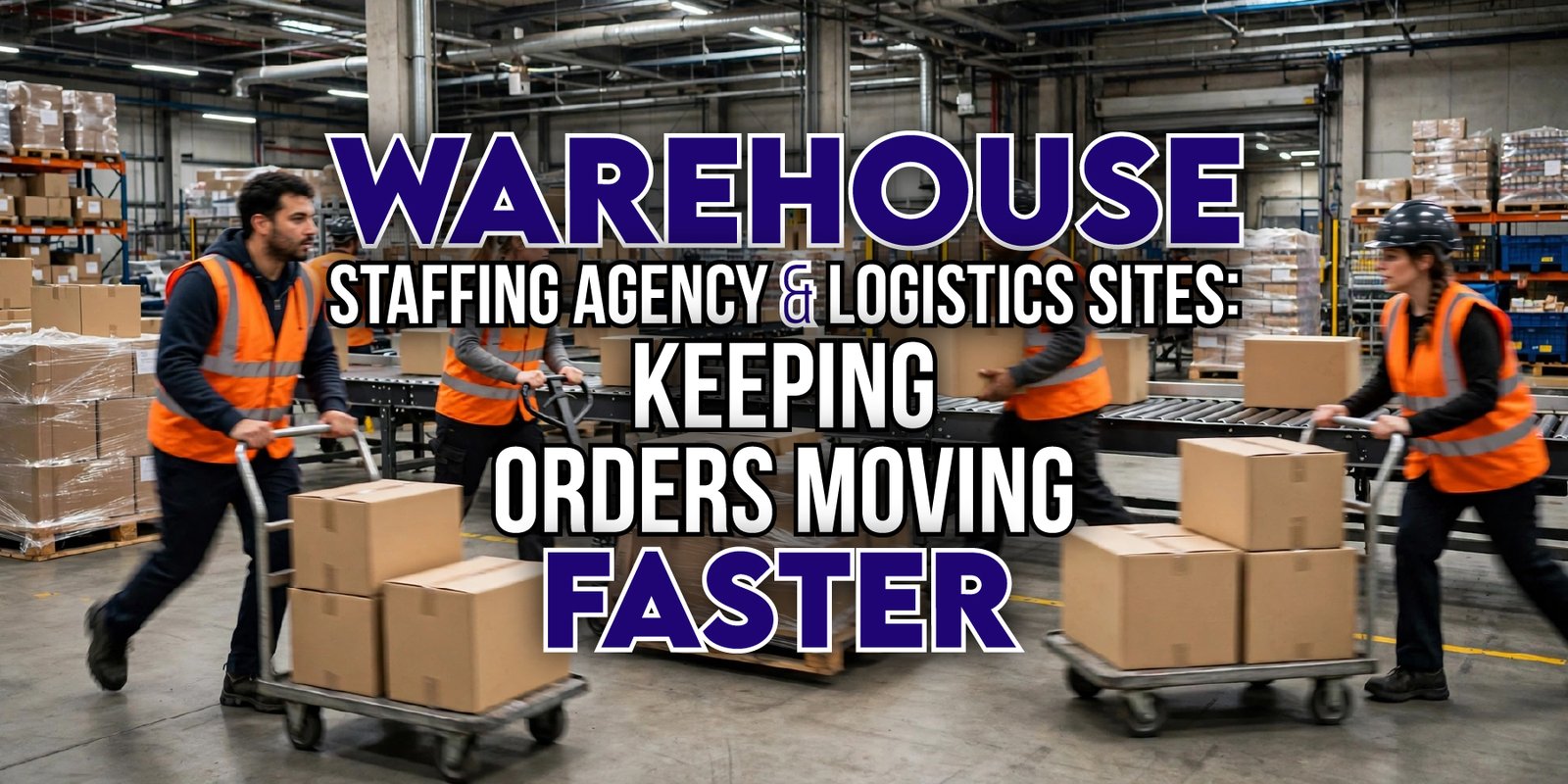
Employers choosing warehouse recruitment support should assess role knowledge, shift matching, licences, transport access and physical duties. Effective leading staffing solutions for warehouses depend on a precise brief because picking, packing, loading, dispatch and forklift work need different experience.
1st Workforce’s specialist warehouse jobs agency support covers employer discussions around pickers, packers, warehouse operatives, production workers and wider operational staff where suitable.
Possible requirements include operatives, pickers and packers, loaders, goods-in staff, dispatch staff, stock handlers, licensed forklift drivers and supervisors.
Before requesting staff, explain the location, hours, transport options, equipment and physical demands. A warehouse recruitment agency should match workers to the current requirement rather than assume every candidate can perform every task.
Planning Your Staffing Requirements
Employers receive better recruitment support services when they prepare accurate information before contacting an agency. A clear brief helps leading staffing solutions assess suitability, availability and likely recruitment challenges.
Prepare:
- Worker numbers and job titles
- Main duties and physical requirements
- Site location and transport access
- Start date, shift times and duration
- Required experience and licences
- Dress code and PPE
- Induction and break arrangements
- Supervisor contact
- Overtime expectations
- Quality or productivity measures
In addition, explain whether the work is chilled, customer-facing, repetitive or target-driven. These details connect candidates with more suitable working conditions.
Discuss Your Workforce Requirements
At 1st Workforce, employer enquiries ask businesses to provide the role, headcount, shift pattern, start date and site location. This information helps the team understand the requirement before discussing availability and rates.
Businesses reviewing leading staffing solutions can request a tailored staffing quote by sharing their required roles, worker numbers, location, shifts and assignment dates.
What Questions Should Employers Ask an Agency?
Strong questions reveal whether leading staffing solutions fit the operation:
- Which sectors and roles do you regularly support?
Look for relevant knowledge rather than a claim that the agency supplies everyone. - How do you assess candidate suitability?
Ask about experience, availability, communication and role requirements. - How do you verify worker availability?
Confirm that availability is checked for the specific shift. - What information do you need from us?
A capable provider should request duties, hours, location, headcount and conditions. - How do you communicate shift changes?
Understand how both workers and employers receive updates. - How do you handle attendance issues?
Ask who receives reports and how options are discussed. - Can you support temporary and ongoing staffing?
Clarify which staffing models the agency provides. - How are fees explained?
Request clarity on charges, overtime and cancellation terms. - What compliance checks do you perform?
Confirm which checks apply and who remains responsible. - Who manages our requirements?
A named contact can simplify communication. - How do you collect feedback?
Structured feedback should improve future matching. - What happens when our needs change?
Leading staffing solutions should include a practical review process.
What Warning Signs Indicate a Poor Staffing Provider?
Warning signs include guaranteed results before the agency understands the role, vague pricing and limited questions about the workplace. Poor communication before an agreement may also predict confusion once shifts begin.
Watch for:
- Guaranteed supply without a detailed brief
- Unclear rates or cancellation terms
- Limited candidate screening
- Unrealistic short-notice promises
- Vague compliance information
- Pressure to commit immediately
- No structured feedback process
- Workers receiving unclear instructions
- Little understanding of the sector
One issue may have an explanation. However, several red flags justify comparing another workforce agency.
What Are the Benefits of Recruitment Support Services?
Recruitment support services can organise sourcing, screening, communication and temporary cover. As a result, internal teams may spend less time on unsuitable applications.
Leading staffing solutions may also support workforce planning, seasonal recruitment, shift fulfilment and ongoing requirements. Where offered, permanent recruitment can sit alongside temporary workforce support.
However, agencies do not remove every recruitment risk. Employers still need supervision, training, performance management and a clear long-term workforce plan.
Permanent Recruitment Versus Temporary Staffing
The right model depends on role duration, operational demand and the importance of continuity.
| Requirement | Permanent Recruitment | Temporary Staffing |
|---|---|---|
| Long-term roles | Usually suits continuing needs | May provide interim cover |
| Seasonal demand | May create excess post-peak capacity | Often suits defined busy periods |
| Short-notice cover | Usually needs a full hiring process | Can offer flexibility, subject to availability |
| Recruitment speed | Includes advertising and selection | May reduce initial sourcing time |
| Workforce flexibility | Lower after permanent appointment | Easier to align with changing demand |
| Long-term commitment | Designed for continuing employment | Linked to the agreed assignment |
| Training requirements | Better where training is extensive | Better when induction is proportionate |
| Temporary projects | May create unnecessary commitment | Often suits defined projects |
| Business expansion | Supports confirmed long-term growth | Helps test changing workload |
| Ongoing staffing | Builds continuity | Supplements permanent teams |
Many employers use both models. Therefore, leading staffing solutions should help businesses choose according to the requirement rather than push one option for every vacancy.
How Does 1st Workforce Support Employers?
1st Workforce supports employers seeking temporary and permanent staffing across warehouse, factory, logistics, production and related operational environments. Its published guidance asks businesses to share the role, location, shift times, worker numbers and preferred start date before the requirement is reviewed.
At 1st Workforce, the staffing approach focuses on understanding duties, shifts and practical employer needs before discussing suitable options. Published role information includes warehouse operatives, pickers and packers, machine operatives, production workers and other operational positions.
The business also discusses temporary cover for seasonal demand, sickness, holidays, short projects and increased workloads. However, availability and timelines depend on the role, location, shift pattern, headcount and required checks.
This reflects a core principle of leading staffing solutions. Recruitment support should begin with an accurate brief and realistic discussion rather than an unsupported guarantee.
Frequently Asked Questions
What Are Leading Staffing Solutions?
Leading staffing solutions combine workforce planning, candidate sourcing, suitable matching, screening, compliance discussions and clear communication. They help employers respond to vacancies, seasonal demand, absences and changing workloads. However, “leading” should reflect a provider’s processes and suitability for the employer, not simply its marketing.
What Makes a Trusted Staffing Company?
A trusted staffing company communicates clearly, asks detailed questions and provides realistic information about availability. It should explain candidate screening, costs, responsibilities and assignment processes. Employers should also assess sector understanding, consistency and how the agency handles feedback or changing needs.
How Do Employers Choose a Quality Staffing Agency?
Compare providers using the same criteria. Review sector experience, screening, availability, communication, compliance processes, costs and feedback procedures. A quality staffing agency should understand the actual duties and working environment before suggesting candidates.
What Information Should I Give a Workforce Agency?
Provide the role, duties, location, headcount, start date, shift times, duration and required experience. Also mention licences, physical requirements, PPE, induction, transport, overtime and the supervisor contact. An accurate brief helps a workforce agency assess suitable available candidates.
Can Staffing Agencies Provide Workers at Short Notice?
Agencies may support short-notice requirements where suitable workers are available. However, no responsible agency should promise an exact timeframe without knowing the role, location, shifts, worker numbers and checks. Complete information and realistic expectations improve the staffing discussion.
Are Temporary Staff Suitable for Seasonal Demand?
Temporary staff can suit seasonal demand when workload increases for a defined period. Warehouses may need pickers and packers, while hospitality operations may need additional staff. Employers should still forecast demand, plan induction, confirm supervision and explain assignment dates clearly.
How Should Employers Compare Recruitment Support Services?
Compare recruitment support services by process, not slogans. Ask how each provider understands roles, screens candidates, confirms availability, communicates shifts, explains charges and manages feedback. Also assess whether its temporary or permanent options match the requirement.
What Should Employers Ask Before Signing With an Agency?
Ask which roles the agency supports, how candidates are screened and how availability is confirmed. Also discuss fees, cancellation terms, compliance, communication, attendance, feedback and account management. Clear answers show whether the process matches the business.
Can a Staffing Agency Help With Warehouse Recruitment?
Yes, depending on its services and candidate availability. Employers should provide duties, shifts, location, physical requirements and any forklift or driving licences. Strong matching also considers transport access, workplace conditions and assignment duration.
What Are the Warning Signs of an Unreliable Staffing Agency?
Warning signs include guaranteed results before a detailed briefing, vague pricing, poor communication, limited screening and unrealistic supply promises. Employers should also question inconsistent information, weak compliance explanations and the absence of a feedback process.
Choosing Staffing Support With Confidence
Leading staffing solutions should combine suitable candidate matching, clear communication, recruitment compliance, workforce flexibility, sector understanding and transparent service discussions. They should also set realistic expectations about worker availability.
Before selecting an agency, define the operational need and compare providers against consistent criteria. Most importantly, ask how each agency will understand the role, screen candidates, communicate shifts and respond when requirements change.
Businesses seeking temporary cover, seasonal workers, warehouse recruitment or continuing support can share their staffing requirements with 1st Workforce for a practical discussion based on the role, location, shifts, headcount and assignment dates.

Leave a Reply