Blog

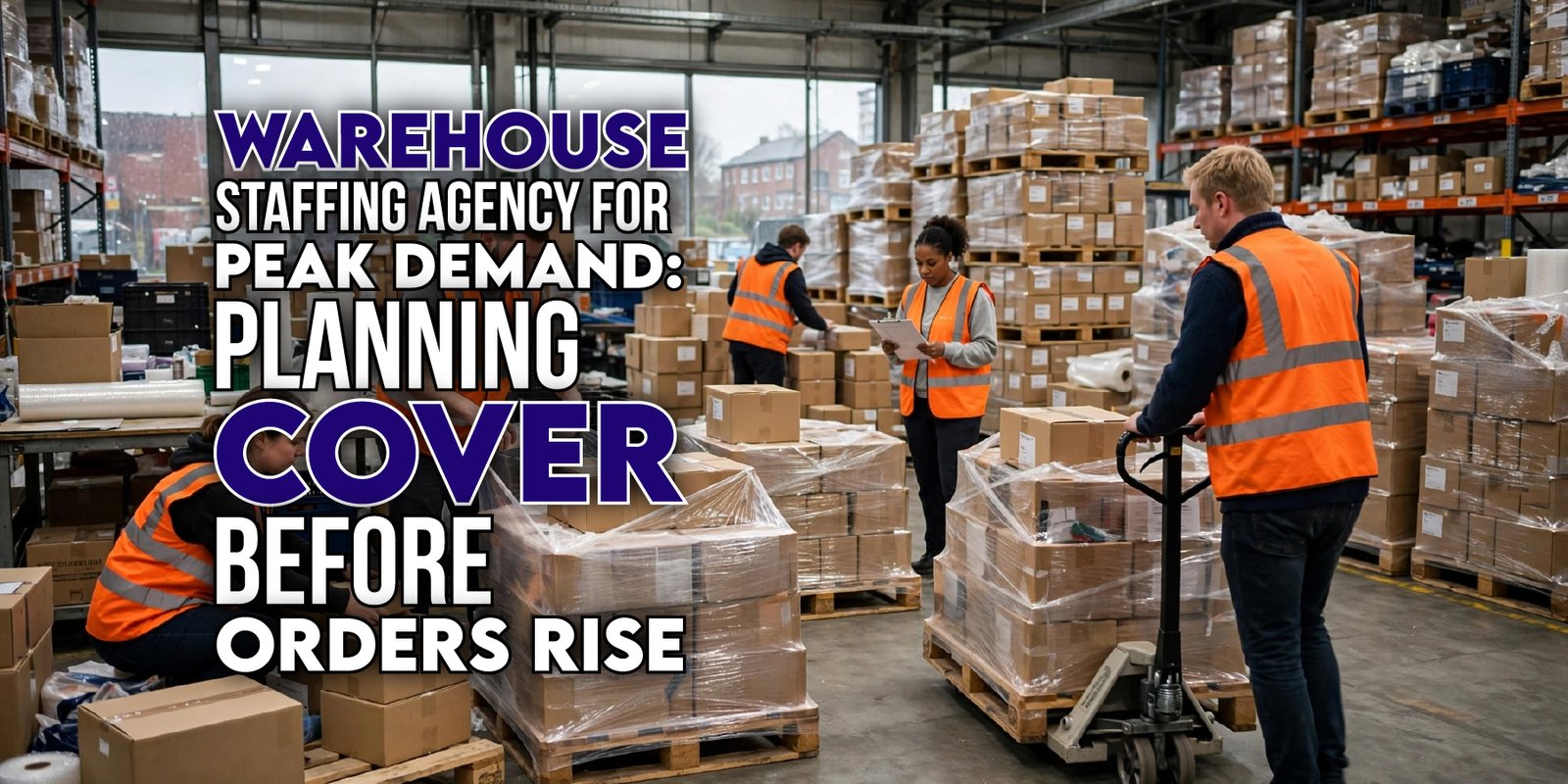
  • Warehouse Staffing Agency for Peak Demand: Planning Cover Before Orders Rise

    Warehouse Staffing Agency for Peak Demand: Planning Cover Before Orders Rise

    Warehouse Staffing Agency for Peak Demand: Planning Cover Before Orders Rise

    Warehouse demand can change quickly. Seasonal trading, promotions, e-commerce activity, increased customer orders, stock movements and new contracts can all create additional pressure on warehouse operations.

    For that reason, businesses should review staffing requirements before order volumes rise rather than waiting until shifts become difficult to cover. A warehouse staffing agency can form part of that planning process by helping businesses address temporary, seasonal or changing personnel requirements.

    However, staffing decisions should start with the operation itself. Managers need to understand expected demand, existing capacity, shift patterns and role requirements before deciding what additional support they need.

    What Does a Warehouse Staffing Agency Do?

    A warehouse staffing agency can support businesses with recruitment and staffing requirements by helping source suitable personnel for temporary, seasonal or changing operational needs. Depending on the provider, support may include candidate sourcing, warehouse recruitment, shift coverage and staffing for periods of increased demand.

    The exact service offered can vary between providers.

    For a warehouse manager, the first step is therefore to define the operational requirement clearly. This may involve identifying the number of roles, shift times, expected duration, duties and any relevant experience or equipment requirements.

    A business might need additional warehouse staff because of:

    • Seasonal demand
    • Increased order volumes
    • Staff absence
    • New contracts
    • Temporary projects
    • Additional shifts
    • Promotional campaigns
    • Stock movements
    • Business expansion

    A warehouse staffing agency can then work from that defined requirement rather than a vague request for “more staff”.

    When Should a Warehouse Start Planning for Peak Demand?

    A warehouse should start planning when it has enough information to identify a potential staffing gap, rather than waiting until peak demand has already arrived. Historical order patterns, expected promotions, seasonal activity, current headcount, absence and shift requirements can all help determine when planning should begin.

    There is no universal lead time that suits every operation.

    For example, an established distribution centre with predictable seasonal demand may have more information available than a business experiencing a sudden increase in orders.

    Therefore, managers should review:

    • Previous peak-period demand
    • Expected order volumes
    • Planned promotions
    • Current staffing levels
    • Existing vacancies
    • Expected employee absence
    • Shift patterns
    • Overtime capacity
    • Picking and packing requirements
    • Dispatch deadlines

    The earlier a potential staffing gap becomes visible, the more time the business has to define the requirement and consider its available staffing options.

    Peak Warehouse Staffing: What Should Businesses Assess?

    Peak warehouse staffing starts with understanding the gap between expected operational demand and available capacity. Businesses should assess order volumes, current staffing, absence, shift patterns, picking, packing, goods-in, dispatch, equipment requirements and the expected duration of the peak.

    A practical assessment should include:

    1. Expected order volume
      Review the anticipated increase rather than relying solely on previous years.
    2. Existing staffing levels
      Establish how many personnel are already available for each shift.
    3. Current vacancies
      Include roles that remain unfilled before the peak begins.
    4. Absence
      Consider planned holidays and any operational absence patterns that the business can reasonably anticipate.
    5. Shift patterns
      Review day, night, weekend and extended shifts.
    6. Picking requirements
      Consider how increased orders could affect picking activity.
    7. Packing requirements
      Assess whether packing capacity can handle the expected workload.
    8. Goods-in activity
      Increased stock movement may create additional receiving requirements.
    9. Dispatch requirements
      Review deadlines and loading activity.
    10. Equipment requirements
      Consider forklift or other equipment-related roles where applicable.
    11. Peak duration
      A short demand spike may require a different staffing approach from a longer seasonal period.

    This assessment gives managers a more realistic basis for deciding whether they need temporary, seasonal or longer-term recruitment support.

    Seasonal Warehouse Staff: Preparing Before Demand Rises

    Seasonal warehouse staff can help businesses address periods when operational requirements temporarily increase. Christmas trading, promotional campaigns, retail activity, e-commerce growth and inventory movements can all create seasonal staffing requirements, although the effect varies between businesses.

    Instead of assuming that every peak requires the same number of additional personnel, assess the actual operation.

    Ask:

    • When does demand normally increase?
    • What order volumes are expected?
    • Which shifts experience the greatest pressure?
    • Which roles become bottlenecks?
    • How long is the additional demand expected to continue?
    • Which existing employees will remain available?
    • What temporary roles will the operation require?

    For example, an operation may experience increased picking activity without the same increase in goods-in requirements. Another business may experience pressure across picking, packing and dispatch at the same time.

    Therefore, seasonal recruitment should reflect the specific operational pattern.

    A warehouse staffing agency can work more effectively when the business provides clear information about the expected peak, roles and shift requirements.

    Temporary Warehouse Cover for Absence and Demand Spikes

    Temporary warehouse cover can help businesses address short-term staffing gaps caused by absence, seasonal demand, temporary projects, new contracts or unexpected changes in operational requirements.

    Temporary staffing may be relevant when:

    • Employees take planned holidays
    • Short-term absence affects a shift
    • Orders increase unexpectedly
    • A new project creates additional work
    • A temporary contract increases workload
    • The business introduces additional shifts
    • Seasonal demand lasts for a defined period

    However, temporary staffing should complement workforce planning rather than replace it.

    Managers should first understand the gap they need to address. Then they can define the role, shift, location, expected duration and responsibilities.

    This gives a warehouse staffing agency clearer information when discussing potential recruitment requirements.

    Warehouse Shift Support: Planning the Right Coverage

    Warehouse shift support depends on more than the number of people required. Shift times, duties, handovers, operating hours and dispatch deadlines can all affect the staffing requirement.

    Businesses should clearly define:

    • Day-shift times
    • Night-shift times
    • Weekend requirements
    • Early starts
    • Late finishes
    • Overtime arrangements
    • Handover requirements
    • Expected contract duration
    • Role responsibilities
    • Site location

    For example, a warehouse that operates extended hours may need different coverage across several shifts rather than simply adding personnel to the busiest period.

    Similarly, a late dispatch deadline could create a specific requirement for packing or loading staff.

    Clear shift information helps a warehouse staffing agency understand the actual requirement rather than simply the requested headcount.

    Common Peak-Season Warehouse Staffing Mistakes

    Peak periods can create pressure quickly. However, many staffing problems begin with planning decisions made before the peak.

    1. Waiting Until Demand Has Already Increased

    Waiting until orders have already risen can leave less time to define requirements and consider recruitment options.

    2. Underestimating Order Volume

    Forecasts can change. Therefore, managers should review expected volumes and operational capacity rather than relying entirely on assumptions.

    3. Ignoring Employee Absence

    Planned holidays and expected absence can reduce available capacity during an already busy period.

    4. Relying Entirely on Overtime

    Overtime can form part of an operational strategy, but businesses should consider availability and the sustainability of extended working arrangements.

    5. Failing to Define Shift Requirements

    A request for warehouse staff without clear shift information can make it harder to understand the actual requirement.

    6. Not Allowing Enough Time for Recruitment

    Recruitment involves identifying the role, sourcing candidates and establishing suitability. Therefore, businesses should consider these activities before the peak starts.

    7. Providing Unclear Role Information

    Candidates need accurate information about duties, location, shifts and expectations.

    8. Ignoring Candidate Suitability

    Availability alone does not establish suitability. Role-specific experience, skills and other requirements can also matter.

    9. Changing Requirements at the Last Minute

    Frequent changes to shifts, duties or staffing requirements can make planning more difficult.

    10. Failing to Review Staffing During the Peak

    Demand can change after the peak begins. Managers should continue reviewing operational requirements instead of treating the original plan as fixed.

    How to Calculate Your Additional Warehouse Staffing Requirement

    There is no universal staffing formula that accurately applies to every warehouse. Instead, managers should use their own operational data to understand the relationship between workload and available capacity.

    Consider:

    • Current headcount
    • Expected order volume
    • Historical productivity
    • Operating hours
    • Shift duration
    • Number of shifts
    • Absence
    • Overtime capacity
    • Picking requirements
    • Packing requirements
    • Dispatch deadlines
    • Peak duration

    For example, an operation may have enough personnel overall but still experience a staffing gap on particular shifts.

    Similarly, additional people may not solve a bottleneck if the constraint sits elsewhere in the process.

    Therefore, review the complete workflow before defining the staffing requirement.

    The objective is to identify where additional capacity is actually needed.

    What Information Should You Give a Warehouse Staffing Agency?

    When approaching a warehouse staffing agency, provide enough information for the recruitment requirement to be understood accurately.

    A useful brief should include:

    • Warehouse location
    • Job roles
    • Number of personnel required
    • Expected start date
    • Shift times
    • Contract duration
    • Expected peak period
    • Main duties
    • Experience requirements
    • Equipment requirements
    • Site rules
    • Pay information where appropriate
    • Attendance expectations
    • Required qualifications
    • Any specific operational requirements

    For instance, “we need warehouse staff” gives limited information.

    By comparison, a brief that explains the role, shift, location, expected duration, duties and relevant requirements gives a much clearer starting point.

    Businesses should also explain whether the requirement relates to picking, packing, goods-in, dispatch, forklift duties or another warehouse function.

    What Employers Look For When Hiring Warehouse Staff

    Warehouse employers may consider several factors when assessing candidates. The precise requirements depend on the role, but relevant considerations can include reliability, punctuality, communication, teamwork, shift availability and role-specific experience.

    For equipment-related positions, relevant training or experience may also matter.

    Businesses should define which characteristics are genuinely necessary for the role rather than creating unnecessarily broad requirements.

    It can also help to distinguish between essential and desirable criteria.

    For example:

    Essential

    • Availability for the required shift
    • Ability to perform the role’s duties
    • Relevant qualification where required
    • Ability to follow site procedures

    Desirable

    • Previous experience in a similar environment
    • Familiarity with a particular warehouse process
    • Experience with relevant systems or equipment

    Businesses can also review what employers look for when considering broader hiring requirements.

    What Warehouse Candidates Should Know Before Accepting Peak-Season Work

    Peak-season recruitment works more effectively when candidates understand the role before accepting it.

    Businesses should communicate:

    • Shift times
    • Warehouse location
    • Main duties
    • Contract duration
    • Working hours
    • Attendance expectations
    • Workplace requirements
    • Required experience
    • Role responsibilities

    Clear communication matters because candidate expectations should match the actual position.

    For example, a warehouse role involving early starts should clearly communicate the required shift pattern. Similarly, a temporary role should make its expected duration clear.

    Businesses can also use what warehouse candidates should know as a useful reference when preparing information for prospective personnel.

    Planning Your Peak Warehouse Staffing Requirements

    A structured staffing brief can make it easier to discuss a requirement with a recruitment provider.

    Start by defining:

    • Expected order increase
    • Current staffing capacity
    • Identified staffing gap
    • Required roles
    • Shift patterns
    • Proposed start date
    • Expected duration
    • Site requirements
    • Relevant experience
    • Equipment requirements

    Next, review whether the requirement is temporary, seasonal or potentially ongoing.

    The right approach depends on the operation and the reason behind the staffing gap. A short promotional period may require temporary cover, while a sustained increase in activity may require a different recruitment strategy.

    If your business has identified a potential staffing gap, you can discuss your warehouse staffing requirements with 1st Workforce.

    How to Choose the Right Warehouse Staffing Agency

    Choosing a warehouse staffing agency involves assessing how well the provider understands the business requirement.

    Consider:

    Sector understanding

    The provider should understand the terminology and operating environment relevant to warehouse and logistics recruitment.

    Recruitment process

    Ask how roles are sourced and how candidate suitability is considered.

    Role matching

    The provider should understand the difference between requirements for picking, packing, dispatch, goods-in and equipment-related roles.

    Communication

    Clear communication matters when shifts, requirements or expected durations change.

    Flexibility

    Warehouse demand can change, so businesses should explain how their requirements may fluctuate.

    Candidate suitability

    Availability matters, but businesses should also define the experience, skills and other requirements relevant to the role.

    There is no single criterion that determines whether a warehouse staffing agency is suitable for a particular business. Instead, compare the provider’s understanding of your requirements with the support you actually need.

    Why Early Warehouse Staffing Planning Matters

    The relationship between demand and staffing can be viewed as a straightforward planning sequence:

    Forecast → staffing gap → role requirements → recruitment planning → candidate sourcing → shift planning → peak readiness

    This sequence helps managers identify what needs attention before order volumes rise.

    Late planning can create additional operational pressure. Depending on the circumstances, businesses may face:

    • Rushed recruitment
    • Limited staffing options
    • Greater management pressure
    • Increased reliance on overtime
    • Shift coverage challenges
    • Operational disruption

    Early planning does not guarantee that these issues will disappear. However, it gives businesses more opportunity to understand the requirement and assess available options.

    Peak Demand Staffing Checklist for Warehouse Managers

    Use this checklist when preparing for a busy period:

    ☐ Review historical demand

    ☐ Forecast expected order volumes

    ☐ Review current staffing levels

    ☐ Identify expected absence

    ☐ Identify overtime capacity

    ☐ Identify staffing gaps

    ☐ Define required roles

    ☐ Define shift patterns

    ☐ Confirm start dates

    ☐ Confirm expected duration

    ☐ Define site requirements

    ☐ Prepare accurate job information

    ☐ Review candidate requirements

    ☐ Plan temporary staffing

    ☐ Review staffing levels during the peak

    Staffing Approaches Compared

    Staffing ApproachUseful ForMain Consideration
    Existing permanent teamNormal operating demandCapacity may be limited during peaks
    OvertimeShort-term increasesAvailability and fatigue need consideration
    Temporary staffShort-term or seasonal demandRequires clear role and shift planning
    Seasonal warehouse staffPredictable seasonal peaksPlanning needs to begin before demand rises
    Permanent recruitmentOngoing staffing gapsRecruitment requires planning and time

    No option works in exactly the same way for every warehouse.

    For example, overtime may address a short-term gap within an existing team, while temporary personnel may provide additional capacity for a defined period. Permanent recruitment may become relevant where increased demand continues beyond the original peak.

    The appropriate approach depends on the business, workload, staffing structure and expected duration of the requirement.

    What does a warehouse staffing agency do?

    A warehouse staffing agency can help businesses address recruitment and staffing requirements by sourcing personnel for temporary, seasonal or changing operational needs. Depending on the provider, services may include candidate sourcing, warehouse recruitment and staffing support. Businesses should explain their roles, shifts, location, duration and requirements clearly so the staffing need can be understood accurately.

    When should a warehouse start planning for peak staffing?

    A warehouse should begin planning when it can identify a potential staffing gap based on expected demand and operational capacity. Businesses can review historical order patterns, upcoming promotions, seasonal activity, current headcount and expected absence. There is no universal planning date because recruitment requirements and operating conditions differ between businesses.

    What are peak warehouse staffing requirements?

    Peak warehouse staffing requirements are the additional personnel a business may need when operational demand increases. The requirement can involve picking, packing, goods-in, dispatch, forklift duties or other warehouse roles. Managers should assess expected order volumes, existing capacity, shift patterns, absence and the expected duration of the busy period before defining the staffing gap.

    How does temporary warehouse cover work?

    Temporary warehouse cover addresses a staffing requirement for a defined or potentially short-term period. It can relate to employee absence, seasonal demand, temporary projects, new contracts or unexpected increases in workload. Businesses should define the role, shift, location, duties, expected duration and any relevant requirements before discussing temporary staffing options with a recruitment provider.

    When should businesses use seasonal warehouse staff?

    Businesses may consider seasonal warehouse staff when they expect demand to increase for a particular period. This can include Christmas trading, promotional activity, retail peaks or increased e-commerce orders. The decision should depend on the business’s actual forecast and staffing capacity rather than an assumption that every seasonal period creates the same requirement.

    What information should I give a warehouse staffing agency?

    Provide the warehouse location, roles, required personnel, start date, shift times, contract duration, expected peak period, duties, experience requirements and relevant site or equipment requirements. Clear information helps define the recruitment requirement. Businesses should also explain attendance expectations, qualifications and any role-specific conditions that candidates need to understand.

    How can businesses plan warehouse shift support?

    Businesses can plan warehouse shift support by reviewing operating hours, order volumes, staffing capacity, absence, dispatch deadlines and the duties required on each shift. Define the start and finish times, role requirements, location and expected duration. This gives managers a clearer view of where additional capacity may be required.

    What should employers look for when hiring warehouse staff?

    Employers should identify the skills and characteristics genuinely required for each role. Depending on the position, these may include reliability, punctuality, communication, teamwork, shift availability, relevant experience and role-specific qualifications. Equipment-related roles may also require appropriate training or experience. Requirements should reflect the actual duties rather than generic assumptions about warehouse work.

    Discuss Your Warehouse Staffing Requirements

    Peak demand planning starts with a clear understanding of the operational requirement.

    Before approaching a warehouse staffing agency, review your:

    • Expected order volumes
    • Existing staffing levels
    • Staffing gaps
    • Warehouse roles
    • Shift requirements
    • Expected start date
    • Contract duration
    • Site requirements
    • Candidate requirements

    A clear brief gives your business a more structured basis for discussing temporary, seasonal or other staffing requirements.

    If your operation is preparing for increased demand, you can discuss your warehouse staffing requirements with 1st Workforce and explain the type of support your operation is considering.

    The right staffing approach depends on your demand, existing capacity, roles and operating model. Therefore, planning should begin with the warehouse’s actual requirements rather than a predetermined staffing solution.

  • Recruitment Agency Near Me: How Local Businesses Find Staff Faster

    Recruitment Agency Near Me: How Local Businesses Find Staff Faster

    Recruitment Agency Near Me: How Local Businesses Find Staff Faster

    When a business searches for a recruitment agency near me, it is usually looking for more than a company with a nearby address. The search can reflect a need for relevant sector knowledge, practical staffing support, local market understanding and a recruitment process that fits the employer’s requirements.

    A recruitment agency can support businesses with candidate sourcing, temporary staffing and recruitment coordination. However, suitability depends on the roles required, service coverage, candidate requirements and the provider’s approach.

    For local employers, the important question is therefore not simply how close a recruitment agency appears on a map. Instead, businesses should assess whether the provider understands their sector, staffing requirements and operating environment.

    What Does “Recruitment Agency Near Me” Actually Mean?

    A “recruitment agency near me” search commonly indicates that an employer wants recruitment support relevant to its location and business requirements. A suitable recruitment agency should have a service area that covers the employer and an understanding of the roles, sectors and staffing arrangements involved.

    The phrase “near me” does not necessarily mean the closest physical office. Searchers may also be looking for:

    • Local or regional recruitment knowledge
    • Relevant sector experience
    • Temporary staffing support
    • Accessible communication
    • Suitable candidate sourcing
    • Understanding of local operating requirements
    • A recruitment process that fits their business

    Therefore, businesses should confirm actual service coverage before engaging a recruitment agency.

    A warehouse manager, for example, may search for a recruitment agency because the business needs additional warehouse operatives. A hotel manager may have a similar search intent but require housekeepers, room attendants or front-of-house personnel.

    The location matters, but the recruitment requirement matters just as much.

    Why Local Recruitment Support Matters to Businesses

    A local recruitment agency can be relevant when employers want recruitment support that understands the context in which their business operates.

    Local recruitment considerations can include:

    • Where the workplace is located
    • Typical commuting considerations
    • Operating hours
    • Shift patterns
    • The type of roles required
    • Sector-specific hiring requirements
    • Candidate expectations
    • The employer’s operational environment

    However, businesses should avoid assuming that every recruitment agency serving an area has the same candidate reach or local knowledge.

    For instance, a distribution centre may operate early-morning, evening or weekend shifts. A hospitality business may require staff around changing service periods. Consequently, the employer needs to explain the actual working pattern rather than simply asking for “staff”.

    Local relevance also needs to work alongside sector knowledge. A recruitment agency that understands warehouse operations may approach a warehouse vacancy differently from a hospitality vacancy.

    The practical test is whether the provider can understand the business requirement and explain how its recruitment process addresses it.

    How to Find a Recruitment Agency for Your Business

    Finding a suitable recruitment agency starts with defining the requirement.

    1. Define Your Staffing Requirement

    Start with the number and type of personnel required.

    Consider whether you need temporary staff, permanent employees or a combination of both.

    2. Identify the Role Types

    List the actual roles rather than using a broad description such as “warehouse staff” or “hospitality staff”.

    3. Decide Between Temporary and Permanent Requirements

    Temporary staff may suit short-term demand, absence or seasonal requirements. Permanent recruitment may suit an ongoing vacancy.

    4. Check Relevant Sector Experience

    Ask whether the recruitment agency understands your industry and the roles involved.

    5. Confirm Service Coverage

    Check whether the provider supports the location where your business operates.

    6. Ask About the Recruitment Process

    Understand how the provider approaches candidate sourcing, screening and communication.

    7. Discuss Candidate Requirements

    Explain experience, qualifications, working patterns and other relevant criteria.

    8. Clarify Communication

    Ask how recruitment discussions and updates will be managed.

    9. Compare Commercial Arrangements

    Understand the applicable commercial terms before proceeding.

    10. Request Further Information or a Quote

    Once the requirement is clear, discuss the next steps with the recruitment agency.

    This process gives employers a clearer basis for comparing providers.

    Staffing Support for Different Business Sectors

    A recruitment agency may support different sectors, but staffing requirements vary considerably between industries.

    Warehouse and Logistics

    Warehouses may require:

    • Warehouse operatives
    • Pickers and packers
    • Dispatch personnel
    • Goods-in staff
    • Stock-handling personnel
    • Logistics staff

    A warehouse may experience changing order volumes, seasonal demand or temporary staffing gaps. Businesses can therefore benefit from defining the roles, shifts and site requirements before contacting a recruitment agency.

    For businesses reviewing warehouse requirements, staffing services for warehouses can be considered as part of the recruitment planning process.

    Logistics Sites

    Logistics operations can involve distribution centres, fulfilment facilities and other sites where staffing requirements change according to operational demand.

    Relevant considerations include:

    • Order volumes
    • Shift patterns
    • Dispatch deadlines
    • Goods movement
    • Temporary demand
    • Operational staffing

    Businesses looking specifically at logistics operations can explore staffing support for logistics sites when considering their recruitment requirements.

    Hospitality

    Hospitality businesses can require:

    • Hotel staff
    • Housekeepers
    • Room attendants
    • Waiters and waitresses
    • Porters
    • Reception personnel
    • Front-of-house staff

    The requirement can vary according to the property, department, service model and working pattern.

    Manufacturing

    Manufacturing businesses may need personnel for production and operational roles. Recruitment requirements can change according to production schedules, contracts, projects and business activity.

    In each sector, the employer should explain the actual vacancy before a recruitment agency proposes a recruitment approach.

    Temporary Staff: When Does Local Recruitment Support Help?

    Temporary staff can help businesses address staffing requirements that are limited in duration or subject to change.

    Examples can include:

    • Seasonal peaks
    • Employee absence
    • Sudden increases in demand
    • New contracts
    • Short-term projects
    • Temporary operational changes
    • Busy trading periods
    • Additional shifts

    A recruitment agency may support these requirements by helping businesses source candidates according to the agreed role and working pattern.

    However, temporary staffing requirements vary significantly. A business requiring two people for a defined period has a different requirement from an operation seeking a larger temporary team across several shifts.

    Therefore, employers should provide clear information about:

    • Number of personnel required
    • Role types
    • Start date
    • Expected duration
    • Working hours
    • Shift pattern
    • Location
    • Required experience
    • Site requirements

    Clear information gives the recruitment agency a more useful understanding of the assignment.

    Businesses should also avoid assuming that temporary staff will always be immediately available. Candidate availability depends on the role, location, requirements and timing.

    Agency Workers Near Me: What Should Employers Check?

    Businesses searching for agency workers near me should look beyond proximity.

    Before engaging a recruitment agency, employers can clarify:

    • Service area
    • Role types
    • Sector experience
    • Candidate sourcing
    • Candidate screening
    • Communication process
    • Availability
    • Working arrangements
    • Commercial terms
    • Relevant compliance requirements

    The employer should also explain the working environment accurately.

    For example, a warehouse role may involve specific shift times and physical duties. A hospitality role may involve direct customer interaction. A manufacturing position may have different operational requirements.

    Consequently, a recruitment agency needs accurate information to understand what the employer actually requires.

    “Near me” should therefore be treated as a starting point for research rather than a guarantee that the closest provider is the most relevant.

    How Quickly Can a Recruitment Agency Provide Staff?

    There is no universal recruitment timeframe because staffing requirements vary between businesses and roles. A recruitment agency may need to consider the role, number of personnel, location, candidate availability, experience requirements, shift pattern and screening process before discussing realistic next steps.

    Timing can also depend on how quickly the employer provides information and responds during the recruitment process.

    For example, a straightforward requirement with flexible working arrangements may differ from a role requiring specific experience, qualifications or unusual shift patterns.

    Employers should therefore ask the recruitment agency what information it needs and what factors could affect the recruitment process.

    Rather than requesting an arbitrary number of days, businesses can ask:

    • What information do you need from us?
    • What candidate requirements should we define?
    • What factors could affect recruitment?
    • How will communication work?
    • What happens after suitable candidates are identified?

    This gives the employer a more realistic understanding of the process.

    Local Recruitment Agency vs Internal Hiring

    Both external recruitment and internal hiring can form part of a business’s workforce strategy. The appropriate approach depends on the employer’s resources, requirements and recruitment process.

    FactorRecruitment AgencyInternal Recruitment
    Candidate sourcingExternal recruitment supportManaged internally
    Recruitment workloadShared or outsourced supportInternal responsibility
    Local market insightDepends on providerDepends on internal knowledge
    Candidate reachDepends on recruitment networkDepends on internal channels
    FlexibilityDepends on staffing requirementsDepends on internal capacity
    Employer controlEmployer retains hiring decisionsEmployer manages the full process

    An external recruitment agency can provide additional recruitment capacity, while internal hiring allows the business to manage sourcing directly.

    Some businesses may use both approaches. For example, an internal HR team might manage permanent recruitment while seeking external support for temporary staffing during periods of increased demand.

    The key consideration is the actual recruitment requirement.

    Questions to Ask a Recruitment Agency Before Working With Them

    Before choosing a recruitment agency, employers should ask practical questions about the service.

    1. Which sectors do you support?

    Confirm whether the provider understands your industry.

    2. What types of roles do you recruit for?

    Make sure the role falls within the provider’s recruitment activity.

    3. What areas do you cover?

    Confirm the actual service area rather than assuming coverage from a search result.

    4. How do you understand our staffing requirements?

    Ask how the provider gathers information about the vacancy.

    5. How do you source candidates?

    Understand the general approach to candidate sourcing.

    6. How do you assess candidates?

    Ask what information is considered during the recruitment process.

    7. How do you handle temporary staffing requirements?

    This is particularly relevant if your staffing requirement changes regularly.

    8. How do you communicate during recruitment?

    Clarify who will manage communication and how updates will be handled.

    9. What information do you need from the employer?

    A clear provider should be able to explain the information required to understand the vacancy.

    10. How are commercial terms structured?

    Ask for the relevant commercial information before proceeding.

    These questions help an employer compare a recruitment agency based on the actual service rather than search ranking or physical proximity alone.

    Discuss Your Local Staffing Requirements With 1st Workforce

    Employers considering recruitment support can begin by preparing the core information behind their staffing requirement.

    Consider:

    • Number of staff required
    • Role types
    • Operating location
    • Temporary or permanent requirement
    • Sector
    • Expected start date
    • Working pattern
    • Shift requirements
    • Experience requirements
    • Main responsibilities

    For example, a warehouse business may need temporary warehouse operatives for a changing order period. A hospitality business may instead need ongoing hotel staffing. Each requirement needs a different recruitment brief.

    If you have a defined requirement, you can discuss your staffing requirements with 1st Workforce.

    The discussion should focus on the actual vacancy, location, role requirements and staffing arrangement rather than assuming that every business needs the same recruitment solution.

    How Businesses Can Prepare Before Contacting a Recruitment Agency

    Preparing accurate information can make an initial discussion with a recruitment agency more useful.

    Use this checklist:

    ☐ Role title

    ☐ Number of staff required

    ☐ Temporary or permanent requirement

    ☐ Expected start date

    ☐ Working hours

    ☐ Shift pattern

    ☐ Work location

    ☐ Required experience

    ☐ Required qualifications where applicable

    ☐ Main responsibilities

    ☐ Candidate expectations

    ☐ Interview requirements

    ☐ Onboarding arrangements

    The employer should also identify which requirements are essential and which are desirable.

    For example, if a warehouse role requires specific equipment experience, explain this before candidate sourcing begins. Similarly, if a hospitality role requires weekend availability, include that information in the recruitment brief.

    The clearer the information, the easier it becomes for a recruitment agency to understand the requirement.

    What Makes Recruitment Support Useful for Local Businesses?

    Useful recruitment support starts with understanding the employer’s actual requirement.

    A recruitment agency can be more relevant when its process considers:

    • Employer requirements
    • Sector knowledge
    • Role details
    • Candidate sourcing
    • Recruitment coordination
    • Communication
    • Temporary staffing needs
    • Changing business requirements

    However, businesses should assess these factors themselves rather than relying on broad marketing claims.

    For a local employer, communication can also matter. A business dealing with changing shifts or operational pressures may need a provider that understands those requirements and communicates clearly about the recruitment process.

    Similarly, sector knowledge can influence the questions a provider asks. Warehouse staffing, logistics staffing, hospitality recruitment and manufacturing recruitment each involve different operational considerations.

    Therefore, employers should assess the actual recruitment process before choosing a recruitment agency.

    Common Mistakes Businesses Make When Searching “Recruitment Agency Near Me”

    Searching locally can narrow the field, but proximity alone does not establish suitability.

    1. Choosing Based Only on Proximity

    The closest provider may not support the required role or sector.

    2. Ignoring Sector Experience

    Different industries have different staffing requirements.

    3. Comparing Only Headline Pricing

    Commercial terms should be considered alongside service scope and recruitment requirements.

    4. Not Explaining the Role Properly

    A vague vacancy can make candidate sourcing more difficult.

    5. Failing to Discuss Staffing Volumes

    The number of personnel required can affect the recruitment requirement.

    6. Ignoring Temporary Versus Permanent Requirements

    Businesses should establish whether the need is short-term or ongoing.

    7. Not Checking Service Coverage

    Search results do not automatically confirm actual service coverage.

    8. Assuming Candidate Availability

    A recruitment agency cannot guarantee that every role will have suitable candidates immediately available.

    9. Failing to Clarify Communication

    Employers should understand how recruitment discussions and updates will work.

    10. Not Preparing Requirements Before Making Contact

    A clear staffing brief helps the provider understand the business requirement.

    The phrase “near me” is therefore useful for discovering relevant options, but businesses should investigate the underlying service before choosing a recruitment agency.

    What does “recruitment agency near me” mean?

    “Recruitment agency near me” usually indicates a search for recruitment support relevant to the searcher’s location. However, “near me” does not necessarily mean the closest physical office. Employers may also want local market relevance, sector knowledge, suitable service coverage and recruitment support that fits their staffing requirements.

    How do I find a local recruitment agency?

    Start by defining your staffing requirement, including the role, number of personnel, location, working pattern and temporary or permanent status. Then compare relevant recruitment providers based on sector experience, service coverage, candidate sourcing, communication and commercial arrangements. Confirm the provider’s actual coverage rather than relying solely on proximity shown in search results.

    Can a recruitment agency provide temporary staff?

    A recruitment agency may support temporary staffing requirements such as seasonal demand, employee absence, short-term projects or operational changes. However, the availability of suitable candidates varies according to the role, location, timing and requirements. Employers should provide clear information about shifts, duration, responsibilities and experience requirements when discussing temporary staffing.

    What should employers ask a recruitment agency?

    Employers can ask about sector experience, role types, service coverage, candidate sourcing, screening, communication, temporary staffing processes and commercial terms. It is also useful to explain the vacancy in detail and ask what information the provider needs. These questions can help businesses compare recruitment support based on their actual requirements.

    What are agency workers?

    Agency workers are personnel who obtain work through a recruitment or staffing provider under arrangements that can vary according to the engagement. Employers should clarify the relevant working arrangements, responsibilities, commercial terms and applicable requirements before engaging temporary personnel. The exact structure depends on the recruitment arrangement and the parties involved.

    How quickly can recruitment agencies provide staff?

    Recruitment timelines vary according to the role, number of personnel required, location, candidate availability, experience requirements, shift pattern and screening process. Employer response times can also affect progress. Rather than relying on a universal timeframe, businesses should discuss their requirement with the recruitment provider and clarify the factors that may influence recruitment.

    What industries can recruitment agencies support?

    Recruitment providers can specialise in different sectors. Depending on the provider, these may include warehousing, logistics, hospitality, manufacturing and other operational industries. Employers should check whether the recruitment agency has relevant experience with the specific roles they need before proceeding.

    How can I discuss my staffing requirements with 1st Workforce?

    Employers can prepare details such as the roles required, number of personnel, location, working hours, shift patterns, expected start date and temporary or permanent requirement. They can then discuss their staffing requirements with 1st Workforce and provide the information needed to understand the recruitment requirement.

    Discuss Your Recruitment Requirements

    Finding a recruitment agency through a “near me” search is only the first step. Employers should also consider sector knowledge, service coverage, role requirements, temporary staffing needs and the recruitment process.

    1st Workforce supports businesses considering recruitment and staffing requirements across operational sectors. The appropriate recruitment discussion depends on the individual business and the roles it needs to fill.

    Employers can prepare information about:

    • Temporary staffing
    • Warehouse staffing
    • Logistics staffing
    • Hospitality staffing
    • Operational recruitment
    • Changing workforce requirements
    • Shift patterns
    • Start dates
    • Role-specific experience

    If you have a defined staffing requirement, you can request recruitment support and provide the details needed to discuss your requirement.

    The aim should be to identify recruitment support that fits the business, rather than choosing a provider solely because it appears physically close to the searcher.

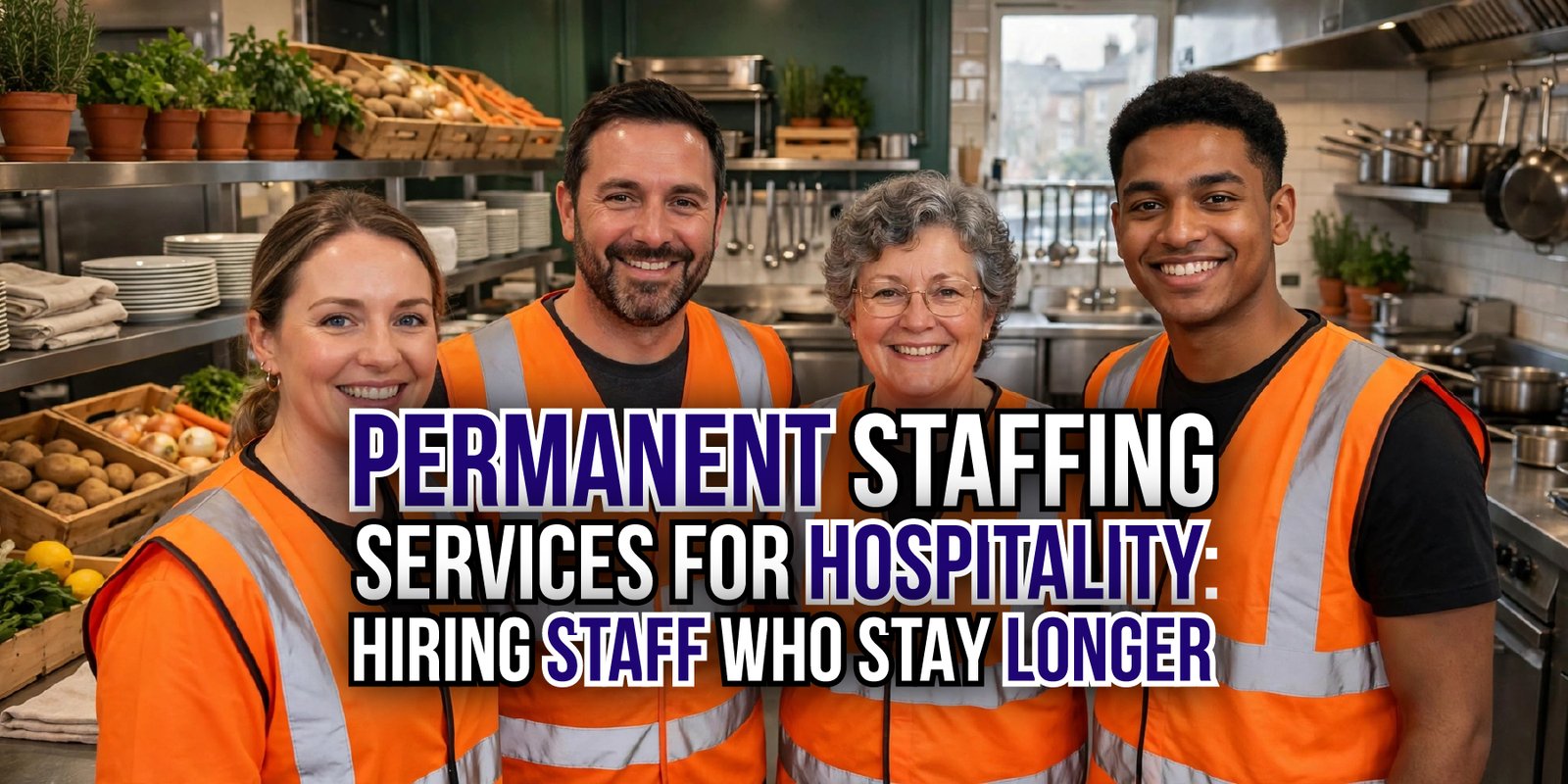
  • Permanent Staffing Services for Hospitality: Hiring Staff Who Stay Longer

    Permanent Staffing Services for Hospitality: Hiring Staff Who Stay Longer

    Permanent Staffing Services for Hospitality: Hiring Staff Who Stay Longer

    Hospitality businesses often need a dependable team across roles that operate every day, from hotel reception and housekeeping to restaurant service and food and beverage. However, filling an ongoing vacancy requires a different approach from covering a short-term staffing gap.

    Permanent staffing services can support hospitality employers that need candidates for ongoing positions. Rather than focusing only on immediate availability, the recruitment process can consider the role itself, required experience, working patterns, candidate expectations and the longer-term needs of the business.

    That does not mean permanent recruitment guarantees employee retention. Instead, clear job information, suitable candidate matching, realistic expectations and structured onboarding can help employers build a more considered recruitment process.

    What Are Permanent Staffing Services?

    Permanent staffing services support employers looking to recruit candidates for ongoing employment rather than short-term or temporary assignments. Depending on the provider, the process can include defining the vacancy, sourcing candidates, reviewing suitability, coordinating interviews and supporting communication between employers and candidates.

    The employer remains responsible for deciding which candidate to hire unless the agreed recruitment arrangement states otherwise.

    For hospitality businesses, the process can begin with a clear definition of:

    • Job title
    • Department
    • Main responsibilities
    • Working hours
    • Shift pattern
    • Location
    • Required experience
    • Qualifications where relevant
    • Start date
    • Employment expectations

    Consequently, permanent staffing services work best when the employer can clearly explain what the position involves.

    A hotel may require a permanent room attendant, receptionist or porter. Similarly, a restaurant may need an ongoing waiter, supervisor or front-of-house team member. Each vacancy requires a slightly different recruitment brief.

    When Should a Hospitality Business Consider Permanent Staffing Services?

    A hospitality business may consider permanent staffing services when it has an ongoing vacancy rather than a temporary requirement.

    Common situations include:

    • Replacing an employee who has left
    • Expanding an existing department
    • Creating a new position
    • Building a management team
    • Establishing a new service
    • Maintaining consistent departmental staffing
    • Addressing recurring vacancies
    • Supporting planned operational growth

    For example, a hotel opening additional rooms may need to review its housekeeping structure. A restaurant introducing longer opening hours may need additional permanent front-of-house personnel.

    In contrast, a business dealing with a short seasonal peak may have a different requirement and could consider temporary staffing instead.

    Therefore, the first question should not simply be, “How quickly can we hire?” It should be, “What type of staffing requirement does the business actually have?”

    That distinction helps employers decide whether permanent staffing services fit the vacancy.

    Hospitality Recruitment: Which Roles May Require Permanent Hiring?

    Hospitality recruitment covers a wide range of operational and customer-facing positions. The exact roles required depend on the property’s size, service model, opening hours and departmental structure.

    Hotels

    Hotel recruitment can include roles such as:

    • Housekeepers
    • Room attendants
    • Reception staff
    • Concierge personnel
    • Porters
    • Public-area cleaners
    • Food and beverage staff

    A hotel may also require permanent supervisory or management positions depending on its organisational structure.

    Restaurants

    Restaurant recruitment can involve:

    • Waiters and waitresses
    • Restaurant supervisors
    • Front-of-house staff
    • Bar staff
    • Kitchen support roles

    The recruitment requirement should reflect the actual service model. For example, a restaurant operating breakfast, lunch and dinner services may require a different staffing structure from a venue operating during evenings only.

    As a result, permanent staffing services should begin with an understanding of the role and operating environment rather than a generic job title.

    Permanent Hotel Staff: What Should Employers Consider?

    Recruiting permanent hotel staff requires employers to explain the actual working environment and responsibilities.

    Before recruitment begins, consider:

    • Department responsibilities
    • Guest interaction
    • Shift patterns
    • Early starts
    • Late finishes
    • Weekend work
    • Working hours
    • Required experience
    • Communication requirements
    • Relevant qualifications
    • Department-specific expectations

    A receptionist, for instance, may have significant guest interaction, while a housekeeping position may involve different physical and operational requirements.

    Similarly, a porter may need to work around arrival and departure periods, while food and beverage staff may follow service-specific shift patterns.

    Clear information allows candidates to understand the position before progressing through the recruitment process.

    For employers, permanent staffing services can therefore be more effective when the vacancy description reflects the actual role rather than a broad description of hospitality work.

    Restaurant Recruitment: Hiring for Long-Term Roles

    Restaurant recruitment should reflect the way the establishment actually operates.

    Employers should consider:

    • Front-of-house responsibilities
    • Customer interaction
    • Service periods
    • Busy trading periods
    • Shift availability
    • Team structure
    • Experience requirements
    • Communication
    • Role expectations
    • Reporting arrangements

    A restaurant hiring a waiter may prioritise different experience from a restaurant hiring a supervisor. Likewise, a venue with a large evening service may require different availability from a daytime operation.

    Therefore, the recruitment brief should describe the real position.

    Permanent staffing services can support this process when the employer clearly identifies the role, expectations and longer-term requirement.

    Long Term Hospitality Staff: What Makes a Role Attractive?

    Employers considering long term hospitality staff should focus on presenting an accurate and realistic role rather than promising retention.

    Candidates may consider factors such as:

    • Clear responsibilities
    • Working hours
    • Shift patterns
    • Location
    • Pay information
    • Training
    • Progression opportunities where offered
    • Team environment
    • Workplace expectations
    • Communication
    • Consistency of scheduling where possible

    These factors do not guarantee that an employee will remain with a business. However, clear expectations can help candidates decide whether a position fits their circumstances and career plans.

    For example, an employer should communicate weekend requirements rather than allowing a candidate to discover them after starting.

    Similarly, if the position involves early mornings or late finishes, those expectations should appear clearly in the vacancy information.

    This transparency can make the recruitment process more useful for both sides.

    Permanent vs Temporary Hospitality Staffing

    Permanent and temporary staffing can address different business requirements. Neither approach suits every hospitality situation.

    FactorPermanent StaffingTemporary Staffing
    Typical purposeOngoing staffing requirementShort-term or changing requirement
    Employment expectationLonger-term roleDefined or flexible period
    Useful forOngoing vacancies and team buildingPeaks, absence and short-term cover
    Recruitment focusLong-term role suitabilityImmediate or short-term requirements
    PlanningBroader role definition may be requiredOften focused on immediate operational needs

    For example, a hotel with an ongoing reception vacancy may consider permanent recruitment. Meanwhile, a venue dealing with a temporary increase in bookings may need short-term support.

    Businesses can also use different staffing approaches at different times.

    The important point is to match the recruitment approach to the underlying operational requirement.

    How to Define a Permanent Hospitality Role Before Recruitment

    A clear vacancy gives employers a stronger starting point for permanent staffing services.

    Before approaching a recruitment provider, define:

    1. Job title
      Use a title that accurately represents the position.
    2. Department
      Identify housekeeping, reception, food and beverage, front of house or another function.
    3. Core responsibilities
      Explain the main duties rather than relying on a generic description.
    4. Shift pattern
      State expected working patterns, including relevant weekends or early starts.
    5. Working hours
      Provide the expected hours where known.
    6. Location
      Make the workplace location clear.
    7. Required experience
      Separate essential experience from desirable experience.
    8. Qualifications
      Identify any qualifications that genuinely apply to the role.
    9. Candidate expectations
      Explain the standards and responsibilities associated with the position.
    10. Pay information
      Provide appropriate information about remuneration.
    11. Reporting structure
      Explain who the successful candidate will report to.
    12. Start date
      Give the expected start date or timeframe.
    13. Training
      Explain relevant training offered by the business.
    14. Progression
      Mention progression opportunities where the business actually offers them.

    This level of detail helps create a more accurate recruitment brief.

    Common Permanent Hospitality Recruitment Mistakes

    Permanent recruitment can become more difficult when employers leave important details unclear.

    1. Writing an Unclear Job Description

    A vague vacancy can make it difficult for candidates to understand the position.

    2. Failing to Define Shift Expectations

    Hospitality often involves varied working patterns. Employers should communicate the actual schedule requirements.

    3. Focusing Only on Immediate Availability

    Availability matters, but it should not replace consideration of whether the candidate meets the role requirements.

    4. Ignoring Relevant Experience

    Different hospitality roles require different levels and types of experience.

    5. Not Explaining the Actual Duties

    Candidates need a realistic understanding of what they will do during a normal working day.

    6. Setting Unrealistic Expectations

    Requirements should reflect the genuine needs of the position.

    7. Delaying Communication With Candidates

    Clear communication helps maintain an organised recruitment process.

    8. Comparing Candidates Inconsistently

    Employers should assess candidates against the actual requirements of the vacancy.

    9. Failing to Plan Onboarding

    Recruitment does not end when an employer selects a candidate. The business should prepare for the person’s start.

    10. Treating Permanent Recruitment Like Short-Term Staffing

    An ongoing role requires consideration of broader suitability, expectations and future responsibilities.

    These considerations form an important part of effective permanent staffing services.

    How Hospitality Employers Can Improve Candidate Matching

    Candidate matching starts with a clear understanding of the vacancy.

    Employers should communicate:

    • Role responsibilities
    • Working hours
    • Location
    • Required experience
    • Customer-facing expectations
    • Team structure
    • Start date
    • Employment expectations
    • Department requirements

    For instance, a hotel may need a receptionist who is comfortable with regular guest interaction and a particular shift pattern. A restaurant may need a waiter with experience in its service environment.

    The more accurately the employer defines the role, the easier it becomes to assess whether a candidate’s background and expectations align with it.

    However, suitability remains specific to each vacancy and candidate. Permanent staffing services should support the recruitment process without implying that any candidate is automatically suitable.

    What Should Hospitality Employers Look For in a Recruitment Partner?

    A recruitment partner should understand the requirements behind the vacancy.

    When evaluating a provider, hospitality employers can consider:

    • Hospitality sector understanding
    • Candidate sourcing processes
    • Communication
    • Understanding of role requirements
    • Candidate screening
    • Employer requirements
    • Candidate expectations
    • Recruitment coordination
    • Ability to understand different departments

    For example, housekeeping recruitment involves different role requirements from front-of-house recruitment. Restaurant recruitment also has its own service and shift considerations.

    Therefore, employers should explain their actual requirements and ask how the recruitment process addresses them.

    Businesses considering permanent staffing services can review the provider’s approach to role definition, candidate sourcing and recruitment coordination before deciding how to proceed.

    Employer and Candidate Expectations Must Match

    Permanent recruitment works on both sides of the employment relationship.

    Employers should communicate:

    • Duties
    • Hours
    • Location
    • Working pattern
    • Role requirements
    • Workplace expectations
    • Start arrangements

    Candidates, meanwhile, need to understand:

    • Responsibilities
    • Working pattern
    • Workplace
    • Department
    • Role expectations
    • Employment terms

    For employers, this means the vacancy should describe the position accurately rather than focusing only on attracting applications.

    Businesses can also provide candidates with recruitment information for jobseekers so they can better understand the recruitment process.

    The goal is not to promise that expectations will always align. Instead, clear communication gives both parties better information before an employment decision is made.

    Planning Permanent Hospitality Recruitment With 1st Workforce

    Employers considering permanent staffing services can begin by defining the vacancy before discussing recruitment requirements.

    Prepare information about:

    • Department
    • Job title
    • Number of positions
    • Shift pattern
    • Working hours
    • Start date
    • Experience requirements
    • Qualifications
    • Main responsibilities
    • Long-term staffing requirement

    For example, a hotel may need several ongoing housekeeping positions, while a restaurant may need permanent front-of-house personnel.

    The requirement will differ from business to business.

    1st Workforce can discuss the information provided by an employer and the type of staffing requirement being considered. Employers can discuss their permanent hospitality staffing requirements when they are ready to outline their vacancy.

    Permanent Staffing Services and Workforce Planning

    Permanent staffing services can form one part of broader workforce planning.

    Hospitality employers can review:

    • Current vacancies
    • Department growth
    • Future staffing needs
    • Expected turnover
    • New services
    • Operational expansion
    • Team structure
    • Management requirements
    • Succession planning

    This approach moves the conversation beyond a single vacancy.

    For example, a growing hotel may need to consider whether its housekeeping, reception and food and beverage structures can support its planned operations.

    Similarly, a restaurant expanding its opening hours may need to review its front-of-house team.

    Workforce planning does not guarantee retention or eliminate future recruitment requirements. Instead, it gives management a structured way to consider current and future staffing needs.

    How the Permanent Hospitality Recruitment Process Works

    The exact process can vary between recruitment providers and employers. However, a typical process can follow several stages.

    1. Employer Defines the Vacancy

    The business establishes the role, department, responsibilities, working pattern and requirements.

    2. Recruitment Requirements Are Discussed

    The employer and recruitment provider clarify the vacancy and candidate criteria.

    3. Candidate Sourcing Begins

    Potential candidates can be identified according to the agreed requirements.

    4. Candidates Are Reviewed

    Relevant information is considered against the vacancy criteria.

    5. Suitable Candidates Are Presented Where Applicable

    The employer can review candidates who appear relevant to the agreed requirements.

    6. Employer Evaluates Candidates

    The business assesses suitability through its own recruitment process.

    7. Interviews Take Place

    The employer can discuss the role, experience and expectations directly with candidates.

    8. Employer Makes the Hiring Decision

    The final decision rests with the employer under the relevant recruitment arrangement.

    9. Start Arrangements Are Confirmed

    The employer and successful candidate agree the relevant arrangements.

    10. Onboarding Begins

    The business prepares the new employee for their role and workplace.

    This process demonstrates why permanent staffing services involve more than simply sending CVs. Clear communication at each stage helps keep the recruitment requirement aligned with the actual vacancy.

    How to Prepare Before Requesting Permanent Staffing Services

    Before approaching a recruitment provider, hospitality employers can use this checklist:

    ☐ Define the role

    ☐ Confirm the department

    ☐ Define working hours

    ☐ Confirm the location

    ☐ Establish required experience

    ☐ Identify relevant qualifications

    ☐ Prepare the main responsibilities

    ☐ Confirm the expected start date

    ☐ Clarify employment expectations

    ☐ Prepare interview criteria

    ☐ Decide how candidates will be assessed

    ☐ Plan onboarding

    ☐ Confirm who will manage recruitment

    ☐ Separate essential and desirable requirements

    ☐ Confirm the expected working pattern

    This preparation can make discussions more focused and give the recruitment provider clearer information about the vacancy.

    What are permanent staffing services?

    Permanent staffing services help employers recruit candidates for ongoing employment rather than temporary assignments. For hospitality businesses, the process can involve defining the vacancy, sourcing candidates, reviewing suitability and coordinating recruitment. The employer normally makes the final hiring decision. The exact process depends on the recruitment provider and the agreed service.

    When should a hotel use permanent staffing services?

    A hotel may consider permanent staffing services when it has an ongoing vacancy, is expanding a department, replacing a departing employee or creating a new role. Permanent recruitment can suit positions where the business expects a continuing staffing requirement. Hotels should first define the department, duties, working pattern, experience and other requirements.

    What is the difference between permanent and temporary hospitality staff?

    Permanent hospitality staff generally fill ongoing roles, while temporary staff support defined or changing staffing requirements. Permanent recruitment often focuses more heavily on longer-term role suitability, whereas temporary staffing may address seasonal demand, absence or short-term operational needs. Businesses can use either approach depending on the nature and duration of their staffing requirement.

    How does hospitality recruitment work?

    Hospitality recruitment typically starts with the employer defining a vacancy and its requirements. A recruitment provider may then source and review candidates according to the agreed criteria. Suitable candidates can be presented to the employer, who assesses them through its recruitment process and makes the hiring decision. The exact process varies by provider and vacancy.

    What should employers look for when hiring permanent hotel staff?

    Employers should consider the actual requirements of the hotel role, including responsibilities, working hours, shift patterns, guest interaction, relevant experience and communication requirements. The criteria should reflect the department and position. For example, a receptionist may have different requirements from a room attendant or porter.

    How can restaurants approach permanent recruitment?

    Restaurants can begin by defining their service model, department, shift patterns, responsibilities and experience requirements. The business should also clarify customer-facing expectations, working hours and the team structure. A clear recruitment brief can then provide a useful basis for discussing restaurant recruitment with a recruitment provider.

    What should a hospitality job description include?

    A hospitality job description should normally explain the job title, department, responsibilities, location, working hours, shift pattern, required experience, qualifications where relevant, reporting structure and expected start date. Employers should also explain genuine role expectations, including customer interaction, weekend work or other relevant requirements.

    Can recruitment agencies help businesses find long-term hospitality staff?

    Recruitment agencies can support businesses with permanent recruitment requirements by sourcing and reviewing candidates according to an agreed vacancy. However, no recruitment process can guarantee long-term retention. Employers can improve clarity by providing accurate job information, realistic expectations and a structured onboarding process.

    Discuss Your Permanent Hospitality Staffing Requirements

    Building a long-term hospitality team starts with a clearly defined recruitment requirement.

    Before discussing permanent staffing services, employers should consider:

    • Permanent vacancies
    • Hotel staffing requirements
    • Restaurant recruitment
    • Department needs
    • Shift patterns
    • Working hours
    • Experience requirements
    • Qualifications
    • Expected start dates
    • Main responsibilities

    A clear brief helps establish what the business actually needs before candidate sourcing begins.

    Whether you are reviewing a hotel vacancy, building a restaurant team or planning staffing across several hospitality departments, the recruitment approach should reflect your individual operation.

    If you are ready to outline your requirement, you can discuss your hospitality staffing requirements with 1st Workforce.

    Permanent recruitment does not guarantee retention. However, accurate role information, realistic expectations, appropriate candidate assessment and effective onboarding can help create a more structured foundation for ongoing hospitality recruitment.

  • Recruitment Agency for Employers: What to Check Before Booking Staff

    Recruitment Agency for Employers: What to Check Before Booking Staff

    Recruitment Agency for Employers: What to Check Before Booking Staff

    Finding suitable candidates has become an important challenge for many UK businesses. Companies need people who match their role requirements, operational expectations and long-term goals. However, managing recruitment internally can require significant time, resources and specialist knowledge.

    A recruitment agency helps employers connect with suitable candidates by understanding business requirements, sourcing applicants and supporting different stages of the hiring process. Whether a company needs temporary staffing for changing demand or permanent recruitment for long-term roles, choosing the right recruitment partner can influence how effectively businesses manage their staffing needs.

    For employers across warehouse, logistics, hospitality, manufacturing and operational sectors, recruitment decisions should focus on more than filling vacancies. A suitable recruitment approach should consider role requirements, candidate suitability, communication and future business needs.

    1st Workforce provides recruitment support for employers requiring temporary staffing, permanent recruitment and workforce solutions. By understanding employer requirements, recruitment partners can help businesses review suitable staffing approaches based on their operational needs.


    What Does a Recruitment Agency Do For Employers?

    A recruitment agency helps employers find suitable candidates by understanding business requirements, sourcing applicants and supporting the hiring process. The service may include identifying candidate requirements, reviewing applications, coordinating recruitment stages and helping businesses connect with suitable people.

    In practice, a recruitment agency acts as a connection between employers and candidates. Therefore, the process usually begins with understanding the role, required skills and the expectations of the business.

    Employers may use recruitment support for:

    • Candidate sourcing
    • Recruitment planning
    • Temporary staffing requirements
    • Permanent hiring needs
    • Shortlisting suitable applicants
    • Managing recruitment activity

    Additionally, recruitment partners can help businesses organise their hiring process when internal teams have limited time or need additional support.


    Why Employers Use A Recruitment Agency

    Businesses use recruitment partners for different reasons depending on their sector, staffing requirements and operational demands.

    One common reason is the time involved in finding suitable candidates. Reviewing applications, communicating with applicants and arranging recruitment stages can require significant internal resources.

    Furthermore, a recruitment agency can provide additional support when companies need to respond to changing business conditions.

    Employers may consider recruitment support when they need to:

    • Expand teams
    • Replace important roles
    • Manage seasonal demand
    • Support operational growth
    • Recruit across multiple departments
    • Access a wider candidate pool

    However, recruitment support does not replace the employer’s responsibility to select suitable candidates. Instead, it helps businesses create a more structured recruitment process.


    Employer Recruitment Support Before Choosing A Staffing Partner

    Employer recruitment support should begin with understanding the company’s actual requirements. Before choosing a recruitment partner, businesses should consider what type of support they need and what outcomes they want from the recruitment process.

    A clear recruitment brief helps both the employer and recruitment partner understand expectations.

    Before starting recruitment, employers should define:

    • Job responsibilities
    • Required experience
    • Essential skills
    • Working environment
    • Location requirements
    • Shift patterns where applicable
    • Hiring timelines
    • Long-term business objectives

    Additionally, communication plays an important role. Employers should choose a recruitment partner that understands their requirements and provides clear updates throughout the process.

    A strong recruitment approach focuses on matching suitable candidates with suitable roles rather than simply increasing applications.


    What To Check Before Booking Recruitment Services

    Choosing recruitment services requires careful consideration. Businesses should review how a provider approaches recruitment and whether the process aligns with their staffing requirements.

    Before working with a recruitment provider, employers should check:

    Sector Experience

    A recruitment partner should understand the industries it supports. Different sectors have different requirements, from warehouse operations and logistics environments to hospitality and manufacturing settings.

    Recruitment Process

    Employers should understand how the recruitment process works, including candidate sourcing, screening and communication stages.

    Understanding Of Roles

    Furthermore, a recruitment provider should take time to understand the actual responsibilities of each position.

    Clear role information helps improve candidate matching.

    Communication Approach

    Regular communication helps employers stay informed about recruitment activity and changing requirements.

    Staffing Flexibility

    Businesses should consider whether the provider can support different hiring situations, including temporary staffing needs and permanent recruitment plans.

    Candidate Suitability

    Ultimately, suitable recruitment depends on matching candidate experience, availability and skills with employer expectations.


    Temporary Staffing Support For Changing Business Needs

    Temporary staffing helps businesses manage short-term changes while maintaining operational requirements.

    Companies may require temporary recruitment support during:

    • Seasonal demand periods
    • Increased workloads
    • Staff absences
    • Short-term projects
    • Business changes

    For example, logistics businesses may experience changing requirements during busy trading periods, while hospitality companies may need additional support during high-demand periods.

    Additionally, temporary staffing allows businesses to review their immediate needs without committing to long-term hiring decisions before they are ready.

    However, employers should clearly define the expected duration, role requirements and operational expectations when requesting temporary staffing support.


    How A Staff Supply Agency Supports Employers

    A staff supply agency helps businesses connect with candidates who may match current staffing requirements.

    The process generally involves understanding employer needs, identifying suitable candidates and supporting communication between the business and applicants.

    A staff supply agency may support employers by:

    • Understanding role requirements
    • Sourcing candidates
    • Reviewing suitability
    • Supporting recruitment coordination
    • Helping businesses manage changing demand

    Furthermore, businesses should look for providers that understand their operational environment rather than offering a one-size-fits-all approach.

    Discuss Your Staffing Requirements With 1st Workforce

    Choosing the right recruitment approach starts with understanding your business requirements, role expectations and future staffing needs.

    1st Workforce supports employers requiring recruitment solutions across operational environments, including temporary staffing, permanent recruitment and workforce planning requirements.

    Whether a business needs support with changing staffing demands, long-term recruitment planning or reviewing suitable hiring options, employers can discuss their requirements and explore recruitment services based on their operational needs.

    Companies looking for recruitment support can request recruitment support and discuss their staffing requirements with 1st Workforce:

  • Permanent Staffing Services for Manufacturing: Finding Skilled Factory Workers

    Permanent Staffing Services for Manufacturing: Finding Skilled Factory Workers

    Permanent Staffing Services for Manufacturing: Finding Skilled Factory Workers

    Manufacturing businesses depend on reliable teams to maintain production schedules, meet customer expectations and support long-term growth. However, finding suitable candidates with the right skills, availability and operational understanding can become challenging as production requirements change.

    Permanent staffing services help manufacturing companies recruit employees for ongoing roles by connecting business requirements with suitable candidates. Instead of focusing only on filling an immediate vacancy, permanent recruitment considers long-term operational needs, role expectations and future team development.

    For factories, production facilities and industrial businesses, successful hiring requires more than advertising a position. Companies need a clear understanding of the role, required experience and the type of candidate who can contribute to their operations.

    1st Workforce supports businesses requiring recruitment support across operational environments, including warehouse, logistics and manufacturing requirements. Through structured recruitment approaches, companies can review options that align with their staffing needs.


    What Are Permanent Staffing Services?

    Permanent staffing services help businesses recruit employees for long-term positions by identifying suitable candidates based on operational requirements, role expectations and company needs. These services typically involve candidate sourcing, recruitment coordination, screening and support throughout the hiring process.

    Unlike short-term recruitment approaches, permanent staffing focuses on helping businesses build ongoing teams. Therefore, employers often use this approach when they need employees for roles that support continuous operations.

    Manufacturing companies may use permanent staffing services when they need support with:

    • Production roles
    • Factory operations
    • Skilled operational positions
    • Long-term team expansion
    • Replacement hiring

    Additionally, a structured recruitment process allows businesses to consider both immediate requirements and future workforce planning.


    Why Manufacturing Businesses Need Permanent Staffing Services

    Manufacturing environments rely on consistency, technical understanding and organised processes. Therefore, businesses often need employees who can understand production requirements and contribute to long-term operations.

    Permanent staffing services can support manufacturers that are looking to strengthen their teams by helping them identify candidates who match specific role requirements.

    Common reasons manufacturing businesses explore permanent recruitment support include:

    Building Stable Production Teams

    Production environments often require employees who understand daily processes, safety expectations and operational procedures.

    Furthermore, permanent roles can support businesses that need continuity within their teams.

    Managing Recruitment Challenges

    Finding suitable candidates can require time, industry understanding and a clear recruitment process.

    Additionally, manufacturing roles may require specific experience, technical knowledge or operational skills.

    Supporting Long-Term Growth

    As manufacturing businesses expand, their recruitment requirements may change.

    For example, increased production capacity, new contracts or operational changes may create additional staffing needs.

    Therefore, companies benefit from reviewing recruitment strategies that support future growth.


    Manufacturing Recruitment For Factory Teams

    Manufacturing recruitment focuses on connecting businesses with candidates who match production requirements, operational expectations and workplace needs.

    A successful recruitment process starts with understanding the role itself.

    Before beginning recruitment, companies should consider:

    • Required experience
    • Role responsibilities
    • Production environment
    • Working patterns
    • Essential skills
    • Team structure
    • Long-term business needs

    Additionally, clear role information helps recruitment partners understand which candidates may be suitable.

    1st Workforce supports businesses looking for recruitment support across operational sectors. Manufacturing companies can use recruitment partnerships to review candidate sourcing approaches and identify suitable options for their hiring requirements.


    Factory Staff Recruitment For Growing Production Sites

    Factory staff recruitment requires an understanding of how production environments operate.

    Factories often rely on coordinated teams where different roles contribute to the overall production process.

    Depending on business requirements, recruitment needs may involve roles connected with:

    • Production operations
    • Assembly environments
    • Manufacturing processes
    • Quality-focused activities
    • Operational support

    Furthermore, employers should consider how each role fits within their wider production structure.

    A clear recruitment brief helps businesses communicate expectations, while candidates gain a better understanding of the position they are applying for.

    As manufacturing requirements change, companies may need recruitment approaches that support both current vacancies and future team planning.


    Finding Skilled Production Workers

    Production workers play an important role in maintaining manufacturing processes, completing operational tasks and supporting production targets.

    However, businesses should focus on matching candidates with suitable requirements rather than simply increasing headcount.

    Effective recruitment considers factors such as:

    • Relevant experience
    • Understanding of production environments
    • Required skills
    • Availability
    • Ability to follow operational procedures

    Additionally, employers should create realistic job descriptions that clearly explain responsibilities and expectations.

    When businesses communicate their requirements clearly, recruitment partners can focus on finding candidates who better match the role.

    Industrial Staffing For Manufacturing Operations

    Industrial staffing supports businesses that need recruitment solutions for operational environments where reliability, consistency and suitable experience matter.

    Manufacturing sites often require teams that can adapt to structured processes, production schedules and workplace requirements. Therefore, industrial staffing should focus on understanding the environment, the role expectations and the skills required.

    When planning recruitment, manufacturers should consider:

    • The type of production environment
    • Required operational experience
    • Team responsibilities
    • Shift requirements
    • Long-term staffing needs
    • Future business growth

    Furthermore, recruitment support can help businesses organise their hiring approach by creating a clearer process for identifying suitable candidates.

    1st Workforce provides recruitment support for businesses requiring operational staffing solutions. This includes helping companies review their requirements across warehouse, logistics and manufacturing environments.


    Permanent Recruitment vs Temporary Manufacturing Staffing

    Manufacturing businesses often need to decide whether they require long-term employees or short-term staffing support. Both approaches serve different operational purposes.

    Permanent staffing focuses on building ongoing teams, while temporary staffing can help businesses manage changing requirements, short-term demand or operational fluctuations.

    FactorPermanent StaffingTemporary Staffing
    Main purposeBuilding long-term teamsSupporting short-term requirements
    Workforce planningSupports future growth and team structureSupports changing demand and immediate needs
    Recruitment focusLong-term role suitabilityFlexible staffing requirements
    Business needOngoing operational requirementsTemporary workforce changes

    However, there is no single recruitment approach that suits every situation. Manufacturing companies should consider their production requirements, business plans and operational priorities before choosing between permanent and temporary hiring.

    For example, a factory expanding its production capacity may require permanent recruitment, while a business managing a short-term increase in orders may require temporary support.

    Additionally, some businesses use a combination of recruitment approaches depending on their changing requirements.


    Logistics and Manufacturing Recruitment for Growing Operations

    Manufacturing businesses often work closely with logistics networks, distribution teams and supply chain operations. Therefore, recruitment planning needs to consider how different departments support each other.

    As production increases, companies may need additional support across operational areas.

    Growth-related recruitment considerations can include:

    • Increasing production capacity
    • Supporting new operational requirements
    • Expanding teams
    • Replacing important roles
    • Developing stronger internal structures

    Furthermore, businesses should review recruitment requirements before demand creates unnecessary pressure.

    1st Workforce supports businesses that require recruitment solutions across operational environments. Companies planning growth can explore scalable recruitment solutions to understand how recruitment support can align with changing staffing requirements.

    This approach allows businesses to consider their current needs while preparing for future changes.


    Scaling Manufacturing Teams With Recruitment Support

    Manufacturing growth often creates new recruitment challenges. A company may need additional team members, different skill sets or a more structured hiring process.

    Therefore, businesses should review recruitment strategies as their operations develop.

    Effective scaling involves:

    • Understanding future staffing requirements
    • Defining important roles
    • Planning recruitment timelines
    • Identifying suitable candidate requirements
    • Reviewing operational changes

    Additionally, companies should avoid waiting until recruitment pressure affects production performance before planning their hiring approach.

    Businesses managing expansion or changing operational requirements can explore adaptable staffing solutions through recruitment planning. A structured approach helps employers review how recruitment support can fit their future objectives.


    Planning Your Manufacturing Recruitment Requirements

    Manufacturing businesses often need recruitment support when they are building teams, replacing important positions or preparing for operational changes.

    Before beginning recruitment, employers should consider:

    • The number of roles required
    • Essential skills and experience
    • Production responsibilities
    • Working patterns
    • Recruitment timelines
    • Long-term operational goals

    At 1st Workforce, businesses can discuss their staffing requirements and review recruitment options based on their operational needs.

    Companies looking for support with their hiring plans can discuss their staffing requirements with 1st Workforce through their recruitment enquiry process.


    How To Choose A Manufacturing Recruitment Partner

    Choosing the right recruitment partner requires more than finding a company that can advertise vacancies.

    A suitable partner should understand the business environment, recruitment requirements and the type of candidates needed.

    Manufacturing companies should consider:

    Sector Understanding

    A recruitment partner should understand the requirements of manufacturing environments and the importance of matching candidates with suitable roles.

    Clear Communication

    Furthermore, regular communication helps businesses explain changing requirements and review recruitment progress.

    Candidate Matching Approach

    Successful recruitment depends on understanding both employer expectations and candidate suitability.

    Understanding Business Needs

    Every manufacturing operation has different requirements. Therefore, recruitment support should consider the company’s processes, team structure and long-term goals.


    Common Manufacturing Hiring Challenges

    Manufacturing businesses can face several recruitment challenges when building permanent teams.

    1. Finding Suitable Candidates

    Identifying candidates with relevant skills and experience can require a structured approach.

    2. Managing Recruitment Timelines

    Production requirements may create pressure when businesses need suitable candidates within specific periods.

    3. Meeting Production Requirements

    Furthermore, recruitment decisions should consider how roles support wider production operations.

    4. Building Skilled Teams

    Long-term team development requires attention to role suitability and operational requirements.

    5. Supporting Business Growth

    As companies expand, recruitment needs may change.

    6. Planning Future Workforce Needs

    Additionally, businesses should review future staffing requirements instead of only focusing on immediate vacancies.


    Permanent Staffing Services: What Should Manufacturing Businesses Prepare Before Hiring?

    Before using permanent staffing services, manufacturers should prepare clear information about the role, business requirements and expected candidate profile.

    A practical recruitment brief should include:

    • Job title
    • Main responsibilities
    • Required experience
    • Essential skills
    • Working environment
    • Reporting structure
    • Shift expectations
    • Location details
    • Recruitment timeline
    • Interview process
    • Long-term role objectives

    Furthermore, clear information helps recruitment partners understand what type of candidate may suit the position.

    Employers should also consider how the role contributes to wider production goals. Therefore, recruitment becomes more focused when businesses define expectations before beginning the hiring process.


    1. What are permanent staffing services?

    Permanent staffing services help businesses recruit employees for long-term roles by supporting candidate sourcing, screening and recruitment coordination. For manufacturing companies, these services can help identify candidates who match production requirements, operational expectations and long-term team needs.


    2. Why do manufacturing companies use permanent recruitment?

    Manufacturing companies use permanent recruitment when they need employees for ongoing roles and want to build stable teams. Additionally, permanent hiring can support businesses that require continuity, operational knowledge and long-term workforce planning.


    3. How does manufacturing recruitment work?

    Manufacturing recruitment usually begins with understanding the employer’s role requirements, skills expectations and operational needs. Then, recruitment partners identify suitable candidates, review applications and support the hiring process based on business requirements.


    4. What roles can factory staff recruitment support?

    Factory staff recruitment can support different operational roles depending on business requirements. These may include production-related positions, operational roles and other manufacturing support positions where suitable candidates are required.


    5. How can businesses find production workers?

    Businesses can find production workers by clearly defining role requirements, identifying required skills and using suitable recruitment channels. Additionally, recruitment partners can support candidate sourcing and help businesses review suitable applicants.


    6. What is industrial staffing?

    Industrial staffing focuses on supporting businesses that require recruitment solutions for operational environments such as manufacturing, production and logistics. It considers factors such as role requirements, operational processes and candidate suitability.


    7. Why use a recruitment partner for manufacturing?

    A recruitment partner can help businesses organise their hiring process, understand role requirements and connect with suitable candidates. Furthermore, external recruitment support can help companies manage recruitment activity alongside their daily operations.


    8. How can businesses request permanent staffing support?

    Businesses can request permanent staffing support by discussing their recruitment requirements, role expectations and operational needs with a recruitment partner. The exact recruitment approach depends on the company’s requirements and available opportunities.


    Build Your Manufacturing Team With 1st Workforce

    Building a reliable manufacturing team requires careful planning, clear role expectations and recruitment support that understands operational requirements.

    1st Workforce supports businesses looking for recruitment solutions across warehouse, logistics and manufacturing environments. Whether a company is planning growth, replacing roles or reviewing future staffing needs, recruitment requirements can vary depending on operational goals.

    Businesses can discuss their staffing requirements and explore suitable recruitment options with 1st Workforce through their enquiry process.

  • Warehouse Staffing Agency Heathrow: Flexible Labour for West London Operations

    Warehouse Staffing Agency Heathrow: Flexible Labour for West London Operations

    Warehouse Staffing Agency Heathrow: Flexible Labour for West London Operations

    Warehouse and logistics businesses around Heathrow and West London operate in one of the UK’s busiest commercial environments. Distribution centres, supply chain operations and storage facilities often manage changing order volumes, delivery expectations and recruitment requirements.

    A warehouse staffing agency helps businesses find suitable personnel by understanding operational needs, sourcing candidates and supporting recruitment requirements. For companies operating around Heathrow, Hounslow and wider West London areas, effective staffing support can help businesses respond to changing warehouse demands.

    However, recruitment challenges can affect daily operations when companies struggle to find suitable candidates, manage busy periods or plan future staffing requirements.

    1st Workforce supports businesses requiring warehouse, logistics and operational recruitment solutions by helping employers review their staffing needs and recruitment requirements.


    What Does a Warehouse Staffing Agency Do?

    A warehouse staffing agency helps businesses recruit suitable warehouse personnel by understanding operational requirements, sourcing candidates and supporting the recruitment process. The agency considers factors such as role responsibilities, experience, availability and business needs when helping employers identify suitable candidates.

    In practice, a warehouse staffing agency connects businesses with candidates who may match specific warehouse and logistics requirements.

    Support may include:

    • Understanding warehouse role requirements
    • Sourcing suitable candidates
    • Reviewing experience and availability
    • Supporting recruitment communication
    • Helping businesses manage staffing needs

    Additionally, warehouse environments often require different types of personnel depending on operational demands.

    For example, a distribution centre may need support for picking and packing activities, while another warehouse may require candidates for dispatch, stock handling or logistics operations.

    Therefore, businesses benefit from recruitment support that understands the difference between various warehouse roles and operational requirements.


    Why Heathrow Businesses Need Warehouse Staffing Support

    Heathrow plays an important role within West London’s logistics environment. Businesses operating near the airport often manage complex supply chains, distribution activities and time-sensitive operations.

    As a result, companies may experience changing staffing requirements based on:

    • Order volumes
    • Distribution schedules
    • Business growth
    • Seasonal demand
    • Operational changes

    Warehouse staffing Heathrow support can help businesses review their recruitment needs when they require additional assistance finding suitable candidates.

    Furthermore, warehouse operations around Heathrow may involve different environments, including:

    • Distribution centres
    • Storage facilities
    • Logistics operations
    • Supply chain businesses
    • Commercial warehouses

    However, staffing requirements differ between businesses. Some companies may need temporary support during busy periods, while others may require longer-term recruitment planning.

    A structured recruitment approach helps employers understand which type of staffing support matches their operational goals.


    West London Warehouse Staff For Growing Operations

    Businesses across West London require reliable warehouse teams to maintain daily operations and support supply chain activity.

    West London warehouse staff requirements can vary depending on:

    • Warehouse size
    • Business activity
    • Operational schedules
    • Role responsibilities
    • Customer demand

    Growing businesses may need additional recruitment support when they expand operations, increase order volumes or develop new processes.

    Additionally, warehouse environments require candidates who understand their responsibilities and can support operational workflows.

    Common warehouse roles may include:

    • Warehouse operatives
    • Pickers and packers
    • Dispatch staff
    • Stock handlers
    • Loading and unloading personnel
    • Logistics support roles

    Therefore, employers should clearly define role expectations before beginning recruitment.

    A recruitment partner can then focus on identifying candidates who align with the business requirements.


    Hounslow Warehouse Workers For Local Business Needs

    Hounslow and surrounding West London areas include many businesses connected with logistics, distribution and commercial operations.

    Companies searching for Hounslow warehouse workers often need candidates who can support practical warehouse activities such as:

    • Order preparation
    • Stock movement
    • Packing processes
    • Dispatch activities
    • General warehouse operations

    However, recruitment decisions should always depend on the specific requirements of the employer.

    Businesses should consider:

    • Required experience
    • Working patterns
    • Role responsibilities
    • Operational environment
    • Candidate suitability

    Furthermore, clear communication between employers and recruitment partners helps improve the understanding of staffing requirements.

    1st Workforce supports businesses looking for warehouse recruitment support by helping employers review their operational staffing needs.


    Agency Warehouse Staff For Flexible Demand

    Agency warehouse staff can help businesses manage changing operational requirements when suitable candidates are available.

    Companies may require flexible staffing support during:

    • Seasonal demand
    • Increased orders
    • Temporary projects
    • Business expansion
    • Short-term operational changes

    Additionally, flexible staffing allows businesses to review their recruitment approach based on current requirements.

    For example, a warehouse may experience increased activity during a busy trading period and require additional support. In another situation, a business may need recruitment assistance while planning longer-term staffing changes.

    However, staffing requirements vary between organisations. Businesses should consider their operational needs before selecting a recruitment approach.


    Warehouse Roles Supported Through Recruitment

    Warehouse operations rely on different roles working together to maintain efficient processes.

    A warehouse staffing agency may support recruitment requirements across roles such as:

    Warehouse Operatives

    Warehouse operatives often support essential activities including:

    • Stock handling
    • Order preparation
    • Warehouse organisation
    • General operational tasks

    Pickers and Packers

    Picking and packing roles help businesses prepare customer orders accurately and efficiently.

    These positions may involve:

    • Selecting products
    • Packing items
    • Preparing orders
    • Supporting dispatch processes

    Dispatch Staff

    Dispatch roles support the movement of goods from warehouse facilities to their next destination.

    Responsibilities may include:

    • Order checks
    • Dispatch preparation
    • Supporting delivery schedules

    Stock Handlers

    Stock handling roles help businesses manage inventory movement and warehouse organisation.

    Furthermore, the exact responsibilities depend on the employer’s processes and operational structure.


    How Warehouse Staffing Helps Heathrow Logistics Operations

    Heathrow logistics operations require careful planning because businesses often manage strict schedules and changing requirements.

    A suitable recruitment approach can support businesses by helping them review staffing needs around:

    • Order handling
    • Warehouse processes
    • Distribution activity
    • Operational planning
    • Recruitment requirements

    Additionally, logistics businesses need staffing approaches that can adapt as demand changes.

    For example, companies may require additional support during busy periods, while other businesses may focus on building permanent operational teams.

    Therefore, recruitment planning should consider both current requirements and future business needs.

    Scalable Recruitment For Changing Warehouse Requirements

    Warehouse operations rarely remain the same throughout the year. Businesses may experience growth, increased order volumes, new contracts or changing customer requirements that affect their staffing needs.

    Therefore, companies need recruitment approaches that can adapt alongside their operations.

    Scalable recruitment solutions can help businesses review their staffing requirements when they need additional recruitment support during periods of change.

    Businesses may need to consider:

    • Current warehouse capacity
    • Future operational plans
    • Seasonal demand
    • Required roles
    • Long-term staffing requirements

    Additionally, flexible recruitment planning allows companies to assess whether they need short-term support, permanent recruitment or a combination of different approaches.

    1st Workforce supports businesses looking for adaptable staffing approaches across warehouse and logistics environments. Companies can explore scalable recruitment solutions when reviewing recruitment strategies for changing operational requirements.

    Furthermore, businesses should regularly review staffing plans because warehouse demand can change over time.


    Planning Your Warehouse Staffing Requirements With 1st Workforce

    Successful warehouse recruitment starts with understanding the exact requirements of the business.

    Before seeking staffing support, companies should consider:

    • Number of positions required
    • Required experience levels
    • Role responsibilities
    • Working patterns
    • Operational deadlines
    • Short-term or long-term requirements

    Additionally, clear information helps recruitment partners understand what type of candidates may suit the role.

    Businesses managing warehouse staffing needs can discuss their requirements with 1st Workforce to review available recruitment options.

    Companies looking for support can discuss their warehouse staffing requirements and explore recruitment approaches based on their operational needs.

    However, every warehouse has different requirements. Therefore, recruitment support should focus on understanding the individual needs of each business.


    How To Choose The Right Warehouse Staffing Partner

    Selecting the right recruitment partner involves more than finding candidates quickly.

    Businesses should consider whether a staffing partner understands warehouse environments, operational challenges and the requirements of logistics roles.

    Important factors include:

    Recruitment Experience

    A recruitment partner should understand the types of roles businesses require and the skills needed for warehouse operations.

    For example, warehouse recruitment may involve different requirements compared with hospitality or manufacturing environments.

    Understanding Warehouse Operations

    Warehouse environments often depend on timing, accuracy and organised processes.

    Therefore, recruitment partners should understand how different roles contribute to:

    • Order preparation
    • Stock movement
    • Dispatch processes
    • Distribution activities

    Communication

    Clear communication helps businesses explain requirements and provide feedback throughout the recruitment process.

    Additionally, regular discussions allow recruitment partners to understand changes in operational needs.

    Candidate Matching

    Suitable recruitment focuses on matching candidate experience and availability with employer expectations.

    However, businesses should avoid focusing only on speed. A suitable candidate should also align with the requirements of the role.


    Common Warehouse Recruitment Challenges

    Warehouse businesses across Heathrow and West London can experience different recruitment challenges depending on their operational requirements.

    Understanding these challenges helps companies prepare effective recruitment strategies.

    1. Finding Suitable Candidates

    Identifying candidates with suitable experience and availability can require careful planning.

    Therefore, businesses should provide clear role information before beginning recruitment.

    2. Managing Busy Periods

    Warehouse demand can increase during seasonal periods, promotions or business growth phases.

    Additionally, companies may need to review staffing requirements before demand increases.

    3. Handling Recruitment Workload

    Recruitment involves multiple stages, including candidate sourcing, communication and selection.

    Furthermore, internal teams may need additional support when managing several recruitment requirements at the same time.

    4. Supporting Business Growth

    Growing operations often require businesses to review their staffing plans.

    For example, expanding warehouse capacity may create additional recruitment requirements.

    5. Maintaining Warehouse Operations

    Staffing levels can affect daily warehouse processes.

    Therefore, businesses should regularly assess whether their teams match operational needs.

    6. Planning Future Staffing Needs

    Effective recruitment considers both immediate requirements and future business goals.

    Additionally, forward planning can help businesses prepare for upcoming changes.


    Warehouse Staffing Agency vs Internal Recruitment

    Businesses can choose between managing recruitment internally or working with external recruitment support.

    The right approach depends on factors such as company resources, hiring requirements and operational priorities.

    FactorStaffing Agency SupportInternal Recruitment
    Candidate sourcingRecruitment support helps identify suitable candidatesManaged by internal teams
    Recruitment workloadShared process between business and recruitment partnerInternal responsibility
    FlexibilitySupports changing staffing requirementsDepends on internal resources
    Sector knowledgeSpecialist recruitment understandingDepends on internal experience
    Recruitment coordinationExternal support availableManaged within the organisation

    However, internal and external recruitment approaches are not always separate choices.

    Some businesses use recruitment partners alongside their internal teams depending on their hiring requirements.


    Why Local Recruitment Understanding Matters Around Heathrow

    Businesses operating around Heathrow and West London often need recruitment support that understands the operational environment.

    Local recruitment knowledge can help businesses consider:

    • Location requirements
    • Candidate availability
    • Travel considerations
    • Sector-specific needs
    • Operational expectations

    Additionally, warehouse and logistics businesses need to consider how roles fit into their wider operations.

    For example, a distribution centre may have different staffing requirements compared with a smaller warehouse facility.

    Therefore, employers should work with recruitment partners who take time to understand their individual requirements.


    Frequently Asked Questions

    1. What does a warehouse staffing agency do?

    A warehouse staffing agency helps businesses find suitable candidates for warehouse and logistics roles. The agency supports recruitment by understanding employer requirements, sourcing candidates and helping businesses review staffing options based on operational needs.


    2. Why use a warehouse staffing agency Heathrow businesses choose?

    Businesses around Heathrow may use a warehouse staffing agency to support recruitment requirements connected with logistics, distribution and warehouse operations. The right recruitment approach depends on factors such as role requirements, operational demand and suitable candidate availability.


    3. How can businesses find warehouse staffing Heathrow support?

    Businesses can find warehouse staffing Heathrow support by working with recruitment partners that understand warehouse environments and operational requirements. Employers should review recruitment processes, communication methods and the type of staffing support available.


    4. What roles can warehouse staffing cover?

    Warehouse staffing can support different operational roles depending on business requirements. These may include warehouse operatives, pickers and packers, dispatch staff, stock handlers, loaders and other logistics-related positions.


    5. What are the benefits of agency warehouse staff?

    Agency warehouse staff can help businesses manage changing operational requirements when suitable candidates are available. This approach may support companies during busy periods, seasonal demand or temporary staffing requirements.


    6. How can West London warehouse staff support operations?

    West London warehouse staff can support businesses by helping maintain warehouse activities such as picking, packing, dispatch and stock handling. The exact responsibilities depend on the employer’s operational requirements and role expectations.


    7. Why do businesses use recruitment partners?

    Businesses use recruitment partners to support parts of the hiring process, including candidate sourcing and recruitment coordination. Additionally, recruitment partners can help companies review staffing requirements when operational needs change.


    8. How can companies request warehouse staffing support?

    Companies can request warehouse staffing support by discussing their recruitment requirements with 1st Workforce. Businesses can review their operational needs and explore recruitment options based on their warehouse and logistics requirements.


    Discuss Your Warehouse Staffing Requirements With 1st Workforce

    Warehouse and logistics businesses need recruitment approaches that match their operational requirements.

    Changing demand, seasonal activity and business growth can all influence staffing needs. Therefore, companies benefit from reviewing recruitment plans regularly and understanding which staffing approach fits their operations.

    1st Workforce supports businesses requiring warehouse, logistics and operational recruitment support. Companies can discuss their requirements, review staffing options and explore suitable recruitment approaches.

    Businesses looking for warehouse recruitment support can request staffing support from 1st Workforce.

  • Recruitment Agency London: Staffing Support for Warehouse, Hospitality and Manufacturing

    Recruitment Agency London: Staffing Support for Warehouse, Hospitality and Manufacturing

    Recruitment Agency London: Staffing Support for Warehouse, Hospitality and Manufacturing

    London businesses operate in a fast-moving environment where staffing requirements can change quickly. Warehouse demand, hospitality schedules, manufacturing output and logistics operations can all create new recruitment challenges.

    A recruitment agency helps businesses connect with suitable candidates by understanding hiring requirements, sourcing applicants and supporting parts of the recruitment process. For companies managing temporary requirements, permanent hiring needs or operational growth, the right recruitment partner can provide structured support.

    However, finding suitable candidates requires more than advertising a vacancy. Employers need to consider skills, availability, experience and whether candidates match the requirements of the role.

    1st Workforce supports businesses looking for recruitment solutions across operational sectors, including warehouse, logistics, hospitality and manufacturing environments.


    What Does a Recruitment Agency Do?

    A recruitment agency connects businesses with suitable candidates by understanding employer requirements, identifying potential applicants and supporting the hiring process. The service may include candidate sourcing, initial screening, recruitment coordination and communication between employers and candidates.

    In practice, a recruitment agency acts as a link between companies with staffing requirements and candidates looking for suitable opportunities. Therefore, businesses can use recruitment support to manage parts of their hiring process while focusing on daily operations.

    A typical recruitment process may involve:

    • Understanding the employer’s role requirements
    • Identifying suitable candidate profiles
    • Reviewing experience and availability
    • Supporting communication between both parties
    • Helping coordinate recruitment stages

    Additionally, recruitment requirements can vary depending on the sector, role type and operational demands. A warehouse business may need operational personnel, while a hotel may require hospitality team members during busy periods.


    Why Businesses Choose a Recruitment Agency London Support

    A recruitment agency London businesses work with needs to understand that the capital has diverse industries, changing demand patterns and different hiring requirements.

    London employers often manage challenges such as:

    • Competitive hiring environments
    • Changing operational demand
    • Short-term staffing requirements
    • Expansion plans
    • Different sector expectations

    Furthermore, businesses need recruitment support that considers their specific environment. A distribution centre, hotel, manufacturing facility and production site will all require different candidate profiles.

    A recruitment partner can help businesses organise their hiring approach by understanding:

    • Required skills
    • Role responsibilities
    • Working patterns
    • Candidate suitability
    • Recruitment timelines

    However, recruitment outcomes depend on factors such as available candidates, employer requirements and the specific vacancy.


    Staffing Agency London Support Across Different Industries

    A staffing agency London companies choose should understand the different requirements across industries. Each sector has unique operational challenges, meaning recruitment approaches need to match the environment.

    1st Workforce supports businesses requiring recruitment solutions across warehouse, logistics, hospitality and manufacturing sectors.

    Warehouse and Logistics Recruitment

    Warehouse and logistics businesses often require candidates who can support daily operations, including:

    • Warehouse operatives
    • Picking and packing roles
    • Dispatch positions
    • Stock handling responsibilities
    • Distribution support roles

    Additionally, logistics environments often experience changing demand. Order volumes, supply chain requirements and operational schedules can influence recruitment needs.

    Therefore, businesses may require recruitment support that understands the importance of suitable candidates for warehouse operations.


    Hospitality Recruitment Support

    Hospitality businesses often experience changing staffing requirements due to busy periods, events and operational demand.

    Hotels and hospitality venues may require support for roles such as:

    • Housekeeping positions
    • Room attendants
    • Hospitality personnel
    • Front-of-house roles
    • Operational support positions

    Moreover, flexibility can be important in hospitality environments where demand may change throughout the year.

    Businesses looking for flexible recruitment approaches can explore hospitality temporary staffing support when reviewing temporary staffing requirements.


    Manufacturing Recruitment

    Manufacturing businesses often require candidates who understand production environments and operational processes.

    Recruitment requirements may include:

    • Production support roles
    • Operational positions
    • Manufacturing personnel
    • Skilled candidates where relevant

    Furthermore, manufacturing recruitment requires a clear understanding of role expectations, workplace requirements and business operations.


    Temporary Staff London for Changing Business Needs

    Temporary staff London businesses require can help companies manage changing operational requirements when suitable candidates are available.

    Temporary recruitment may support businesses during:

    • Seasonal demand
    • Increased workloads
    • Staff shortages
    • Short-term projects
    • Operational changes

    However, temporary staffing depends on business requirements, available candidates and the specific role.

    For example, a logistics company may require additional support during a busy period, while a hospitality venue may need extra personnel during increased customer demand.

    Additionally, temporary recruitment allows businesses to review their staffing approach based on current operational needs.


    Workforce Solutions for Growing Businesses

    Growing companies often need recruitment approaches that adapt alongside their operations.

    Workforce solutions can help businesses review:

    • Current staffing requirements
    • Future recruitment needs
    • Operational changes
    • Department growth
    • Flexible hiring approaches

    Furthermore, recruitment planning becomes increasingly important when businesses expand into new areas or increase their operational capacity.

    A recruitment partner can support businesses by helping them understand available options and align hiring requirements with business objectives.

    At 1st Workforce, recruitment support is designed around business requirements, helping employers review staffing needs across operational sectors.


    Seasonal Recruitment and Peak Demand Planning

    Seasonal demand can create additional pressure for businesses across London.

    Warehouse, logistics and hospitality companies may experience increased requirements during:

    • Holiday periods
    • Promotional campaigns
    • Busy trading seasons
    • Increased customer demand

    Therefore, businesses benefit from planning recruitment requirements before demand increases.

    For logistics businesses, reviewing approaches such as a seasonal logistics workforce strategy can help employers consider how temporary and permanent staffing requirements work together.

    Additionally, seasonal planning allows businesses to assess whether short-term support or longer-term recruitment better fits their operational needs.

    Planning Your Recruitment Requirements With 1st Workforce

    Recruitment planning helps businesses understand what type of staffing support they need before beginning the hiring process.

    Companies should consider:

    • The number of roles required
    • Required skills and experience
    • Temporary or permanent staffing needs
    • Operational deadlines
    • Working patterns
    • Candidate expectations

    Furthermore, clear communication helps recruitment partners understand the requirements of the business more effectively.

    1st Workforce supports employers looking for recruitment solutions across warehouse, logistics, hospitality and manufacturing environments. Businesses can review their staffing requirements and discuss their recruitment requirements with 1st Workforce.

    A structured approach allows companies to explore recruitment options based on their operational requirements rather than simply reacting to immediate staffing pressure.


    How To Choose The Right Recruitment Partner

    Choosing a recruitment partner requires businesses to consider more than candidate availability. The right approach focuses on understanding the organisation, role requirements and operational environment.

    When selecting recruitment support, businesses should review:

    Sector Understanding

    A recruitment partner should understand the industries they support.

    For example:

    • Warehouse businesses require candidates who can support logistics operations.
    • Hospitality companies need personnel who match service requirements.
    • Manufacturing environments require candidates who understand production processes.

    Additionally, sector knowledge helps recruitment teams understand the difference between various roles and responsibilities.

    Recruitment Process

    A clear recruitment process helps businesses understand how candidates are identified and reviewed.

    Companies should consider whether a recruitment partner provides support with:

    • Candidate sourcing
    • Candidate screening
    • Role matching
    • Recruitment coordination
    • Communication throughout the process

    Furthermore, a structured process helps employers maintain clarity when reviewing suitable candidates.

    Candidate Matching

    Finding candidates is only one part of recruitment. Businesses also need candidates whose experience and availability align with the role.

    Therefore, employers should provide clear information about:

    • Job responsibilities
    • Required experience
    • Working conditions
    • Operational expectations

    A recruitment partner can then better understand which candidates may fit the requirement.

    Communication

    Strong communication supports better recruitment decisions.

    For example, businesses should be able to share feedback, update requirements and discuss changes when operational needs develop.


    Common Recruitment Challenges London Businesses Face

    London businesses across different industries often experience recruitment challenges. Therefore, understanding these challenges can help companies prepare better hiring strategies.

    1. Finding Suitable Candidates Quickly

    Businesses may need support identifying candidates who match specific requirements.

    However, suitable candidates depend on factors such as skills, availability and role expectations.

    2. Managing Changing Demand

    Operational requirements can change due to growth, seasonal periods or business activity.

    Additionally, companies need recruitment approaches that can adapt when staffing needs change.

    3. Seasonal Staffing Pressure

    Certain industries experience increased demand during specific periods.

    For example, logistics businesses may require additional support during busy trading periods, while hospitality venues may experience higher staffing needs during events or seasonal activity.

    4. Recruitment Workload

    Managing recruitment internally requires time and resources.

    Therefore, some businesses use recruitment partners to support parts of the hiring process while internal teams focus on operational priorities.

    5. Maintaining Operational Requirements

    Staffing levels can influence daily operations.

    Businesses should regularly review whether they have suitable personnel to support their processes and future plans.

    6. Matching Skills With Roles

    A suitable candidate match depends on more than job titles.

    Furthermore, businesses should consider experience, availability and role expectations when reviewing recruitment requirements.


    Recruitment Agency vs Internal Recruitment

    Both recruitment agencies and internal hiring teams can support business recruitment. The right option depends on company resources, requirements and operational needs.

    FactorRecruitment AgencyInternal Recruitment
    Candidate sourcingAgency-supported candidate sourcingManaged internally by company teams
    Recruitment workloadShared recruitment supportInternal responsibility
    Sector knowledgeDepends on recruitment experience and industry understandingDepends on internal team knowledge
    FlexibilityDepends on available staffing requirementsDepends on internal hiring processes
    Recruitment coordinationExternal support availableManaged within the organisation

    However, many businesses combine internal recruitment with external support depending on their hiring requirements.

    For example, a company may manage some roles internally while using recruitment support for specialist, urgent or high-volume requirements.


    How Recruitment Support Helps Different London Industries

    A recruitment agency supports different sectors by understanding the relationship between employer requirements and candidate availability.

    Warehouse and Logistics Businesses

    Warehouse and logistics companies often need recruitment support for operational roles.

    These environments may require candidates for:

    • Warehouse operations
    • Distribution activities
    • Stock handling
    • Dispatch processes
    • Logistics support

    Additionally, recruitment planning helps businesses prepare for changing order volumes and operational requirements.

    Hospitality Businesses

    Hospitality companies often require staffing approaches that reflect customer demand and operational schedules.

    Recruitment support may help businesses review requirements for:

    • Hotels
    • Hospitality venues
    • Service environments
    • Operational teams

    Furthermore, businesses can consider flexible recruitment options when demand changes.

    Manufacturing Businesses

    Manufacturing companies often require candidates who can support production environments.

    Recruitment requirements may depend on:

    • Production schedules
    • Operational needs
    • Required experience
    • Business growth plans

    Therefore, understanding the workplace environment is important when matching candidates with roles.


    Temporary Staff London Support and Permanent Recruitment

    Businesses often need to decide whether temporary or permanent recruitment better matches their requirements.

    Temporary recruitment may suit:

    • Short-term increases in demand
    • Seasonal requirements
    • Temporary projects
    • Changing operational needs

    Permanent recruitment may suit:

    • Long-term positions
    • Ongoing business requirements
    • Team development
    • Continued operational needs

    However, there is no single approach that suits every business.

    Instead, companies should consider factors such as:

    • Expected duration of the requirement
    • Business growth plans
    • Operational priorities
    • Required experience

    A recruitment partner can help businesses review available options based on their specific circumstances.


    What Makes Effective Workforce Solutions?

    Effective workforce solutions focus on understanding the connection between business requirements and suitable candidates.

    A practical recruitment approach considers:

    • Employer goals
    • Role requirements
    • Candidate suitability
    • Operational timelines
    • Future staffing needs

    Additionally, businesses should review recruitment regularly because operational requirements can change.

    For growing companies, flexible recruitment planning can help them respond to new opportunities while maintaining operational focus.


    1. What does a recruitment agency do?

    A recruitment agency helps businesses find suitable candidates by understanding hiring requirements, sourcing applicants and supporting parts of the recruitment process. The agency may help coordinate communication between employers and candidates while considering factors such as experience, availability and role suitability.


    2. Why use a recruitment agency London businesses trust?

    A recruitment agency London businesses choose can provide recruitment support based on local market requirements, sector needs and changing staffing demands. Companies should review recruitment partners based on communication, industry understanding and their ability to support specific hiring requirements.


    3. What industries do recruitment agencies support?

    Recruitment agencies can support different industries depending on their expertise. Common sectors include warehouse, logistics, hospitality, manufacturing and operational environments. The type of recruitment support depends on business requirements, available candidates and the specific roles companies need to fill.


    4. Can recruitment agencies provide temporary staff London companies need?

    Recruitment agencies may support businesses looking for temporary staff London companies require during changing operational periods. Temporary staffing depends on factors such as employer demand, role requirements and suitable candidate availability.


    5. What is the difference between temporary and permanent recruitment?

    Temporary recruitment focuses on short-term or changing staffing requirements, while permanent recruitment focuses on ongoing roles. Businesses should consider factors such as operational needs, future plans and the expected duration of the requirement before choosing an approach.


    6. How can businesses choose a staffing agency London provider?

    Businesses should consider a staffing agency London provider based on sector knowledge, communication, recruitment processes and understanding of operational requirements. A suitable partner should take time to understand the company’s needs before recommending recruitment options.


    7. What workforce solutions can recruitment agencies provide?

    Workforce solutions can include recruitment support, candidate sourcing, staffing planning and assistance with changing operational requirements. The exact support depends on the business sector, role requirements and recruitment objectives.


    8. How can businesses request recruitment support?

    Businesses can request recruitment support by discussing their staffing requirements with a recruitment partner. 1st Workforce helps employers review recruitment needs across warehouse, logistics, hospitality and manufacturing environments.


    Discuss Your Recruitment Requirements With 1st Workforce

    Finding suitable candidates in London requires businesses to understand their staffing requirements, operational priorities and future plans.

    A recruitment agency can support companies by helping them review candidate requirements, recruitment processes and available staffing approaches.

    1st Workforce supports businesses looking for recruitment solutions across warehouse, hospitality, logistics and manufacturing environments. Recruitment requirements can vary depending on the sector, role and operational situation.

    Businesses looking to explore recruitment support can speak with 1st Workforce to discuss their staffing requirements.

  • Permanent Staffing Services for Warehouses: Hiring Reliable Long-Term Operatives

    Permanent Staffing Services for Warehouses: Hiring Reliable Long-Term Operatives

    Permanent Staffing Services for Warehouses: Hiring Reliable Long-Term Operatives

    Building a reliable warehouse team requires more than filling an open position. Businesses need candidates who match their operational requirements, understand their role responsibilities and can support long-term warehouse planning.

    Permanent staffing services help businesses recruit candidates for ongoing positions by connecting employers with suitable people based on role expectations, skills requirements and operational needs. For warehouse and logistics companies, this approach can support stronger team structures and more consistent recruitment planning.

    However, finding suitable permanent team members can become challenging when businesses experience growth, increased demand or recruitment pressure. Therefore, many organisations review professional recruitment support to help manage their long-term hiring requirements.

    A structured approach to recruitment allows businesses to focus on building teams that match their warehouse environment rather than simply responding to immediate vacancies.


    What Are Permanent Staffing Services?

    Permanent staffing services help businesses recruit employees for long-term roles by identifying candidates who match operational requirements, company needs and role expectations. Recruitment support may include candidate sourcing, screening, shortlisting and coordinating parts of the hiring process.

    Unlike short-term recruitment approaches, permanent staffing focuses on helping businesses identify candidates for ongoing positions. Therefore, employers usually consider factors such as experience, skills, availability and suitability for the role.

    For warehouse businesses, permanent staffing services can support recruitment for roles where companies need long-term team members who understand their operational processes.

    A recruitment partner may assist with:

    • Understanding the role requirements
    • Identifying suitable candidates
    • Reviewing relevant experience
    • Supporting communication during recruitment
    • Helping businesses manage candidate selection

    Additionally, employers remain responsible for defining their requirements and selecting candidates who fit their organisation.


    Why Warehouses Need Permanent Staffing Services

    Warehouse operations rely on coordination, accuracy and consistent processes. Therefore, businesses often need stable teams that understand their responsibilities and contribute to ongoing operations.

    Permanent staffing services can help warehouse businesses plan recruitment around long-term requirements rather than only addressing immediate staffing gaps.

    Companies may consider permanent recruitment support when they need to:

    • Build a stronger operational team
    • Replace important roles within the business
    • Support warehouse expansion
    • Improve recruitment planning
    • Develop long-term staffing structures

    Furthermore, permanent recruitment can help businesses create clearer approaches to team development. When companies understand their future requirements, they can make more informed hiring decisions.

    However, every warehouse has different needs. A distribution centre handling large volumes may require different recruitment considerations compared with a smaller warehouse operation.


    Warehouse Recruitment for Long-Term Teams

    Effective warehouse recruitment starts with understanding the role, the working environment and the skills required.

    A clear recruitment process helps businesses communicate what they need from potential candidates. Therefore, employers should define important details before beginning the search for permanent team members.

    A practical warehouse recruitment plan should consider:

    • Role responsibilities
    • Required experience
    • Working patterns
    • Site requirements
    • Operational expectations
    • Skills needed for the position

    Additionally, recruitment partners can help businesses review candidate suitability based on the information provided.

    At 1st Workforce, recruitment support focuses on helping businesses review their operational staffing requirements across warehouse and logistics environments.

    A successful recruitment process is not only about finding available candidates. Instead, it focuses on identifying people whose experience and expectations align with the position.


    Hiring Permanent Warehouse Staff

    Finding suitable permanent warehouse staff requires businesses to consider both immediate role requirements and future operational needs.

    Warehouse positions often contribute directly to daily processes such as stock movement, order preparation and dispatch activities. Therefore, employers should look for candidates who understand the expectations of the role.

    When hiring permanent warehouse staff, businesses should consider:

    • Previous warehouse experience
    • Relevant skills
    • Ability to follow operational processes
    • Availability
    • Long-term role suitability

    Furthermore, clear communication during recruitment helps candidates understand the position before joining the business.

    A well-planned recruitment process can also support better alignment between employer expectations and candidate expectations.

    However, permanent hiring does not remove the need for ongoing management, training or development. Businesses should continue supporting their teams after recruitment to maintain effective operations.


    Warehouse Operatives and Their Role in Logistics

    Warehouse operatives support essential warehouse activities that help businesses manage daily operations.

    Depending on the organisation, warehouse operatives may contribute to tasks such as:

    • Picking products
    • Packing orders
    • Preparing dispatches
    • Handling stock
    • Supporting warehouse processes

    Because warehouse roles directly connect with wider logistics operations, businesses need candidates who understand their responsibilities and follow operational procedures.

    Additionally, employers should consider how each role fits within their wider warehouse structure. For example, picking, packing and dispatch activities often depend on effective coordination between different team members.

    Permanent staffing services can support businesses looking to recruit warehouse operatives for ongoing positions by helping identify candidates who match the role requirements.


    Permanent Recruitment vs Temporary Staffing

    Businesses often choose between permanent recruitment and temporary staffing depending on their operational requirements.

    Both approaches serve different purposes, and the right option depends on factors such as demand, business plans and staffing needs.

    FactorPermanent StaffingTemporary Staffing
    Employment approachLong-term roles within the businessShort-term or flexible requirements
    Workforce planningSupports ongoing team structuresHelps manage changing demand
    Recruitment purposeBuilding permanent teamsSupporting temporary requirements
    Business needLong-term operational planningSeasonal peaks or short-term changes
    Hiring focusLong-term role suitabilityImmediate staffing flexibility

    For example, a warehouse expanding its core operations may consider permanent recruitment, while a company experiencing a temporary increase in orders may review flexible staffing options.

    Additionally, businesses can consider different recruitment models depending on their circumstances. For example, 1st Workforce also supports businesses reviewing temporary staffing solutions when flexible recruitment support is required.

    Logistics Recruitment for Growing Businesses

    As warehouse operations expand, recruitment requirements often change. Growing businesses may need additional team members to support increased order volumes, new contracts, larger facilities or changing supply chain demands.

    Logistics recruitment helps businesses identify candidates who match the requirements of operational roles across warehouse and distribution environments.

    When planning recruitment, companies should consider:

    • Current staffing requirements
    • Future business growth
    • Required skills
    • Operational schedules
    • Role responsibilities
    • Team structure

    Furthermore, recruitment planning becomes more important when businesses need to maintain service levels while expanding operations.

    For example, a growing distribution centre may require additional permanent team members to support warehouse processes, while another business may need flexible support during specific demand periods.

    1st Workforce supports businesses with recruitment solutions designed around operational requirements, helping employers review their staffing needs across warehouse and logistics environments.

    Additionally, companies experiencing seasonal fluctuations may benefit from reviewing approaches such as a seasonal logistics workforce strategy alongside their long-term recruitment plans.


    How Permanent Staffing Services Support Warehouse Growth

    Permanent staffing services help warehouse businesses build long-term teams by supporting candidate sourcing, recruitment planning and the identification of suitable people for ongoing roles.

    Growth creates new opportunities, but it also creates recruitment challenges. Therefore, businesses need a clear understanding of which positions require permanent team members and which roles may require temporary support.

    A structured recruitment approach helps employers:

    • Identify important operational roles
    • Define required skills
    • Review suitable candidates
    • Plan future staffing requirements
    • Support consistent warehouse operations

    Additionally, permanent recruitment can support businesses that want to develop stronger internal teams over time.

    However, recruitment decisions should always reflect the specific needs of the organisation. A role that requires permanent support in one business may require a different solution elsewhere.


    Planning Your Permanent Recruitment Requirements

    Warehouse recruitment works best when businesses understand their requirements before starting the hiring process.

    Companies preparing to strengthen their warehouse teams can discuss their recruitment requirements with 1st Workforce to understand available staffing options and recruitment support.

    A clear recruitment discussion can cover:

    • Number of roles required
    • Experience expectations
    • Operational requirements
    • Recruitment timelines
    • Candidate suitability

    Businesses looking for tailored recruitment support can discuss their recruitment requirements with 1st Workforce.

    This approach allows employers to review their needs clearly while considering the type of recruitment support that best matches their operations.


    How To Choose The Right Permanent Recruitment Partner

    Selecting the right recruitment partner requires businesses to consider more than simply receiving candidate profiles.

    A suitable recruitment partner should understand the operational environment, recruitment requirements and expectations of the business.

    When reviewing recruitment support, companies should consider:

    Sector Understanding

    A recruitment partner should understand the challenges of warehouse and logistics environments. This includes recognising the importance of operational requirements, role responsibilities and candidate suitability.

    Recruitment Process

    A clear recruitment process helps businesses understand how candidates are identified, reviewed and progressed.

    Additionally, employers should ask how the recruitment partner approaches:

    • Candidate sourcing
    • Candidate screening
    • Communication
    • Role matching
    • Recruitment coordination

    Understanding Business Requirements

    Every warehouse operates differently. Therefore, a recruitment partner should take time to understand factors such as working patterns, responsibilities and operational expectations.

    Communication

    Furthermore, regular communication helps businesses and recruitment partners stay aligned throughout the hiring process.

    Strong communication also allows employers to provide feedback and adjust recruitment requirements when needed.


    Common Permanent Warehouse Hiring Challenges

    Permanent warehouse recruitment can create several challenges for businesses. Therefore, understanding these issues helps companies prepare better hiring strategies.

    1. Finding Suitable Candidates

    Identifying candidates with suitable experience and availability can require careful planning.

    Businesses should clearly explain role expectations so recruitment teams can focus on relevant candidates.

    2. Managing Recruitment Timelines

    Recruitment involves multiple stages, including role discussions, candidate reviews and decision-making.

    Additionally, delays in internal feedback can affect the overall recruitment process.

    3. Understanding Role Requirements

    Unclear job expectations can make it harder to identify suitable candidates.

    Therefore, businesses should define responsibilities, required skills and operational needs before starting recruitment.

    4. Building Long-Term Teams

    Permanent hiring focuses on long-term requirements rather than short-term solutions.

    Companies should consider how each role supports wider warehouse operations.

    5. Supporting Business Growth

    As businesses expand, staffing needs may change.

    Furthermore, recruitment planning helps companies prepare for future operational requirements.

    6. Matching Candidates With Operational Needs

    The right candidate match depends on factors such as experience, availability and role expectations.

    A structured recruitment approach helps businesses review these factors more effectively.


    Why Candidate Matching Matters in Warehouse Recruitment

    Finding suitable people requires more than matching job titles.

    Effective recruitment considers the relationship between:

    Business requirements → Role responsibilities → Candidate experience → Long-term suitability

    Therefore, businesses should provide clear information about the position before beginning recruitment.

    For example, warehouse roles may involve different responsibilities depending on the environment, including picking, packing, stock handling or dispatch activities.

    Additionally, candidates should understand what the role involves before progressing through the recruitment process.

    Permanent staffing services support this process by helping businesses identify candidates whose experience aligns with their requirements.


    The Importance of Operational Planning Before Hiring

    Warehouse recruitment decisions should connect with wider business planning.

    Before hiring permanent team members, businesses should review:

    • Expected workload
    • Future growth plans
    • Required skills
    • Existing team structure
    • Operational priorities

    Furthermore, planning helps employers avoid making recruitment decisions based only on immediate pressure.

    A long-term approach allows businesses to consider how new team members fit into their warehouse operations.


    Frequently Asked Questions

    1. What are permanent staffing services?

    Permanent staffing services help businesses recruit candidates for ongoing roles within their organisation. A recruitment partner can support candidate sourcing, screening and recruitment coordination while helping employers identify people who match their operational requirements and role expectations.


    2. Why use permanent recruitment for warehouses?

    Warehouses may use permanent recruitment when they need long-term team members for ongoing operational roles. Permanent hiring can support businesses that want to build consistent teams, plan future staffing needs and recruit candidates who match their warehouse requirements.


    3. How does warehouse recruitment work?

    Warehouse recruitment usually begins with understanding the employer’s role requirements. The recruitment process may involve sourcing candidates, reviewing experience, discussing suitability and supporting communication between the employer and candidate during the hiring process.


    4. What roles can permanent warehouse staff cover?

    Permanent warehouse staff can support different operational roles depending on business requirements. These may include warehouse operatives, picking and packing positions, dispatch-related roles, stock handling responsibilities and other warehouse activities where suitable candidates are required.


    5. What is the difference between permanent and temporary staffing?

    Permanent staffing focuses on ongoing roles within a business, while temporary staffing supports short-term or changing requirements. Therefore, businesses choose between these options based on factors such as operational demand, business plans and staffing requirements.


    6. How can logistics businesses find suitable candidates?

    Logistics businesses can improve recruitment outcomes by clearly defining role requirements, identifying required skills and working with recruitment partners who understand operational environments. Additionally, clear communication helps match candidates with suitable opportunities.


    7. Why do companies use recruitment partners?

    Companies use recruitment partners to support parts of the hiring process, including candidate sourcing and recruitment coordination. Furthermore, recruitment support can help businesses manage changing staffing requirements while focusing on their core operations.


    8. How can businesses request permanent staffing support?

    Businesses can request permanent staffing support by discussing their recruitment requirements with a suitable recruitment partner. 1st Workforce supports employers reviewing warehouse and logistics recruitment needs based on their operational requirements.


    Final Recruitment Support Section

    Build Your Warehouse Team With 1st Workforce

    Building a strong warehouse team requires planning, clear role requirements and a recruitment approach that matches business needs.

    As operational requirements change, businesses may need support identifying suitable candidates for permanent warehouse positions. Therefore, working with a recruitment partner can help employers review their staffing requirements and explore available recruitment options.

    1st Workforce supports businesses with recruitment solutions across warehouse and logistics environments, helping employers discuss their operational staffing needs.

    Businesses looking to strengthen their teams can request staffing support from 1st Workforce and discuss their recruitment requirements.

  • Warehouse Staffing Agency for Logistics Sites: Keeping Orders Moving Faster

    Warehouse Staffing Agency for Logistics Sites: Keeping Orders Moving Faster

    Warehouse Staffing Agency for Logistics Sites: Keeping Orders Moving Faster

    Warehouse and logistics operations depend on having suitable personnel available when demand changes. From increased order volumes to seasonal peaks, businesses often need reliable recruitment support that matches their operational requirements. A warehouse staffing agency can help logistics companies identify suitable candidates for warehouse roles while supporting changing business needs.

    Modern distribution environments require careful planning because delays in recruitment can affect picking, packing, dispatch and wider supply chain activities. Therefore, many businesses explore staffing support when they need additional recruitment capacity, temporary support or help managing changing operational requirements.

    A warehouse staffing agency does not replace internal management teams. Instead, it provides recruitment support by helping businesses connect suitable candidates with available roles based on experience, availability and operational needs.

    What Does a Warehouse Staffing Agency Do?

    A warehouse staffing agency helps businesses find suitable personnel for warehouse and logistics roles based on operational requirements, demand levels and recruitment needs. The support may include understanding job requirements, sourcing candidates, reviewing experience and helping coordinate the recruitment process.

    In practice, a warehouse staffing agency works alongside employers to understand the type of support they require. This may involve temporary staffing during busy periods or recruitment assistance when businesses need to strengthen their operational teams.

    Additionally, the right staffing approach depends on factors such as warehouse size, order volumes, working patterns, required skills and business objectives. Every logistics operation has different requirements, so recruitment support should reflect the individual site.

    Why Logistics Businesses Use Warehouse Staffing

    Logistics businesses often experience changing staffing requirements throughout the year. Order volumes can increase, new contracts can create additional demand and seasonal periods can place extra pressure on warehouse operations.

    Therefore, logistics staffing can help businesses prepare for changing requirements without relying only on internal recruitment resources. A staffing partner can support employers by helping them identify suitable candidates when additional operational support becomes necessary.

    For example, online retail peaks, promotional campaigns and increased distribution activity may require businesses to review their staffing plans. Additionally, companies expanding their warehouse operations may need recruitment support to build teams across different functions.

    A warehouse staffing agency can help businesses approach these situations with a clearer recruitment process. However, staffing requirements always depend on the employer’s actual needs, available roles and suitable candidate availability.

    Warehouse Roles Supported Through Recruitment

    Warehouse operations involve several different roles, each contributing to the movement and preparation of goods. A warehouse staffing agency can support recruitment for operational positions where businesses require suitable candidates with relevant experience or availability.

    Depending on employer requirements, warehouse recruitment may cover roles such as:

    • Warehouse operatives
    • Pickers and packers
    • Dispatch operatives
    • Loaders and unloaders
    • Stock handlers
    • Inventory assistants
    • Forklift roles where applicable
    • Warehouse supervisors

    Furthermore, each role requires different responsibilities and expectations. A picker and packer role may focus on order preparation, while dispatch operatives may support the final stages before goods leave the site.

    At 1st Workforce, recruitment support focuses on helping businesses manage staffing requirements across operational environments, including warehouse, logistics, manufacturing and related sectors. The recruitment approach should always match the employer’s role requirements rather than using the same method for every business.

    How Distribution Centre Staff Help Keep Orders Moving

    Distribution centre staff play an important role in maintaining smooth warehouse operations. Their responsibilities can include activities such as picking orders, preparing shipments, moving stock and supporting dispatch processes.

    A well-organised distribution centre depends on clear processes and suitable personnel across different operational areas. Therefore, businesses often review staffing levels when order volumes change or when operational demands increase.

    For example, during busy trading periods, additional support may help businesses manage increased activity across areas such as:

    • Order picking
    • Packing operations
    • Stock movement
    • Dispatch preparation
    • Goods handling

    However, recruitment planning should always consider the specific needs of the site. A large distribution centre may require different staffing considerations compared with a smaller warehouse operation.

    Seasonal Warehouse Demand and Recruitment Planning

    Seasonal demand can create additional pressure for logistics businesses. Periods such as Christmas trading, promotional events and increased customer ordering can affect warehouse activity and staffing requirements.

    Therefore, businesses often review recruitment plans before expected demand increases. Preparing early can help employers understand what roles they may need, what experience is required and how temporary support fits within their wider operations.

    A warehouse staffing agency can support this planning process by helping businesses connect with suitable candidates when additional staffing requirements arise.

    For businesses managing changing order volumes, understanding a seasonal logistics workforce approach can help explain how recruitment planning may change during peak periods.

    Additionally, seasonal requirements do not always follow the same pattern every year. Businesses should review their own operational history, expected demand and recruitment needs before making staffing decisions.

    Warehouse Labour Supply for Changing Operations

    Warehouse labour supply refers to the availability of suitable personnel required to support warehouse activities. However, effective staffing is not only about numbers. Businesses also need candidates who match the role requirements, working environment and operational expectations.

    When operations change, employers may need to review their recruitment approach. For example, expansion, new product lines or increased order volumes can create different staffing requirements.

    Therefore, workforce planning becomes an important part of warehouse management. Employers should consider:

    • Current operational demands
    • Expected changes in workload
    • Required skills
    • Shift requirements
    • Recruitment timelines
    • Long-term business plans

    A warehouse staffing agency can support this process by helping businesses review recruitment requirements and identify suitable staffing options.

    Why Dispatch Operatives Matter in Logistics

    Dispatch operatives support the movement of goods from warehouse operations towards delivery processes. Their work can involve preparing orders, checking dispatch requirements and supporting accurate movement of products.

    Because dispatch is closely connected with customer delivery expectations, businesses often focus on having suitable personnel available during busy periods.

    Furthermore, effective dispatch operations rely on coordination between different warehouse functions. Picking, packing, stock handling and dispatch activities must work together to maintain efficient processes.

    A warehouse staffing agency can help businesses recruit candidates for operational roles where their experience and availability match the employer’s requirements.

    Warehouse Staffing Agency vs Internal Recruitment

    Businesses can choose different approaches when building warehouse teams. Some companies manage recruitment internally, while others use a warehouse staffing agency to support parts of the hiring process.

    Both approaches have different advantages depending on the organisation’s resources, recruitment needs and operational demands.

    AreaStaffing AgencyInternal Recruitment
    Candidate sourcingAgency-supported candidate search and recruitment assistanceManaged directly by the business
    Recruitment workloadShared support during the hiring processInternal teams manage the full process
    Peak demandCan provide additional recruitment support depending on requirementsInternal processes manage increased demand
    Recruitment expertiseSpecialist recruitment knowledge may support hiring activitiesDepends on internal recruitment resources
    Hiring controlEmployer maintains role requirements and final decisionsEmployer manages the complete recruitment journey

    A warehouse staffing agency can be useful when businesses need additional recruitment capacity, especially during periods where internal teams are managing multiple priorities.

    However, internal recruitment may work well for businesses with established hiring processes and sufficient resources. The right approach depends on operational requirements, recruitment volume and business goals.

    Planning Your Warehouse Staffing Requirements

    Warehouse operations can change quickly. Therefore, businesses should review staffing requirements before demand increases rather than waiting until recruitment pressure affects daily operations.

    At 1st Workforce, recruitment support helps businesses discuss their operational requirements and consider suitable staffing approaches based on their needs.

    Before arranging recruitment support, businesses should consider:

    • The number of roles required
    • The type of warehouse positions needed
    • Required experience or skills
    • Expected working patterns
    • Short-term or ongoing staffing needs
    • Business growth plans

    Additionally, companies looking for recruitment support can discuss their staffing requirements with 1st Workforce.

    A clear recruitment brief helps create better communication between the business and recruitment partner. As a result, candidates can be matched more effectively with the operational requirements of the role.

    Choosing the Right Warehouse Staffing Agency

    Selecting a recruitment partner requires more than simply finding available candidates. Businesses should consider how well the staffing provider understands warehouse environments, operational pressures and recruitment requirements.

    A suitable warehouse staffing agency should focus on understanding the employer’s needs before recommending recruitment options.

    When reviewing a potential staffing partner, businesses should consider:

    Understanding of Warehouse Operations

    Warehouse environments involve different processes, responsibilities and skill requirements. Therefore, recruitment support should consider the actual working environment rather than treating every warehouse role the same.

    Clear Communication

    Good communication helps businesses explain their requirements and helps recruitment partners understand expectations. Additionally, clear updates can support a smoother recruitment process.

    Candidate Matching Approach

    Suitable recruitment focuses on matching candidates with role requirements, availability and experience. A strong process considers whether a candidate fits the position rather than simply filling a vacancy.

    Ability to Support Changing Requirements

    Warehouse demand can change due to business growth, seasonal activity or operational adjustments. Therefore, businesses may value recruitment support that can adapt alongside changing needs.

    Common Warehouse Recruitment Challenges

    Warehouse and logistics businesses can experience different recruitment challenges throughout the year. A warehouse staffing agency can help businesses review available recruitment options when these challenges occur.

    1. Sudden Demand Increases

    Order volumes can change quickly, especially during busy trading periods. Therefore, businesses may need to review staffing requirements before operational pressure increases.

    2. Seasonal Peaks

    Seasonal demand can create temporary recruitment needs. Additionally, businesses may need extra support during specific periods without changing their long-term team structure.

    3. Recruitment Delays

    Finding suitable candidates can require time and internal resources. A recruitment partner may help businesses manage parts of the sourcing and screening process.

    4. Short-Notice Requirements

    Some businesses experience unexpected changes in operational demand. Therefore, having a recruitment process in place can help companies respond more effectively.

    5. Finding Suitable Personnel

    Recruitment is not only about availability. Businesses also need candidates who meet the required skills, experience and role expectations.

    6. Managing Operational Changes

    Growth, new contracts or changing processes can affect staffing needs. As a result, businesses should regularly review their recruitment approach.

    How Can Businesses Prepare for Warehouse Recruitment?

    A clear recruitment plan helps businesses communicate their needs effectively. Before contacting a warehouse staffing agency, employers should prepare important details about the roles they need to fill.

    A practical recruitment brief may include:

    • Job titles
    • Main responsibilities
    • Required skills
    • Preferred experience
    • Working hours
    • Shift patterns
    • Site location
    • Start dates
    • Number of positions required
    • Recruitment timelines
    • Interview process
    • Key operational requirements

    Furthermore, businesses should consider how new personnel will fit into existing warehouse processes. Good planning helps recruitment partners understand the role and identify more suitable candidates.

    The Role of Temporary Staffing in Warehouse Operations

    Temporary staffing can provide businesses with flexibility when operational requirements change. For example, companies may need additional support during seasonal periods, short-term projects or increased demand.

    A warehouse staffing agency may support employers by helping identify suitable temporary candidates based on the role requirements.

    Temporary recruitment does not replace permanent hiring. Instead, both options serve different business needs.

    For example:

    • Temporary staffing may support short-term demand changes.
    • Permanent recruitment may support ongoing roles.
    • Businesses may use both approaches at different stages of growth.

    Additionally, understanding how temporary staffing solutions work across different industries can provide useful context when businesses review flexible recruitment options.

    How Warehouse Staffing Supports Business Growth

    Business growth often creates new recruitment requirements. As companies increase production, expand distribution operations or take on additional demand, they may need to review how they build their teams.

    Therefore, recruitment planning should support both current needs and future objectives.

    A warehouse staffing agency can help businesses consider recruitment options when they require additional operational support.

    For growing businesses, scalable recruitment solutions can help employers review how recruitment requirements may change over time.

    Furthermore, employers should regularly evaluate:

    • Current staffing levels
    • Future operational plans
    • Skills required
    • Recruitment timelines
    • Business growth expectations

    This approach helps businesses make informed recruitment decisions rather than reacting only when shortages appear.


    7. FAQs

    What does a warehouse staffing agency do?

    A warehouse staffing agency helps businesses recruit suitable candidates for warehouse and logistics roles. The agency may support candidate sourcing, screening and recruitment coordination based on employer requirements. However, businesses remain responsible for defining their operational needs and selecting candidates who match their requirements.

    Why do logistics companies use staffing agencies?

    Logistics companies use staffing agencies because demand can change due to seasonal peaks, business growth and operational requirements. A recruitment partner can help businesses manage parts of the hiring process and identify suitable candidates when additional staffing support is required.

    What roles can warehouse staffing agencies provide?

    A warehouse staffing agency may support recruitment for roles such as warehouse operatives, pickers and packers, dispatch operatives, stock handlers and other operational positions. Available roles depend on employer requirements, candidate availability and the specific needs of the warehouse environment.

    How does logistics staffing support peak demand?

    Logistics staffing can help businesses prepare for periods where warehouse activity increases. For example, seasonal trading periods or higher order volumes may create additional recruitment requirements. Employers should review their needs early and consider what staffing support matches their operational plans.

    What is seasonal warehouse recruitment?

    Seasonal warehouse recruitment involves hiring additional personnel during periods when businesses experience increased demand. These periods may include promotional activity, holiday seasons or temporary increases in orders. The exact staffing requirements depend on each business and its operational needs.

    How can businesses choose a warehouse staffing partner?

    Businesses should consider factors such as recruitment experience, communication, understanding of warehouse operations and the ability to match candidates with role requirements. A suitable staffing partner should understand the employer’s needs before suggesting recruitment options.

    Can staffing agencies support distribution centres?

    Yes, staffing agencies can support distribution centres by helping businesses recruit suitable candidates for operational roles. The exact support depends on the size of the site, required roles, business demand and available recruitment requirements.

    How can businesses request warehouse staffing support?

    Businesses can begin by reviewing their staffing requirements, including roles needed, expected timelines and operational priorities. Companies that require recruitment assistance can speak with 1st Workforce to discuss suitable staffing options and recruitment support.


    Discuss Your Logistics Recruitment Requirements

    Warehouse operations depend on planning ahead, especially when demand changes, new projects begin or businesses need additional operational support.

    A warehouse staffing agency can help employers review recruitment requirements, identify suitable staffing approaches and connect with candidates who match their operational needs.

    At 1st Workforce, recruitment support focuses on helping businesses manage staffing requirements across warehouse, logistics and related operational environments. Employers can discuss their requirements, review available options and request recruitment support from 1st Workforce.

    By understanding site requirements, role expectations and business objectives, companies can create a more structured approach to warehouse recruitment.

  • Recruitment Agency for Jobseekers: Finding Flexible and Permanent Work in the UK

    Recruitment Agency for Jobseekers: Finding Flexible and Permanent Work in the UK

    Recruitment Agency for Jobseekers: Finding Flexible and Permanent Work in the UK

    Searching for work can involve far more than sending applications. You may need to compare locations, shifts, job requirements, travel options and employer expectations at the same time. A recruitment agency can simplify parts of that process by connecting suitable candidates with employers whose current requirements match their experience, availability and preferences.

    For UK jobseekers, a recruitment agency can also help explain whether an opportunity is temporary or permanent, what the employer expects and what the next stage may involve. However, registration does not guarantee work because every vacancy depends on current employer demand and candidate suitability.

    What Does a Recruitment Agency Do for Jobseekers?

    A recruitment agency helps jobseekers connect with employers that have suitable vacancies. It typically reviews a candidate’s experience, skills, availability, location and job preferences, then considers relevant opportunities. Where a match exists, the agency may explain the role, support the application process and coordinate the next stage with the employer.

    In practice, a recruitment agency sits between candidate availability and employer requirements. Therefore, keeping your details accurate makes it easier for the recruitment team to identify roles that genuinely fit your circumstances.

    How Does a Recruitment Agency Work?

    A recruitment agency usually follows a straightforward process:

    1. The candidate contacts or registers with the agency.
    2. The candidate provides relevant experience, skills and availability.
    3. The agency reviews current opportunities.
    4. Suitable roles may be discussed with the candidate.
    5. Employer requirements determine whether the candidate progresses.
    6. The next stage may involve an interview, assessment, document checks or placement arrangements.

    The exact process varies by vacancy. For example, some temporary roles may move quickly when employers need short-term cover, while permanent roles may involve a longer interview process.

    The agency should also explain what information it needs from you. Clear communication reduces confusion and helps both sides understand whether a role is realistic.

    What Are Agency Jobs?

    Agency jobs are roles that a recruitment agency helps an employer fill. They can include temporary, fixed-term or permanent opportunities depending on the employer’s requirement and the type of vacancy.

    Therefore, agency jobs should not automatically be treated as short-term work. Some employers use agencies for temporary cover, while others use them for permanent recruitment or specialist hiring.

    For candidates, the important questions are the role type, expected duration, working pattern, location and employer requirements. The agency should make those details clear before you decide whether to progress.

    Finding Temporary Jobs Through a Recruitment Agency

    Temporary jobs can suit candidates who want short-term assignments, different working environments or shifts that fit their current availability. A recruitment agency may connect suitable candidates with temporary opportunities when employers need additional staffing for a defined period.

    However, flexibility depends on the vacancy. Not every temporary job offers a choice of shifts, and availability can change according to employer demand.

    Before accepting temporary jobs, candidates should confirm the location, working hours, expected duration, duties and start arrangements. The agency can help communicate these details when a suitable role becomes available.

    Why Employers Recruit Temporary Staff

    Employers may use temporary recruitment during seasonal demand, increased orders, absence cover, short projects or other changing operational requirements. That demand can create temporary opportunities for candidates at different times of the year.

    For employers, the decision often involves matching staffing levels to real workload. This guide to temporary staffing and cost control explains why businesses may choose temporary support when requirements change.

    For jobseekers, the practical point is simple: temporary jobs often depend on current business demand. The agency may therefore contact candidates when an employer requirement matches their experience and availability.

    Finding Permanent Jobs Through a Recruitment Agency

    A recruitment agency can also support candidates looking for permanent jobs. Permanent recruitment usually focuses on ongoing roles where the employer wants to add a long-term team member.

    Relevant experience, transferable skills, location, availability and employer expectations can all influence whether a candidate is suitable. Permanent jobs may also involve interviews, assessments or additional selection stages.

    Therefore, jobseekers should not assume a recruitment agency only handles temporary work. At 1st Workforce, current published information includes both temporary staffing and permanent placements across warehouse, factory, logistics, production, quality control and supervisory environments.

    Temporary vs Permanent Jobs: Which Might Suit You?

    Temporary and permanent jobs solve different needs, so the right option depends on your circumstances.

    Temporary Work

    Temporary work may suit people who want:

    • short-term experience
    • opportunities between permanent roles
    • exposure to different operational environments
    • work that fits their current availability, where suitable shifts exist
    • experience that may strengthen a future application

    Permanent Work

    Permanent work may suit people looking for:

    • longer-term employment
    • greater continuity
    • an ongoing role with one employer
    • progression opportunities where the employer and role provide them

    The recruitment team can help you understand which type of opportunity is being offered. However, neither route is universally better.

    How Local Recruitment Support Can Help

    Local recruitment support can make job searching more practical because location, commuting distance, shift times and transport can affect whether a role is genuinely suitable.

    A recruitment team that understands employer requirements can consider these practical details before discussing a vacancy. For example, a night shift may not suit a candidate who cannot travel reliably at that time.

    During your job search, be realistic about how far you can travel. This helps the recruitment team focus on opportunities that fit both your experience and your day-to-day circumstances.

    What Information Should You Give a Recruitment Agency?

    A recruitment agency will typically need enough information to understand your experience and availability without collecting unnecessary personal details at the first stage.

    Be ready to provide:

    • an up-to-date CV
    • recent work experience
    • relevant skills
    • qualifications where appropriate
    • your general location
    • current availability
    • preferred shifts
    • the type of role you want
    • realistic travel distance
    • relevant licences or certificates where required
    • right-to-work information when required during the recruitment process
    • current contact details

    Accurate information helps the agency match you more effectively with suitable opportunities. If your availability changes, update the recruitment team rather than waiting for the next vacancy.

    How to Improve Your Chances of Being Matched With Suitable Roles

    No action can guarantee a job, but candidates can make the matching process clearer.

    First, keep your CV current and make relevant experience easy to understand. Next, provide accurate availability and explain which shifts or locations you can realistically accept.

    In addition, respond promptly when a recruitment agency contacts you about a suitable role. Mention licences, certificates or specialist experience that relate directly to the vacancy.

    Finally, keep your contact details updated. If your circumstances change, tell the recruitment team so they do not continue matching you against roles that no longer fit.

    Connecting Candidate Availability With Employer Demand

    A recruitment agency works with both candidates and employers. Candidates benefit when the recruitment team understands current employer requirements and can compare them against skills, availability and location.

    1st Workforce supports employers across warehouse, factory, logistics, production, manufacturing, packing, fulfilment and quality-control environments, alongside temporary and permanent recruitment. Employers who need staffing support can discuss their recruitment requirements with 1st Workforce.

    For candidates, that employer-facing activity matters because agency jobs only exist where businesses have genuine recruitment requirements. However, current vacancies and candidate suitability will always vary.

    Why Employer Relationships Matter to Jobseekers

    A recruitment agency can only connect candidates with roles when employer demand exists. Therefore, relationships with employers help the agency understand changing staffing requirements, role types and hiring priorities.

    Businesses that are growing may require several people across different operational roles. 1st Workforce’s scalable recruitment solutions explain how changing headcount and business growth can affect recruitment planning.

    For jobseekers, this means suitable opportunities may appear when employer requirements change. Keeping your candidate details current helps a recruitment agency assess whether a new requirement could fit you.

    Can Temporary Work Lead to Permanent Opportunities?

    Temporary work can sometimes lead to a longer-term opportunity, but there is no guarantee. Progression depends on the employer’s requirements, available permanent roles, business demand, candidate performance and the employer’s recruitment decisions. A recruitment agency can explain the status of a vacancy, but candidates should always confirm whether a role is temporary, permanent or potentially temporary-to-permanent.

    If a temporary role develops into a permanent vacancy, the process may still involve employer approval or additional recruitment stages.

    What Should You Ask a Recruitment Agency Before Accepting a Role?

    Before accepting an opportunity, ask enough questions to understand what you are agreeing to.

    Useful questions include:

    • Where is the job located?
    • What are the working hours?
    • What shift pattern applies?
    • What duties does the role involve?
    • What experience is required?
    • When does the role start?
    • Is it temporary or permanent?
    • If temporary, what is the expected assignment length?
    • What documents are required?
    • Is there an interview or assessment?
    • Who should I contact if my availability changes?
    • What should I expect on the first day?

    A recruitment agency should be able to explain the information available for the vacancy. If an important detail is still being confirmed by the employer, ask when you can expect an update.

    What Happens After a Recruitment Agency Finds a Suitable Role?

    Once a recruitment agency identifies a potentially suitable role, it may discuss the vacancy with you and confirm whether you want to be considered.

    The next stage depends on the employer. It can include an employer review, interview, assessment, document checks or start-date arrangements.

    For temporary jobs, the process may be shorter where the employer has an immediate operational need. By comparison, permanent jobs may involve more detailed selection.

    Importantly, discussing a vacancy does not mean employment is guaranteed. Employer requirements and the candidate’s suitability still determine progression.

    Common Mistakes Jobseekers Make When Using a Recruitment Agency

    1. Sending an outdated CV. Old information can make matching harder.
    2. Giving unclear availability. Be specific about when you can work.
    3. Applying for unrealistic locations. Consider commuting time and transport.
    4. Missing calls or messages. Suitable agency jobs can move quickly.
    5. Leaving out relevant licences or experience. Include information that supports the role.
    6. Not confirming whether the role is temporary or permanent. Understand the employment type before progressing.
    7. Failing to update the agency. Tell the recruitment team when your availability or job preferences change.
    8. Assuming registration guarantees employment. A recruitment agency can support your search, but vacancies depend on employer demand and suitability.

    Recruitment Agency Jobseeker Checklist

    Before contacting a recruitment agency, review:

    • current CV
    • recent work history
    • relevant skills
    • qualifications
    • licences where applicable
    • preferred type of role
    • temporary or permanent preference
    • preferred shifts
    • current availability
    • realistic travel distance
    • transport arrangements
    • current contact information
    • earliest start date
    • questions you want to ask about a vacancy

    This checklist gives a recruitment agency clearer information from the beginning. As a result, the team can spend more time considering suitable opportunities rather than repeatedly confirming basic details.

    Temporary vs Permanent Job Comparison

    FactorTemporary JobsPermanent Jobs
    DurationUsually defined or variable assignmentsLonger-term employment
    FlexibilityCan vary by assignmentUsually follows the contracted role
    AvailabilityDepends on current employer demandDepends on permanent vacancies
    ExperienceCan expose candidates to different environmentsCan support longer-term role development
    Recruitment processVaries by assignment and employerMay involve a longer selection process
    Best suited toCandidates seeking short-term or flexible opportunitiesCandidates seeking longer-term employment

    A recruitment agency can explain the vacancy type, but candidates should compare each role individually rather than assume all temporary or permanent jobs work the same way.

    Do Jobseekers Pay a Recruitment Agency to Find Work?

    In Great Britain, a recruitment agency generally cannot charge a jobseeker a fee for finding or trying to find them work. Agencies may charge for certain optional services, such as training, CV support or transport, but they cannot make those services a condition of finding work; different rules apply in some entertainment and modelling contexts.

    If a payment request seems unclear, ask what the charge covers and review current official guidance before agreeing.

    How Should You Keep Your Recruitment Profile Useful?

    Keep your recruitment profile accurate whenever your circumstances change. A recruitment agency needs current information to understand whether a vacancy fits.

    Update the team if you gain a qualification, change location, become available for different shifts or accept another job. Similarly, tell them if you no longer want temporary jobs or have decided to focus only on permanent jobs.

    This simple step can improve the quality of matching without creating any guarantee of employment.

    7. FAQs

    What does a recruitment agency do for jobseekers?

    A recruitment agency connects candidates with employers that have suitable recruitment requirements. It considers factors such as experience, skills, availability, location and role requirements before discussing an opportunity. Depending on the vacancy, the agency may also coordinate interviews, assessments, document checks or start arrangements.

    Are agency jobs always temporary?

    No. Agency jobs can include temporary and permanent opportunities depending on employer requirements. Some businesses use a recruitment agency for short-term cover, while others use agency support to recruit permanent team members. Always confirm the employment type and expected duration before progressing.

    Can a recruitment agency help me find permanent jobs?

    Yes, a recruitment agency may connect suitable candidates with permanent jobs where relevant vacancies are available. The process can include candidate screening, employer review and interviews. However, permanent opportunities depend on current vacancies, your experience, availability and the employer’s requirements.

    How do I find temporary jobs through a recruitment agency?

    Start by providing an up-to-date CV, accurate availability, location, preferred shifts and relevant experience. A recruitment agency can then consider you for temporary jobs that match current employer demand. Registration does not guarantee a placement, so keep your details updated and respond promptly when suitable roles are discussed.

    Can temporary jobs become permanent?

    Sometimes. A temporary role may develop into a permanent opportunity if the employer has a long-term vacancy and decides to recruit permanently. However, temporary-to-permanent progression is never automatic. It depends on business demand, candidate suitability and the employer’s recruitment decisions.

    What should I give a recruitment agency when registering?

    Provide your current CV, recent experience, relevant skills, qualifications, availability, location, preferred shifts, type of role sought and valid contact details. A recruitment agency may request additional information later when it is relevant to a specific role or recruitment requirement.

    How does local recruitment support help jobseekers?

    Local recruitment support can help candidates consider practical factors such as commuting distance, transport, shift times and employer location. A recruitment agency can use that information when assessing suitable opportunities, although available roles will always depend on current employer demand.

    Does registering with a recruitment agency guarantee a job?

    No. Registering with a recruitment agency does not guarantee employment, interviews, shifts or hours. The agency can consider you for suitable opportunities, but progression depends on available vacancies, employer requirements, your experience, availability and overall suitability for the role.

    8. Find Recruitment Support That Fits Your Next Step

    Working with a recruitment agency can give jobseekers another route to temporary jobs, permanent jobs and suitable operational opportunities where employer demand exists. Keep your CV, availability, location and role preferences current so the recruitment team can understand what type of work may fit.

    1st Workforce currently supports recruitment across warehousing, manufacturing, logistics, food production, distribution, packing, fulfilment, quality control and wider operational environments, including temporary staffing and permanent placements. Candidates can use the site’s application route where relevant to their job search; meanwhile, employers who need temporary or permanent recruitment support can request recruitment support from 1st Workforce.