
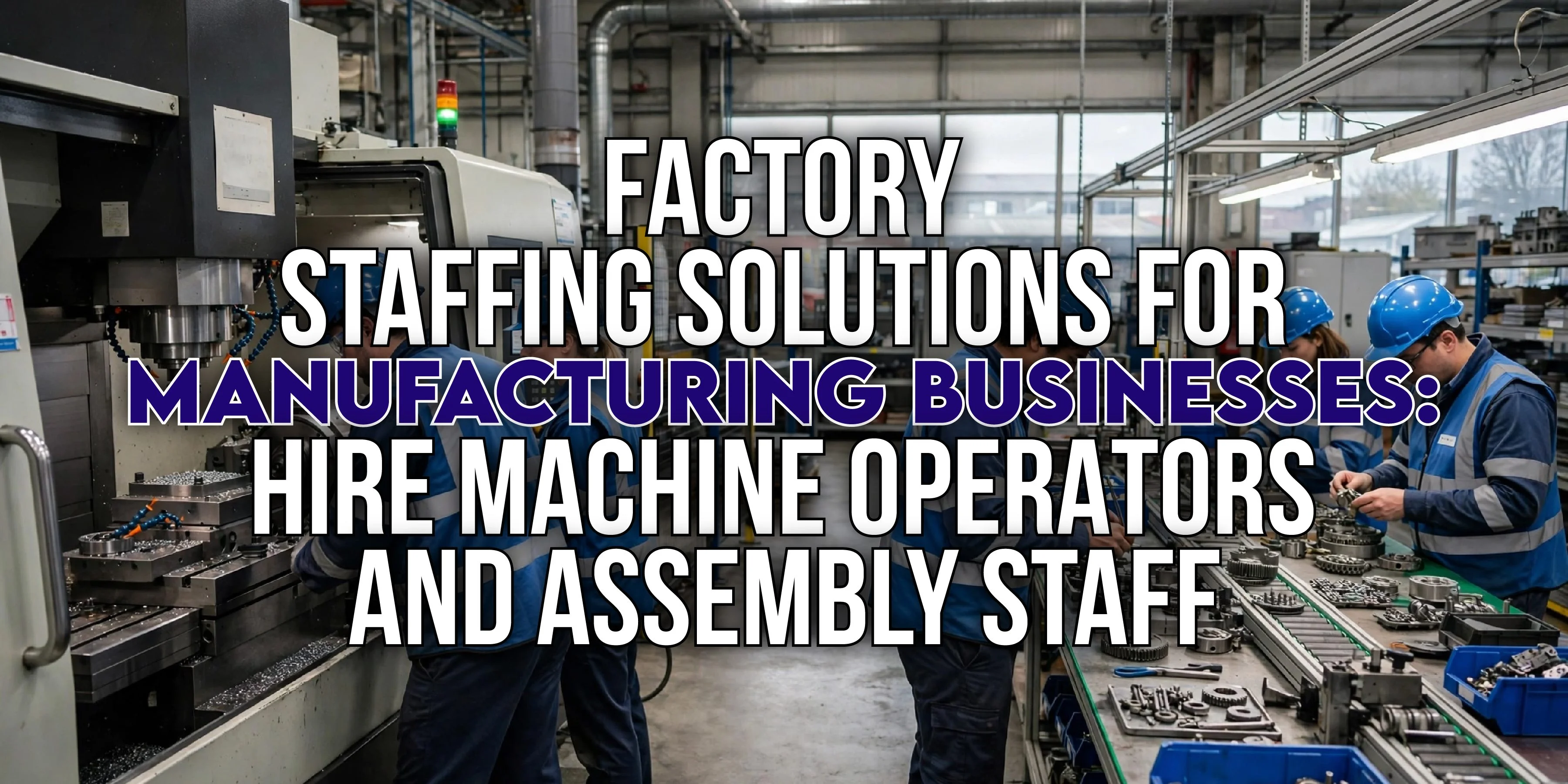
Factory staffing solutions for manufacturing businesses work best when recruitment starts with the production process. Machine operators and assembly staff contribute to output in different ways. A vacancy that simply asks for factory experience can miss the equipment knowledge or attention to detail your line needs.
1st Workforce supports manufacturing employers with factory staffing and operational recruitment. Share the work involved, required experience and shift pattern so the staffing discussion is grounded in your production requirements.
Make machine operator recruitment equipment-specific
Describe the machine type, materials, normal operating tasks and level of responsibility. Loading material, monitoring a cycle, changing settings and maintaining equipment are different activities. Identify which are included in the vacancy and which remain with your technical team.
Previous experience on one machine does not automatically demonstrate competence on another. Plan the site assessment, familiarisation and authorisation needed before independent operation. Make clear who handles faults and when an operator should stop and seek help.
Define the assembly tasks and quality checks
For assembly line staffing, describe the product, tools, work instructions and checks at each stage. Explain whether people work at a fixed station or move between tasks, and whether the work involves small components, repeated manual tasks or team assembly.
List the essential skills for each station.
Identify tasks that can be taught during induction.
Explain how completed work is checked and recorded.
Set out the route for reporting missing or faulty parts.
Confirm who can approve rework or process changes.
Build a skills-based shift plan
A production shift needs the right mix of capabilities, not just a total number of people. Identify essential positions that cannot be left uncovered, then plan supporting roles around them. Include breaks, handovers and the time supervisors spend introducing new starters.
If you need manufacturing agency workers across several shifts, share the requirement for each shift separately. A worker available for days may not be available for nights, and a team trained on one product may need additional guidance on another.
Introduce workers without overloading supervisors
Prepare instructions, reporting arrangements and the work area before workers arrive. Where several people start together, consider staged introductions so supervisors can check understanding and observe initial work.
Give workers a clear point of contact for questions. Early feedback about unclear instructions or recurring material shortages can help prevent repeated disruption later in the shift.
Check output, rework and continuity together
Review attendance, accepted output and rework by task. If output rises but defects also increase, investigate the process and training before increasing the target. A consistent team can retain knowledge of the product, but continuity should be discussed rather than assumed.
Can one operative cover machine and assembly work?
Only if the person is suitable for both tasks and your training, authorisation and supervision arrangements support the assignment. Define the combined role before recruitment.
Separate machine operation from assembly support
A manufacturing team may include people who operate equipment, assemble components, prepare materials and complete checks. These activities should not be combined into one vague vacancy. Describe the task assigned to each role and the experience required before the worker starts. A candidate with assembly experience may be suitable for a defined workstation without being competent or authorised to operate a particular machine.
Ask the production supervisor to identify the boundary between routine work and activities reserved for specialist personnel. Setting up equipment, changing a process and responding to a fault may require different competence from following a normal operating instruction. The recruitment brief should make those distinctions visible. This helps the agency assess suitable candidates and prevents the first shift from becoming a negotiation about duties that were never discussed. If the requirement changes, reassess the role and communicate the change before asking the worker to take on additional responsibilities.
Describe equipment experience precisely
State the relevant equipment category and the type of work involved without disclosing unnecessary proprietary information. Explain whether the requirement is for previous experience, a specific qualification or the ability to complete site training. Broad phrases such as “machine experience” can hide major differences between production environments. A worker's background should be assessed against the actual assignment rather than treated as a general authorisation to use any equipment.
The employer should arrange appropriate instruction, familiarisation and supervision for its equipment and procedures. HSE guidance on training and competence emphasises that training should suit the work. A certificate or previous job title does not remove the need to assess the current task. Identify who confirms that a person may work independently and how that decision is recorded. Until the appropriate checks and instruction are complete, keep duties within the worker's assessed capability and the site's authorised arrangements rather than using production pressure as a reason to skip preparation.
Explain assembly standards and work instructions
Assembly workers need a clear description of the product, sequence and checks relevant to their workstation. Provide controlled instructions and explain how the worker identifies the current version. Where the site uses samples or visual aids, make sure they match the production run. A person should not be expected to infer the required standard from a neighbouring workstation that may be working on a different variant.
Explain the route for a missing component, an unclear instruction or a suspected defect. The worker may be responsible for identifying and reporting the issue without being authorised to alter the design or substitute a part. Supervisors should encourage questions before an uncertainty is repeated across a batch. During recruitment, distinguish the level of experience needed for the assembly task from specialist inspection or engineering responsibilities. A well-defined operative role supports accurate matching and gives the site a clearer basis for training and performance feedback.
Match staffing to the production sequence
Review how work moves between stations and where a staffing gap affects the next stage. Adding workers to one area may not increase completed output if another station or process remains the constraint. Use the actual production plan to identify the roles and periods requiring support. Explain whether the work is continuous, organised into batches or affected by frequent changes in product type.
Include preparation, handovers and the site's changeover arrangements in the discussion. Do not assume that every additional worker can be productive at the same moment if there are limited workstations or trainers. A phased start may be useful where the operation allows it, but the choice should reflect the site's workload and available resources. Share changes in the production schedule with the agency when they affect the required skills or hours. The staffing plan should describe the work to be covered, not merely reproduce last month's headcount.
Prepare materials and workstations before arrival
Check that the proposed workers will have the tools, components, instructions and supervision needed for their assigned tasks. A person waiting for materials or an unavailable workstation cannot contribute as planned. Identify those readiness issues before requesting additional labour so that recruitment is not used to compensate for a problem elsewhere in the production system.
The first-shift plan should identify the reporting point, supervisor and induction sequence. Explain any practical clothing or equipment arrangements through the agreed process. Workers should know how to raise a concern and which tasks they must not begin without authorisation. The site remains responsible for its operational preparation and suitable supervision. An agency can help identify people, but it cannot make an unprepared workstation ready simply by confirming attendance. Reviewing these details in advance improves the chance that the assignment begins with useful work rather than avoidable waiting and conflicting instructions.
Give line leaders realistic supervision capacity
A line leader introducing several new workers may have less time for direct production activity. Account for that demand when deciding how many people can start together. The supervisor should be able to explain the task, observe understanding and answer questions without being expected to manage every other operational issue simultaneously. An induction plan is more credible when the named trainer is actually available.
Identify who takes over supervision during breaks or absence. Keep workers informed if the reporting line changes. Where a task requires additional competence or authorisation, the responsible person should confirm readiness before independent work begins. Do not treat time spent beside a machine as evidence that a worker has been trained to operate it. Clear supervision also helps the agency receive meaningful feedback about the placement, including whether a concern relates to experience, instruction or a change in the duties originally described.
Use an illustrative assembly bottleneck review
Imagine a fictional production line where completed assemblies wait for a specified inspection before packing. Recruiting more assembly operatives may increase the waiting work without improving dispatch readiness. The manager should identify whether the constraint is inspection capacity, unavailable information or another issue. The example does not imply a standard staffing solution; it demonstrates why the role brief should follow the actual process.
Review your own data on work waiting between stages and the reason it remains there. Estimate cover using the relevant tasks and productive time, allowing for training, breaks and supervision. If a specialist role is required, define it clearly instead of asking a general operative to absorb the responsibility. The resulting enquiry gives the agency a practical basis for assessing candidates. It also helps the employer explain how the new worker's contribution will be measured and which decisions remain with experienced production or quality personnel.
Review quality, output and escalation together
The performance review should reflect the assignment. Completed units matter, but so do conformity to instructions, accurate records and appropriate escalation. A worker should not feel pressured to continue through an unclear requirement simply to maintain an output figure. Explain which checks must be completed and when supervisor approval is needed. Use measures that support the process rather than reward speed in isolation.
When a problem occurs, establish the facts before changing the placement. A missing component, revised instruction or machine interruption may affect output without indicating that the worker is unsuitable. Give the agency specific feedback about the task and the support already provided. Where the match is good, discuss continuity subject to availability and the agreed arrangement. Where the role changes, update the brief so that later replacements are assessed against current requirements. This makes recruitment feedback useful rather than a sequence of general comments about pace.
Keep shift handovers linked to production records
The incoming team should know what work is complete, what is awaiting a check and what requires an authorised decision. Use the site's approved records rather than informal notes that can conflict with the production system. Identify the relevant supervisor for outstanding matters and record any temporary instruction that still applies. Avoid leaving workers to reconstruct the previous shift's progress from items on a workstation.
Changes in product, materials or working instructions should be highlighted in the handover. A worker returning after several days may otherwise assume the assignment is unchanged. Confirm how the agency is informed if the change affects candidate suitability or hours. A clear handover supports continuity across permanent and temporary teams and helps managers distinguish ordinary work in progress from an unresolved exception. It also provides a better basis for deciding whether the next staffing request needs the same role or a different skill mix.
Request manufacturing staff with a complete brief
Provide the site location, production activities, equipment requirements, shifts and assignment duration. Separate machine operator recruitment from assembly line staffing where the duties differ. Explain essential experience, training available and the person responsible for supervision. Include any known changes in the production plan that could affect the role, identifying provisional details rather than presenting them as confirmed.
Discuss candidate assessment, attendance communication and feedback with 1st Workforce. Confirm who approves changes and how the site will prepare for the first shift. Availability and terms depend on the particular requirement, so avoid planning around an assumed guarantee of immediate cover. A clear manufacturing staffing enquiry connects suitable people with defined work and a prepared workplace. That gives the employer a stronger basis for evaluating the arrangement than a general request for factory workers with no explanation of the processes they will support.
Discuss industrial staff supply
Read about staffing for manufacturers and explore our services. When you request manufacturing staff, include equipment details, headcount, shift times, required skills and the preferred start date.