
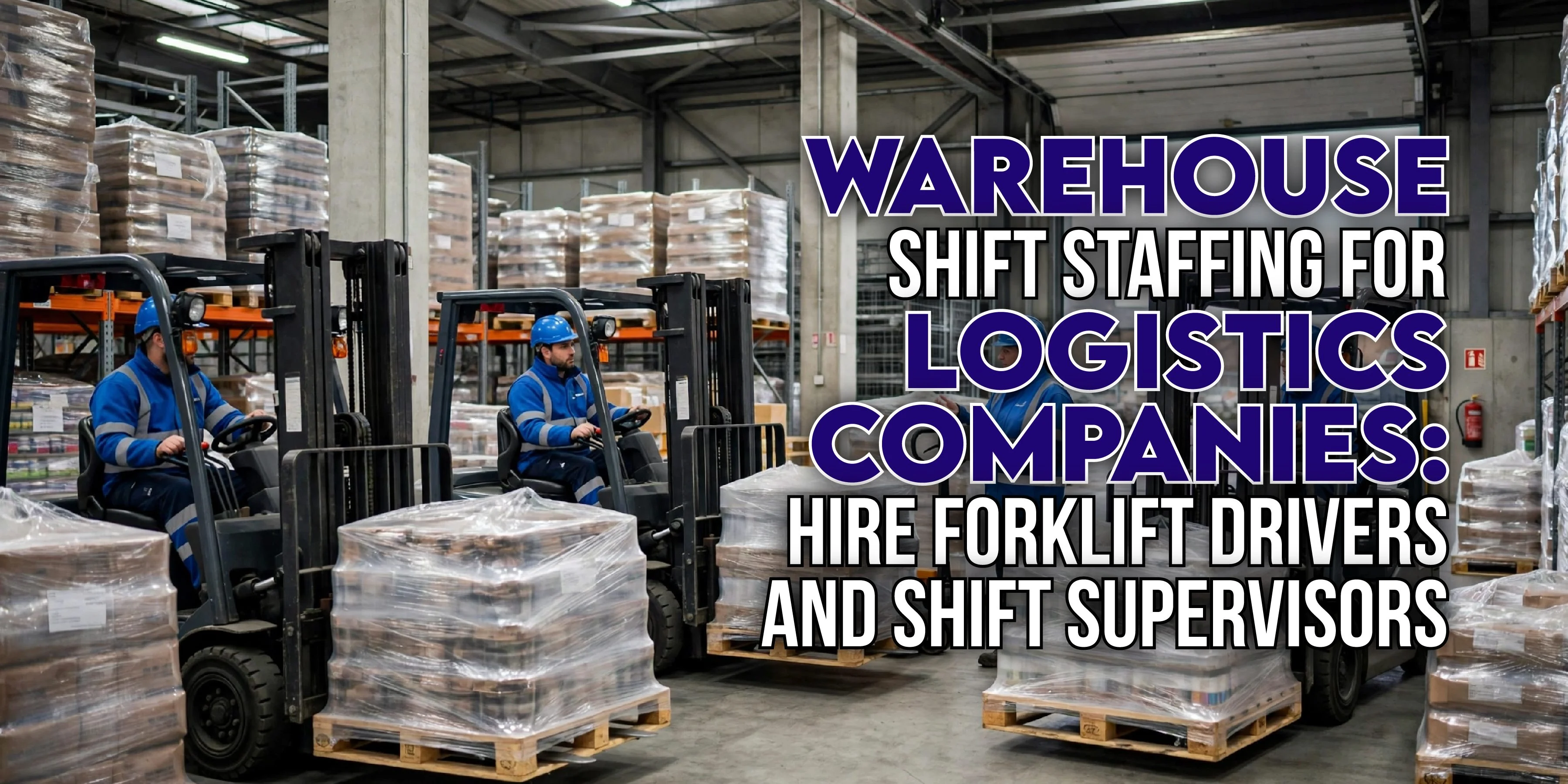
Warehouse shift staffing for logistics companies needs more than a total headcount. Forklift drivers support material movement, while shift supervisors coordinate people, priorities and handovers. A gap in either role can affect several warehouse activities at once.
1st Workforce supports warehouse and logistics staffing enquiries. For forklift and supervisory roles, share the exact duties and experience required so suitability can be discussed against your operation.
Specify the truck and working environment
A forklift driver agency brief should identify the truck type and the work involved. Counterbalance, reach and other equipment are not interchangeable assignments. Explain the loads, working areas and tasks the operator will be expected to perform.
For FLT operator recruitment, state what experience and evidence your site needs. Arrange the site's competence checks, familiarisation and authorisation before independent operation. A generic reference to forklift experience is not enough to define suitability for every truck or environment.
Separate operator duties from supervision
Warehouse supervisor staffing requires its own brief. Explain whether the supervisor allocates work, monitors progress, leads handovers, records attendance or escalates operational issues. Identify the size of the team and the decisions the role can make.
If a supervisor is also expected to operate equipment, make that requirement explicit. Consider whether those combined duties are practical during busy periods when both hands-on work and team oversight are needed.
Plan coverage at the busiest movement points
Review inbound deliveries and outbound collection windows.
Identify replenishment needs before picking peaks.
Allow for breaks without leaving critical roles uncovered.
Check supervision arrangements on nights and weekends.
Include time for shift handovers and first-day familiarisation.
Logistics shift workers should be assigned around these requirements rather than distributed evenly without reference to workload. Explain any planned change in volume or operating hours when requesting cover.
Prepare a structured shift handover
The incoming supervisor needs to know what remains outstanding, which areas are under pressure and which issues have already been escalated. Use the site's agreed process to record equipment concerns and operational restrictions.
Workers should know their reporting line and the boundaries of their assignment. Keep safety-critical decisions and equipment use within the site's established training, supervision and authorisation arrangements.
Review team performance in context
Monitor attendance, completed movements, backlog and errors alongside feedback from the shift supervisor. If operators wait for instructions or available locations, the problem may be coordination rather than the number of drivers.
Use early reviews to refine the brief. A role described as general shift supervision may need stronger systems experience or a different balance between operational and people-management duties.
Can temporary cover include night shifts?
Night-shift cover can be discussed, subject to suitable availability and your site requirements. Provide exact hours, location and the support available during those shifts.
Specify the truck and the assigned work
Forklift driver recruitment should begin with the equipment and tasks involved. Identify the type of truck, the working environment and the activities the operator will be expected to perform. Experience with one category of equipment does not establish readiness for every truck or site. Give the agency enough information to assess relevant training and experience rather than describing the vacancy simply as an FLT role.
Explain whether the work supports receiving, replenishment, dispatch or another part of the operation. Each may involve different familiarity with the site's procedures and records. State which responsibilities are excluded, particularly where a general warehouse role is combined with equipment use. The employer should assess suitability and arrange the relevant site instruction before independent operation. A clear recruitment brief supports that process and reduces the chance of a candidate arriving with experience that appears relevant by title but does not match the actual assignment.
Distinguish training evidence from site authorisation
Training records are part of assessing a candidate, but they do not replace the employer's responsibility to consider the actual equipment and work. HSE guidance on lift-truck training describes basic training, specific job training and familiarisation. The site should confirm what is needed for the person and assignment, including appropriate supervision and authorisation under its arrangements.
Discuss these requirements with the agency before the start date. Identify who reviews the evidence, who provides site-specific instruction and who confirms that the operator can work independently. Do not assume that an agency's confirmation of experience means all local requirements have been completed. Equally, the agency needs accurate information about the role to assess candidates sensibly. A written understanding of responsibilities helps both parties coordinate the placement and avoids a first shift in which the worker is expected to begin while essential checks or familiarisation remain unresolved.
Define the supervisor role separately
A warehouse shift supervisor may coordinate people, priorities, handovers and exceptions across several tasks. That is different from being an experienced forklift operator. Describe the leadership responsibilities, reporting line and decision-making authority in the recruitment brief. Explain whether the supervisor also performs operational duties and how those duties affect their ability to manage the shift.
Identify the systems, reporting and communication skills required. A supervisor may need to allocate work, review progress and escalate a staffing or equipment issue to management. State which decisions remain with the site manager and what support is available outside normal office hours. Avoid expecting a temporary supervisor to infer the organisation's authority structure from their job title. A clear brief helps the agency assess relevant supervisory experience and gives the successful candidate a realistic account of the work before they accept responsibility for a live shift.
Match operator cover to the movement plan
Review when the operation needs equipment-supported tasks and how those tasks connect with the rest of the warehouse. Receiving peaks, replenishment periods and dispatch preparation may create different demands. The number of operators should be considered alongside available equipment, working areas and the site's operational arrangements. Additional drivers cannot contribute as planned if suitable equipment or supporting work is unavailable.
Include handovers, breaks and familiarisation in the plan. Where continuous cover is required, explain how it will be maintained. If the shift pattern changes, confirm that the proposed personnel and supervision remain suitable. A staffing request should identify the actual hours and duties rather than assume that a person recruited for one shift can move to another without discussion. Connect recruitment to the site's own workload information so that the agency can assess a defined requirement instead of a general impression that the warehouse needs more forklift support.
Prepare the workplace and the first-shift briefing
The site should arrange the relevant equipment, instructions and supervision before the worker begins assigned duties. Explain the reporting point, working area and how concerns are raised. The induction should address the local arrangements applicable to the role without relying on the worker's familiarity with another warehouse. The responsible employer should determine the required preparation and confirm completion through its process.
Do not ask a new operator to improvise around an unavailable resource or an unclear instruction. If the planned task cannot be performed under the site's arrangements, refer it to the supervisor and agree the next step. The agency should be informed where the issue affects the assignment's duties or hours. A practical first-shift plan gives workers a clear basis for their work and allows supervisors to assess understanding, rather than treating attendance at the gate as proof that the person is immediately ready for independent equipment operation.
Give supervisors an accurate picture of the shift
The incoming supervisor needs to know the planned workload, available people and unresolved matters from the previous team. Identify staffing gaps, equipment issues and work awaiting an authorised decision through the site's approved records. A supervisor who receives only a target output figure lacks the context needed to allocate tasks realistically. Provide the operational information and contacts relevant to the assignment.
Explain how priorities are changed and who approves a departure from the plan. Workers should not receive conflicting instructions from several managers while the supervisor is expected to remain accountable for the result. If a permanent manager retains authority over particular decisions, make that boundary explicit. A clear reporting structure supports temporary supervisors and helps the agency understand the level of experience required. It also makes performance feedback more useful because the employer can compare the work with the authority and resources actually provided.
Use a fictional cover gap to test the brief
Imagine a fictional shift where an operator is absent during a planned receiving period. The supervisor should review the available qualified and authorised personnel, equipment and workload before reallocating tasks. A general warehouse operative should not be treated as a substitute solely because they are available. The site follows its own procedures for the operational decision and contacts the agency through the agreed process if replacement support is needed.
Use this example to test who reports the absence, who approves changes and what information the agency needs. Confirm whether the original role brief accurately describes the equipment and duties. The scenario is not a claim about a real assignment or a universal staffing formula. It demonstrates why a useful contingency depends on clear competence requirements and communication. A generic request for anyone who can cover the shift can create uncertainty precisely when the operation needs accurate information and a controlled response.
Review output with the conditions of the work
Productivity measures should reflect the role and the resources available. An operator may be delayed by unavailable stock, a changed priority or an unresolved instruction. A supervisor may spend time managing an exception that is necessary to keep the operation organised. Assess those circumstances alongside completed work rather than using a single speed measure without context.
Review whether the agreed procedures, reporting and handovers were followed. Give the agency specific feedback about the task, the issue and the support provided. Distinguish a suitability concern from a gap in site preparation or a material change in duties. Where the placement is successful, discuss continuity for the remaining period, subject to availability and terms. Where requirements change, update the brief before requesting another worker. This supports better matching and avoids repeating the same mismatch because the vacancy still describes an earlier version of the operation.
Plan handovers between operators and supervisors
The shift handover should identify unfinished work and issues requiring attention, using the site's approved process. Relevant equipment information should be passed through the appropriate local arrangements, with technical concerns handled by authorised personnel. Avoid informal assumptions that a problem reported by one worker has automatically been resolved before the next person begins. The responsible supervisor should know what remains open.
Record changes in priorities and the contact handling each exception. A clear handover prevents the incoming team from repeating work or acting on outdated instructions. It also supports continuity when temporary and permanent staff work together. Supervisors should check that workers understand their assigned duties and the route for questions. The agency can then receive useful feedback about the assignment rather than a general report that the shift was difficult, with no distinction between workload, equipment, communication and candidate suitability.
Request forklift and supervisory staff as defined roles
Keep the equipment and supervisory requirements in separate parts of the enquiry even when both vacancies are needed for the same shift. This lets the provider discuss each role on its own merits and makes any later substitution easier to assess against the original requirements. It also prevents a strong candidate for one position from being assumed suitable for the other without the relevant checks.
Provide the warehouse location, truck requirements, tasks, shifts and assignment duration. For supervisors, add the team responsibilities, reporting line and expected systems knowledge. State the training evidence and site preparation required for each role. Explain who assesses suitability and authorises independent work so that the agency and employer have a shared understanding before mobilisation.
Ask 1st Workforce about candidate assessment, attendance communication and the process for changes or replacement requests. Confirm commercial terms and the person authorised to approve them. Availability depends on the role and timing, so a clear plan should not rely on an unsupported promise of instant cover. Warehouse shift staffing works best when recruitment, competence assessment and local supervision are connected. The resulting brief gives both parties a practical basis for evaluating the placement while keeping operational decisions and site authorisation with the responsible employer.
Discuss forklift and supervisor recruitment
Explore our logistics staffing services and day and night shift guidance. Request staffing support with truck details, supervisory responsibilities and headcount by shift.