
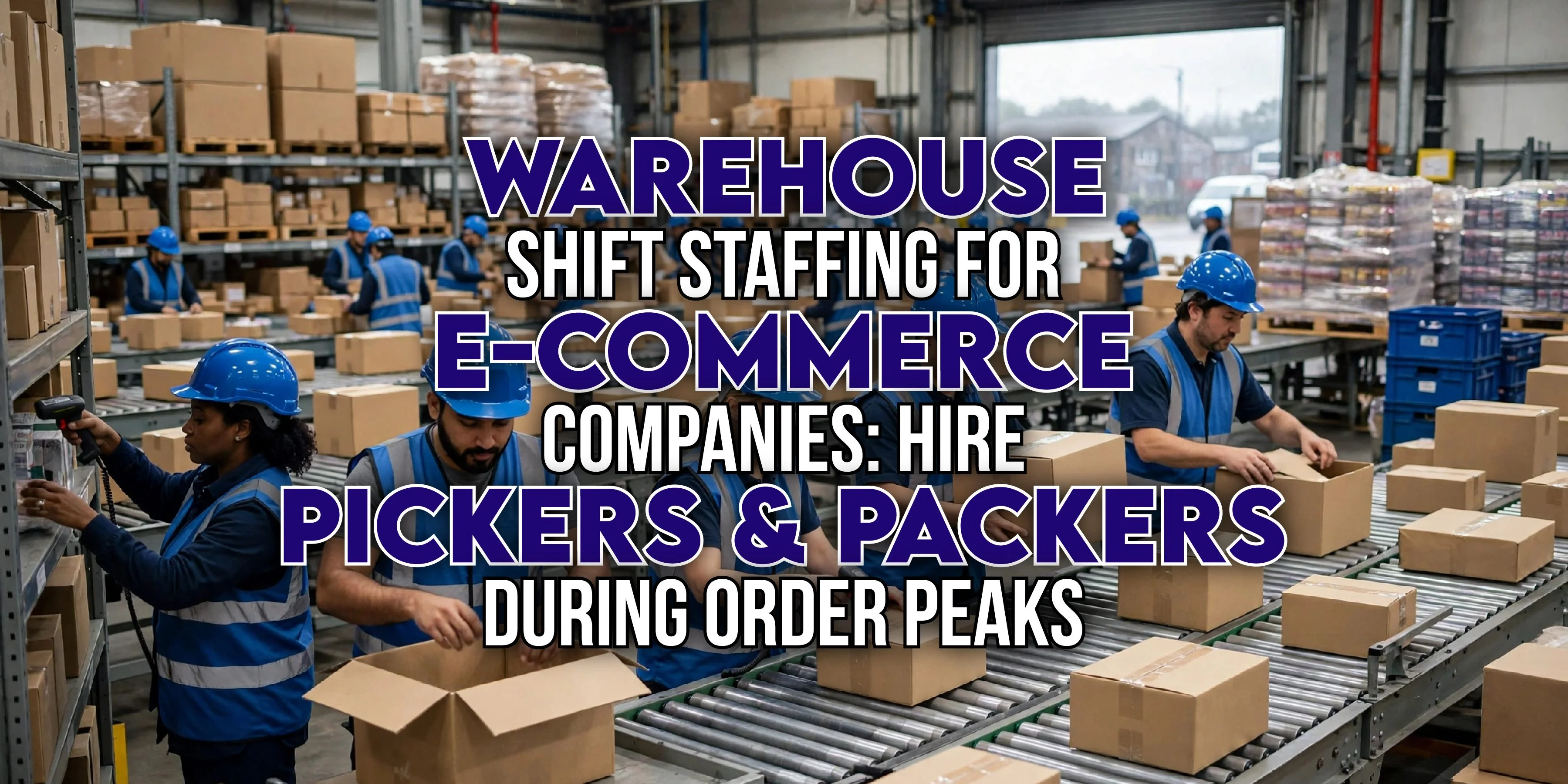
Warehouse shift staffing helps e-commerce companies plan labour around changing order volumes. Promotions, product launches and seasonal demand can put extra pressure on picking and packing even when the rest of the business is operating normally. A useful staffing plan focuses on the work behind the order count.
1st Workforce supports employers seeking temporary warehouse staff and fulfilment staff supply. Tell us where your process needs support so the role brief reflects the actual work rather than a broad request for extra hands.
Forecast workload by task, not orders alone
Two hundred single-item orders create a different workload from two hundred multi-item orders needing special packaging. Review items per order, pick locations, packing steps and carrier cut-off times when estimating staffing needs.
Separate picking, replenishment, packing and dispatch preparation. If pickers wait for stock or packers wait for packaging, adding people to the busiest-looking area may not solve the underlying delay.
Build a picker and packer brief
A picker packer agency needs practical information about your layout, products and systems. State whether operatives will use handheld scanners, paper pick lists or another workflow, and whether previous experience is essential or training is available.
List picking methods and typical handling tasks.
Explain packing standards and fragile-item procedures.
Identify labelling, order-checking and dispatch requirements.
Confirm shift times, including weekend work.
Specify the supervisor and induction process.
Where equipment operation is part of a role, identify it separately. A general picker or packer assignment does not automatically include operating powered handling equipment.
Introduce seasonal warehouse operatives before the peak
The first shift involves learning locations, stock codes, exception handling and quality expectations. Where possible, allow an induction period before the busiest promotional day. A smaller group starting earlier may be easier to integrate than a large group arriving as orders surge.
Use experienced team members to explain the process, but account for the time this takes. Supervisors should know which workers are new and which tasks they can perform independently.
Balance shifts against carrier collections
Work backwards from the collection deadline. Picking must finish early enough for checks, packing and dispatch preparation. A later packing shift helps only if there is enough picked work and supervision to keep it productive.
Use a brief handover to record outstanding orders, stock discrepancies and priority shipments. Avoid leaving the next shift to reconstruct the backlog from separate messages.
Review accuracy alongside productivity
Monitor pick accuracy, packing rework and orders ready before collection. Faster picking is not a useful improvement if packers spend longer correcting errors. Update the e-commerce warehouse staffing brief when the product mix or order profile changes.
Can temporary workers support a short online promotion?
Temporary support can be considered for a defined promotional period. Share the dates, expected workload and required skills early so availability and onboarding can be discussed.
Translate the sales forecast into fulfilment work
An online sales forecast does not directly describe the labour required in the warehouse. Review the number of items per order, the location of stock and the packing steps involved. A promotion on one product can create a concentrated picking pattern, while a broad sale may send workers across many locations. Explain that difference when discussing e-commerce warehouse staffing so that the brief reflects the expected work.
Use your own operational records to estimate the tasks that must be completed before carrier collection. Separate replenishment, picking, checking, packing and dispatch preparation. Identify the stage most likely to constrain the process and the support it needs. A staffing request based only on order volume may overlook a shortage of packing stations or delayed stock replenishment. The purpose of the forecast is to connect people, equipment and workflow, giving the agency a defined requirement rather than an instruction to supply extra workers wherever the floor appears busy.
Describe the picking method and product range
Tell the agency whether workers follow individual orders, grouped picks or another established method. Explain the system used and whether previous experience with it is essential. General warehouse experience can be useful without guaranteeing familiarity with your layout, stock codes or exception process. Identify the training available and the person responsible for confirming that a worker understands the task.
Describe the products and handling requirements accurately. A role involving small boxed items differs from one involving awkward or fragile goods. Explain the practical conditions without making assumptions about an individual's capabilities. The site should assess the work and provide the relevant instruction and equipment. If powered handling equipment or another specialist activity is included, specify it separately. A picker packer agency can assess a clearer brief more effectively than a vacancy that uses a familiar title but leaves the most important tasks unstated until the first shift.
Prepare locations, scanners and system access
New starters need the resources required to carry out the agreed role. Confirm that scanners, workstations and authorised system access will be available at the start of the shift. Check that location labels and instructions are usable. A worker cannot meet a reasonable productivity expectation while waiting for equipment or searching for stock in a layout that has changed without updated information.
Explain how workers report a system error, unavailable stock or an unreadable label. They should not need to invent a substitute location or use another person's account to continue. Provide a clear escalation route and distinguish the tasks the worker may complete independently from changes requiring supervisor approval. During a promotional peak, these small preparation details can affect the whole shift. Review them before increasing headcount so that additional workers join a functioning process rather than a queue for the same missing resource.
Make packing instructions specific to the order
Packing work can involve different materials, presentation standards and checks depending on the product and customer requirement. Provide current instructions and a clear method for identifying the correct packaging. Where the site uses examples or visual aids, make sure workers know which version applies. A familiar-looking item should not be packed from memory if the order requires a different format.
Explain what happens when packaging is unavailable or an item appears damaged. The worker needs a route for reporting the issue without silently substituting materials or setting the order aside where it will be forgotten. Keep the responsibilities for product decisions with the authorised team. A packing operative may identify and report a concern without being authorised to approve the shipment. Clear boundaries support accuracy and help supervisors distinguish a genuine production constraint from an individual performance issue when reviewing the shift.
Build induction into the peak plan
An induction has a real effect on available output and should be included in the staffing plan. Workers need to learn the reporting point, working area, task instructions and escalation contacts. Supervisors or experienced colleagues who provide that support also need time to do it. Do not assume that a large group of new starters will contribute at the same pace as an established team from the first hour.
Where possible, discuss a phased introduction before the main promotion. A smaller initial group may help the site test instructions and identify missing resources. The right approach depends on the workload and available people, so it is a planning option rather than a guaranteed formula. Confirm how workers will be assessed for independent duties and how the agency receives feedback. If the operation changes between induction and the peak, brief the team again on the relevant differences instead of relying on an earlier walkthrough.
Sequence shifts around the whole order journey
A later packing shift is useful only if sufficient picked work is ready and the necessary support remains available. Review the relationship between picking, packing and carrier deadlines rather than treating each team separately. Include the time required for checks, labels and dispatch preparation. If a collection time changes, assess which stages of the process are affected and update the staffing requirement accordingly.
The shift handover should identify outstanding orders, stock discrepancies and work awaiting an authorised decision. Give the next team a clear priority order and a record of what has already been done. Avoid several informal lists that cause the same order to be picked or investigated twice. Supervisors should know where the backlog sits and whether it reflects volume, stock availability or another issue. That information supports a more useful staffing discussion than simply describing the warehouse as behind schedule at the end of every day.
Use a fictional promotion to test the plan
Imagine a fictional online retailer expecting a short promotion with many multi-item orders and a fixed evening collection. The plan needs enough time for items to be located, consolidated, checked and packed. Adding packers at the end of the day will not solve a replenishment delay that prevents picking from finishing. The exercise should identify where work may wait and who is responsible for resolving that constraint.
Use actual process data from your own operation when estimating cover; the example does not establish a universal staffing ratio. Include realistic allowances for induction, breaks and exception handling. Ask whether the necessary stations and equipment can support the proposed headcount. A practical review may lead to different start times, a revised task allocation or an earlier replenishment period. The recruitment brief should reflect the resulting decision, giving 1st Workforce a clear account of the people and hours required rather than a general request for emergency support.
Measure accuracy and completion together
Review whether orders are correct and ready at the required stage, not only how many items a worker picks in an hour. Faster picking can create extra work if packers must correct errors or locate missing items. Choose measures appropriate to each task and explain them to the team. A worker should understand when to stop and ask for help rather than believe that every query will be treated as poor performance.
Use early feedback to improve the brief. Repeated errors may arise from confusing stock descriptions, unclear packing instructions or an unsuitable candidate match. Identify the cause before deciding on the response. Share specific information with the agency, including the training already provided and the task involved. Where the arrangement works well, discuss continuity for the remaining period, subject to availability. Where the product mix changes, reassess the duties so that later assignments are based on current requirements rather than the assumptions used for the first promotional day.
Keep temporary-team communication consistent
Workers should have one clear day-to-day reporting line and know how to raise an attendance or assignment concern. The agency and site should agree who receives absence notifications, who requests changes and who approves additional hours. A change communicated only to a worker may leave the agency and supervisor working from different schedules. Keep material updates in the agreed channel.
Explain the process for extending or ending the assignment as order volumes change. Give as much notice as practical and confirm the commercial arrangements with the provider. Do not assume that every temporary worker can move to a different shift or remain for an unspecified period. A predictable communication process helps the agency assess availability and keeps the site informed. It also allows supervisors to plan induction and continuity rather than discovering at the start of a shift that the people expected are working to a different instruction.
Prepare an enquiry that supports a useful response
Provide the warehouse postcode, dates, shifts, headcount and the tasks needing support. Add the picking method, products, systems and any essential experience. Explain the carrier deadlines and the point in the workflow where additional people are expected to help. Confirm the supervisor, induction arrangements and available equipment so that the agency understands how the assignment will begin.
Ask how suitability, attendance communication and feedback will be handled. Discuss what information is needed before workers are confirmed and how changes in order volume will be managed. A clear brief helps 1st Workforce discuss fulfilment staff supply against the actual location and timing. It does not remove the need for site preparation or guarantee unlimited availability. The strongest staffing enquiry connects recruitment with a realistic operational plan, making it easier for both the provider and the employer to understand what a successful assignment should look like.
Arrange fulfilment staffing support
Explore our warehouse staffing services or read the day and night warehouse shift guide. To discuss picking and packing cover, send your requirements with the postcode, headcount by shift and preferred start date.