
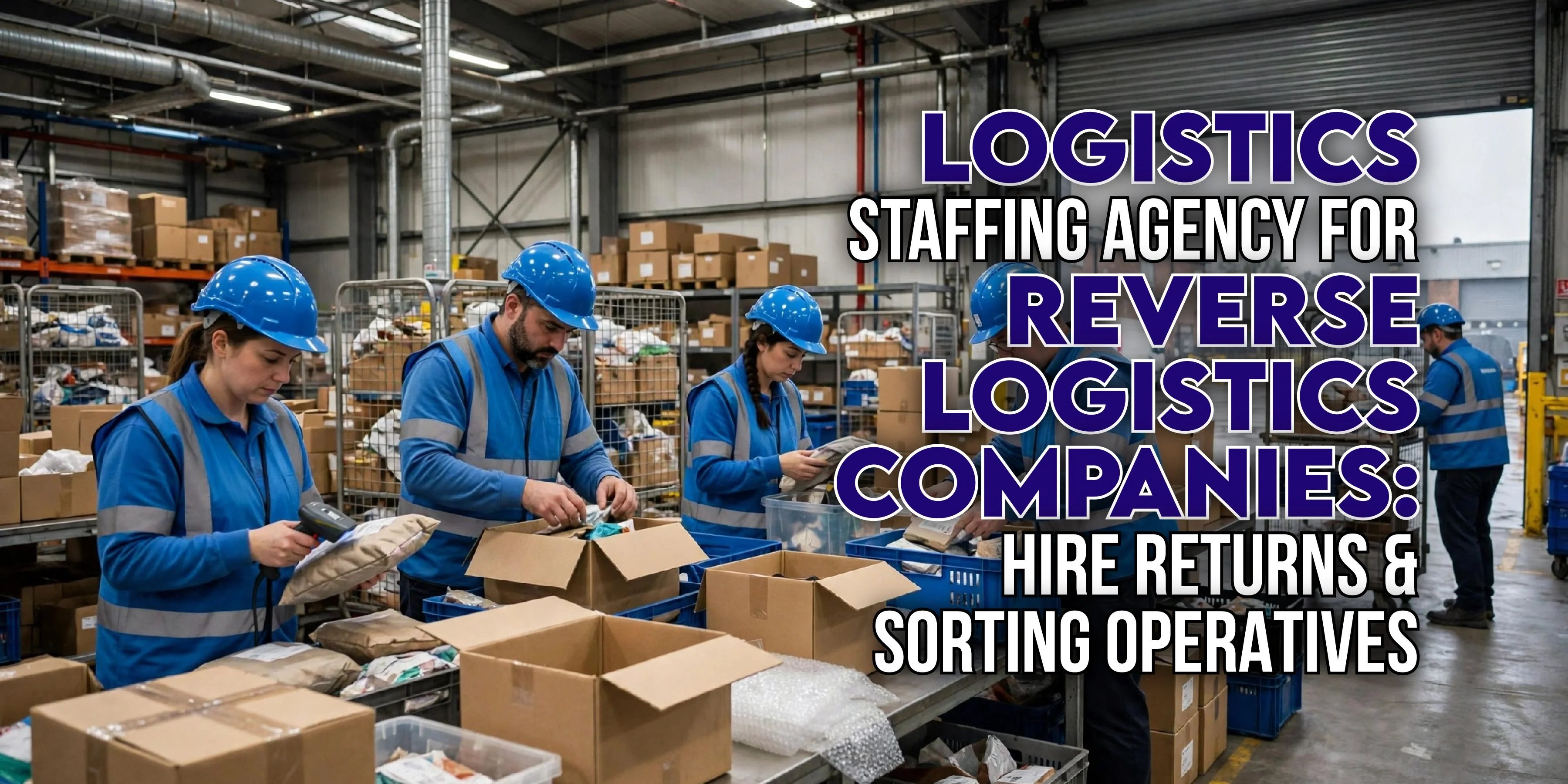
A logistics staffing agency can help reverse logistics companies organise staffing around the work created by returned goods. Returns arrive in different conditions, often with incomplete packaging or information. Processing them requires more than moving items back onto a shelf.
1st Workforce supports employers with warehouse and logistics staffing. A clear returns processing recruitment brief helps identify the checking, recording and sorting tasks suitable workers will need to perform.
Map the returns journey before hiring
Start with the stages a returned item follows: receipt, identification, condition checks, recording and routing. Different products may need different handling or escalation. Explain where the temporary team fits into that process.
Separate physical processing from decisions about refunds, resale, disposal or technical assessment. Returns operatives should work within defined instructions rather than making decisions outside the authority assigned to them.
Give sorting staff clear categories
A sorting staff agency brief should describe the categories workers will use and how uncertain items are handled. These might include items ready for further checks, products with missing information and goods awaiting a supervisor decision.
Explain how to identify the product and return reference.
Provide the condition-check instructions used on site.
Define the required system entry or scanning steps.
Identify where each category is placed.
Set a clear route for unknown, damaged or disputed items.
Avoid relying on labels that mean different things to different teams. Consistent instructions help new workers make repeatable observations and keep exceptions visible.
Plan staffing around the backlog profile
A backlog of unopened returns needs different support from a backlog of identified items awaiting a technical decision. Count the work by stage instead of using one overall total. This helps you decide where additional reverse logistics workers can contribute.
For seasonal increases, consider when returns are expected to arrive and how long processing usually takes at your site. Include the time needed to introduce workers to product categories and system workflows.
Protect traceability during busy shifts
Keep each item linked to its return record as it moves between stations. Explain what to do when a label is unreadable or a reference does not match. New workers should have an accessible supervisor contact for these exceptions.
At handover, record outstanding work by stage and identify items awaiting decisions. A clear queue prevents a later shift from repeating checks or assuming an unprocessed item is ready to move on.
Measure accurate processing, not speed alone
Review recorded returns, sorting accuracy, rework and unresolved exceptions. A high processing count can conceal errors that create additional investigation later. Use feedback to improve instructions and the balance of staff across stages.
Can temporary returns staff support a seasonal backlog?
Temporary support can be considered for a defined backlog or demand increase. Share the product mix, process stages, expected duration and training arrangements so availability can be discussed.
Map the return from arrival to its next destination
Reverse logistics involves more than receiving a parcel back into the building. The item may need to be identified, checked, recorded, sorted and passed to another team for a decision. Describe that sequence before requesting staff. Identify where work accumulates and which part of the process the temporary operatives will support. A general warehouse brief may not capture the attention to condition and records that the returns role needs.
Explain the possible next stages without giving workers authority they do not have. An operative may sort an item into an approved category while a specialist or manager decides whether it can be restocked, repaired or handled through another route. Make those boundaries explicit. The agency can then assess candidates for the actual duties rather than assume that experience in picking or dispatch automatically matches a returns-processing assignment. A clear process also helps supervisors explain what successful work looks like during the first shift.
Distinguish physical handling from customer decisions
Receiving or checking a returned item does not necessarily authorise the operative to approve a refund or communicate a commercial outcome to the customer. State which decisions belong to the customer-service, quality or management team. Temporary staff should know how their observations contribute to that process without being expected to resolve a policy question independently.
Use the employer's approved categories and records. If the condition or reference is unclear, the worker should raise the query rather than select whichever outcome allows the item to move fastest. Explain who reviews exceptions and how the result is communicated back to the processing team. This distinction supports consistency and prevents a staffing role from expanding informally into a responsibility that requires different experience or authorisation. It also makes recruitment feedback more precise: an employer can assess accurate sorting and reporting without blaming the operative for decisions outside their control.
Describe the product mix and practical workload
Returns can vary widely in size, packaging and the work needed to identify them. A batch of similar boxed goods creates a different workload from mixed items arriving without complete information. Tell the agency about the products and tasks relevant to the assignment, keeping sensitive customer details out of the recruitment brief. Identify any specialist handling or equipment requirements separately.
Use your own records to understand the expected mix rather than count parcels alone. Some items may need straightforward recording, while others require referral and additional checks by authorised staff. Explain that variation when planning shifts and output expectations. The site should provide the relevant instructions and resources for the work. A realistic brief helps candidates understand the environment and gives the provider a better basis for discussing suitable returns processing recruitment than a request for general operatives with no indication of the products or process involved.
Make sorting categories clear and controlled
Workers need a consistent way to recognise the approved categories and know where each item goes next. Provide current instructions, location labels and any authorised visual aids. Explain how changes are communicated and who can clarify a borderline case. Do not rely on informal labels that mean different things to different shifts. A sorting system is useful only if the team applies it consistently.
Avoid asking operatives to infer a product's next destination from appearance alone where the procedure requires another check. The role should identify what they observe, what they record and when they refer. If an item cannot be processed, place it into the employer's approved exception workflow rather than allowing a separate unofficial pile to develop. Clear categories support both accuracy and handovers, while helping supervisors identify whether a backlog comes from handling capacity or from decisions that remain with another part of the business.
Prepare records and authorised system access
Explain the system used for returns and the fields the operative is expected to complete. Distinguish basic entry from permissions to change stock, approve a refund or close a case. Provide authorised access through the site's process and instruction on the relevant functions. A worker's familiarity with another application does not establish that they understand this employer's categories or approval rules.
Records should be accurate and limited to the information required for the task. Customer details may appear on packaging or documents, so brief staff on the organisation's handling and confidentiality arrangements. Avoid personal messaging accounts or unofficial copies for resolving routine queries. Identify who handles a system problem and the approved interim process if one is needed. These preparation steps help temporary returns staff contribute without creating inconsistent records that the next team must later reconcile or correct before the item can move through the process.
Plan capacity for both routine and exception work
A returns backlog can grow because incoming volume exceeds handling capacity, but it can also grow because exceptions wait for review. Separate those causes before requesting more operatives. If the bottleneck is an authorised decision, adding sorters may increase the waiting queue without completing more returns. The staffing plan should identify the work that additional people can actually perform.
Review the arrival pattern, product mix and support available during each shift. Include induction, breaks and handover time in the plan. A later shift may be useful only if the people who resolve queries or receive completed work are also available. Explain those dependencies to the agency and confirm the role priorities when several tasks compete. A practical reverse logistics staffing requirement describes both the expected work and the process that allows it to be completed, rather than treating every unprocessed item as evidence that the same kind of worker is missing.
Use an illustrative unidentified-return scenario
Imagine a fictional return arriving without the expected reference. The operative follows the employer's process for recording the information available and raising an exception. They do not attach the item to a guessed customer record or make a refund decision simply to clear the workstation. The supervisor identifies the authorised team that can investigate and confirms where the item remains under the site's arrangements.
Use the scenario to test the briefing. Ask what the worker records, who receives the query and how the outcome returns to the processing team. Confirm that all shifts use the same route. This is an illustrative example, not a report of a real 1st Workforce placement. Its value is in exposing uncertainty before the peak period begins. A clear exception process helps operatives work consistently and gives the agency a better understanding of the accuracy, communication and system skills the assignment requires.
Give supervisors time to establish the process
New workers need an introduction to the product categories, recording steps and escalation routes. Experienced staff who provide that instruction need time to do it. Account for the effect on direct output during the first shifts and avoid treating a large group of new starters as immediately equivalent to an established team. Consider a phased introduction where the workload and availability allow it.
Identify who confirms that a worker can perform a task independently and who supports them when an unusual item appears. The supervisor should be accessible during the actual shift, including periods outside the main office hours. If the product mix or process changes, brief the team on the relevant differences. Clear supervision helps distinguish a training question from a candidate-suitability issue and allows the agency to receive specific feedback instead of a general statement that the returns operation is still behind schedule.
Measure completed, accurate processing
The number of items handled is useful only alongside the accuracy of their records and next destinations. A worker who sorts quickly but creates repeated corrections may not improve the operation's overall performance. Choose measures that reflect the assigned role and explain them to the team. Include appropriate escalation as part of good work rather than treating every query as a failure to process an item.
Review early results with the agency using factual examples. Determine whether a problem arises from unclear instructions, missing information, system limitations or a mismatch in experience. Update the role brief where necessary. If the assignment works well, discuss continuity subject to availability and the agreed arrangement. The handover should identify unfinished processing and open exceptions through the site's approved records, giving the next shift a clear account of what remains to be done and which matters are awaiting another team's decision.
Request returns and sorting support with a clear scope
Provide the site postcode, dates, shifts, products and expected tasks. Explain the sorting categories, systems and level of experience required. Identify the decisions retained by authorised staff and the supervision available to temporary operatives. Include any specialist handling or equipment requirements so that the agency does not have to infer them from a broad warehouse job title.
Ask 1st Workforce how candidate suitability, attendance communication and feedback will be managed. Confirm the process for changing hours or extending the assignment if returns volumes remain high. Availability depends on the location, role and timing, so use a realistic mobilisation plan. A focused reverse logistics enquiry helps the provider discuss suitable workers while keeping the employer's own processing standards and authorisation boundaries clear. That is a stronger basis for improving the flow of returns than simply adding headcount without identifying where items are waiting and why.
Arrange returns and sorting support
Explore our warehouse and logistics staffing services. When you request a quote, include the postcode, headcount, shift times, systems and tasks that need cover. This gives 1st Workforce a practical basis for discussing suitable support.