
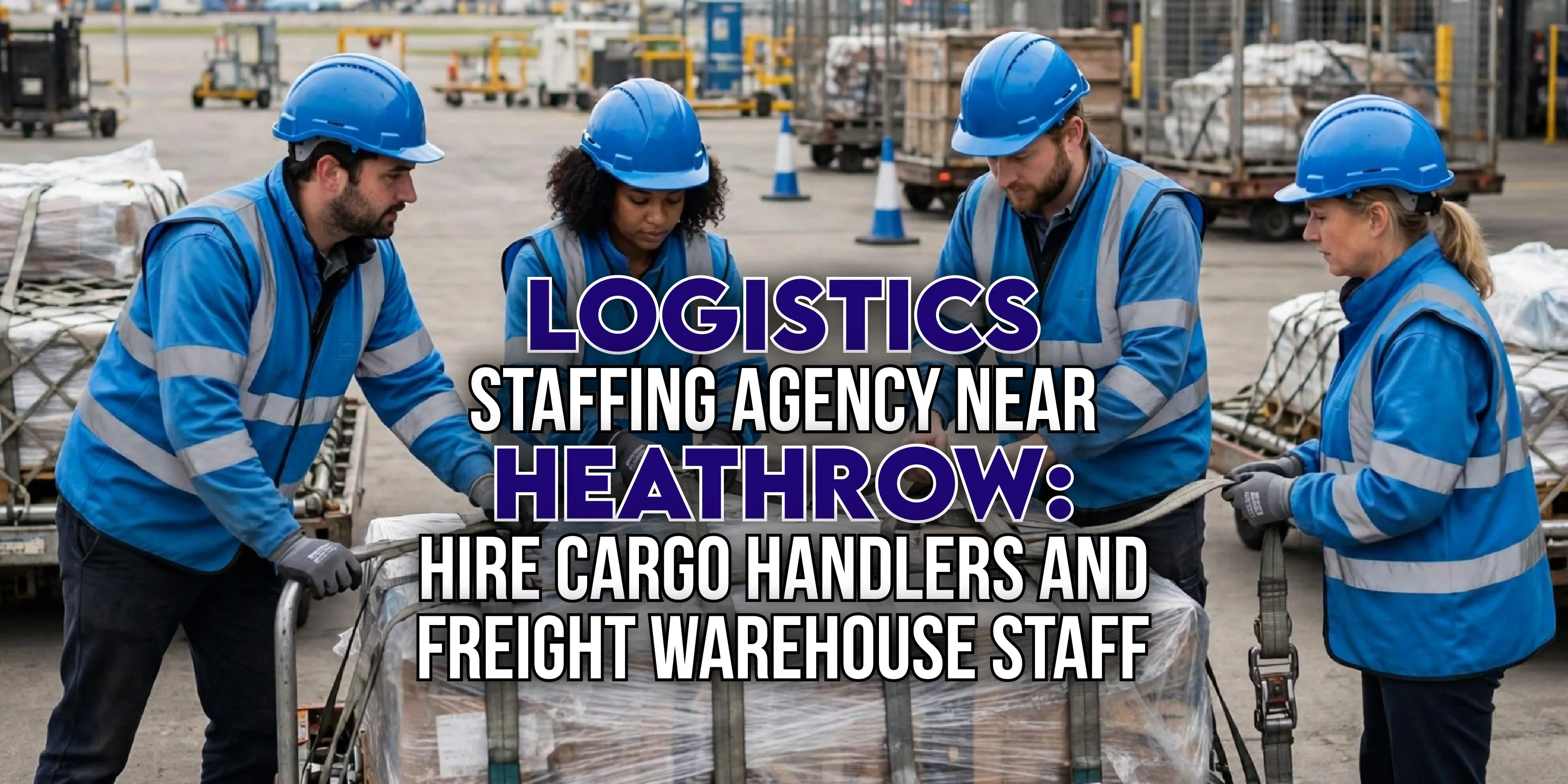
A logistics staffing agency near Heathrow should understand the difference between a general warehouse vacancy and a role connected to freight handling. Employers need to explain where the work takes place, what cargo is handled and which site requirements apply. That detail is more useful than simply asking for airport staff.
1st Workforce supports employers with logistics and warehouse recruitment. For Heathrow logistics recruitment enquiries, share your exact operating location and role requirements so appropriate options can be discussed.
Clarify whether the role is landside or airside
A freight warehouse near an airport is not necessarily an airside workplace. Confirm whether the assignment is in an ordinary warehouse, a controlled cargo facility or another restricted area. Access arrangements and onboarding can differ between sites.
Do not assume that a general cargo handling assignment includes airport access permissions or specialist clearance. Identify the actual requirements and confirm how they will be met before agreeing a start date. Recruitment availability and site approval are separate questions.
Describe the freight handling work
Cargo handling staff may support checking, sorting, packing, labelling or moving goods within the duties assigned by the employer. Freight warehouse workers may also use warehouse systems or follow specific documentation procedures.
Describe the cargo type and typical handling tasks.
List systems, scanners and paperwork involved.
Separate manual tasks from powered equipment operation.
Identify any specialist training or site authorisation needed.
Explain escalation arrangements for damage or discrepancies.
Where work involves specialist cargo, include those requirements in the brief. Do not treat all goods or handling environments as interchangeable.
Plan shifts around actual freight activity
Review receiving windows, collection times and expected workload by shift. A large incoming movement can create several different tasks: unloading support, checks, sorting and onward preparation. Plan which stages need additional people and when.
Include time for induction, breaks and handovers. If freight activity changes at short notice, agree who will update the staffing contact and how changes to the assignment will be confirmed.
Make the commute and arrival instructions clear
West London logistics staffing enquiries should include the full site postcode and the correct entrance. Early starts, night shifts and locations away from public transport can affect practical availability.
Explain parking or arrival arrangements without promising transport that has not been agreed. Give workers a named contact for the first shift, particularly where the site has several buildings or separate receiving points.
Review handling quality and handover records
Look at attendance, documentation accuracy and unresolved receiving issues alongside throughput. A concise handover should identify outstanding cargo checks, priority work and any discrepancy awaiting a supervisor decision.
Can an agency guarantee immediate airport access?
Access should never be assumed from a staffing enquiry. Confirm the requirements of the specific site and role, then establish a realistic onboarding plan before deployment.
Explain where the freight role is based
“Near Heathrow” covers different workplaces and does not identify the access conditions of a particular assignment. A freight warehouse outside the airport boundary can have different arrangements from a role within a controlled airport environment. Give the agency the actual site location and explain where the worker will perform the assigned duties. Do not assume that the airport name alone communicates the permissions or experience required.
Describe the connection between the premises and the wider freight operation. Workers may support receiving, sorting, packing, records or other defined warehouse activities. Identify which of those tasks are included and which belong to separate teams. This helps the recruitment discussion focus on the real vacancy rather than a broad request for cargo handlers. It also gives candidates a clearer picture of the commute, shift pattern and working environment before they accept an assignment that may begin or finish outside ordinary daytime hours.
Separate general handling from regulated activities
Air cargo work can involve responsibilities beyond ordinary warehouse handling. The role brief should distinguish general operational support from screening, security controls or other activities requiring specific training and authorisation. A worker's experience in a freight warehouse does not automatically establish suitability for every cargo-related duty. Explain the actual task and the requirements the responsible organisation has identified.
CAA guidance for regulated agents states that permanent, temporary and agency staff with access to air cargo or mail need appropriate aviation security training. The relevant employer or regulated organisation should confirm what applies to the assignment. Do not assume that an agency placement itself provides airport access or a particular approval. Build the necessary checks and training into the mobilisation plan and keep duties within the person's authorisation. If the requirements are not yet confirmed, identify that uncertainty before proposing a start date that depends on them being complete.
Describe the freight and handling requirements
Tell the agency about the type of goods, packaging and practical handling involved, while keeping sensitive commercial information restricted. A role supporting small consignments may differ from one involving bulky freight or specialised handling arrangements. Explain the physical tasks accurately and identify any equipment-related duties separately. The site should assess the work and provide appropriate instruction, resources and supervision.
If the assignment involves dangerous goods or other specialist cargo responsibilities, specify the required competence and confirm the applicable arrangements with the responsible organisation. Do not incorporate those duties into a generic operative brief. Candidates need to understand the work they are being considered for, and recruiters need enough information to assess relevant experience. A precise description reduces the risk of a person arriving for ordinary warehouse support and being asked to undertake a specialist activity that was not part of the recruitment discussion.
Plan shifts around the site's own workload
Freight activity may be affected by collection windows, inbound arrivals and customer requirements, but the staffing plan should use the actual site's schedule. Identify when receiving, preparation and dispatch tasks occur and which positions need continuity. Avoid assuming that every warehouse near Heathrow follows the same pattern or requires identical overnight coverage. The agency needs the specific start and finish times for the assignment.
Include handovers, induction and access arrangements in the planning. A worker who must complete a site process before beginning duties is not available for immediate independent output at the moment they arrive. Confirm that supervisors and relevant support teams will be present during the proposed shift. If timings change, communicate the revised requirement through the agreed channel. The objective is to match staffing to a defined operational period, rather than relying on a general statement that the freight business operates around the clock.
Check practical travel and arrival information
Provide the correct entrance and reporting point, particularly where a freight estate has several businesses or access routes. Confirm the supervisor contact and what a worker should do if delayed. Early starts and late finishes can affect practical travel arrangements, so give candidates accurate information about the shift rather than discovering a mismatch after the placement is confirmed.
Do not promise transport or parking unless it is part of the agreed arrangement. State what the site provides and what the worker needs to arrange independently. Explain any arrival documentation or approved access process in advance through the appropriate channel. Avoid sharing sensitive credentials or access details more widely than necessary. A clear arrival plan helps the first shift begin with the required briefing rather than a series of calls from someone waiting at the wrong entrance while the operational team assumes they have not attended.
Define documentation and system responsibilities
Freight warehouse support may include checking references, entering information or communicating a status to another team. Explain which systems are used and what the worker is authorised to do. Distinguish recording information from making a customs, security or commercial decision. Those specialist decisions should remain with the appropriate authorised personnel unless the role expressly includes them and suitability has been established.
Provide the site's procedures and approved system access before the worker starts the relevant task. Explain how discrepancies are referred and who can approve a correction. A new operative should not be expected to infer a missing reference or alter a record simply to keep a consignment moving. Clear responsibilities support traceability and give supervisors a better basis for reviewing work. They also help the agency assess whether the vacancy needs general warehouse experience, stronger administration skills or a specialist background beyond the scope of a basic handling role.
Make induction specific to the freight premises
The induction should connect the worker's task with the site's layout, reporting lines and operational rules. Explain the areas they may use, the duties they may perform and the route for raising a concern. Previous work at a nearby warehouse does not replace familiarisation with this employer's arrangements. Identify who provides the briefing and how understanding is confirmed before independent duties begin.
Where the assignment has additional access or training requirements, confirm completion through the responsible process rather than assuming another team has handled them. Keep the agency informed about anything that affects the start or scope of work. Supervisors should know which workers are new and which activities require continued support. This preparation helps integrate temporary freight warehouse workers into the operation without placing them in a position where they must choose between following an unclear instruction and delaying work they have not been trained or authorised to perform.
Use a consignment-query scenario to test the brief
Consider a fictional consignment arriving with a reference that does not match the expected record. The assigned worker should follow the site's process for recording and referring the discrepancy. They should not make a specialist acceptance or release decision unless that is part of their authorised role. The supervisor needs to identify the person who can resolve the query and communicate the outcome to the relevant teams.
Use the scenario during briefing to establish what the operative records, where the goods remain under the site's procedure and who approves the next step. This is an illustrative planning example, not a description of an actual 1st Workforce assignment. Its purpose is to expose unclear boundaries before a real query arises. A well-defined referral route makes the role easier to perform and helps the agency understand which skills are essential, rather than recruiting against an assumption that any experienced warehouse worker can resolve every freight exception.
Review continuity and performance across shifts
Assess whether the worker follows the assigned process, records information accurately and raises queries at the right time. Productivity should be considered alongside the complexity of the task and the resources available. A delay caused by an unresolved instruction or missing access permission should not be treated as an individual performance failure without examining the circumstances.
Share specific feedback with the agency and explain any change in the requirement. Where the placement works well, continuity may reduce repeated familiarisation, subject to availability and the agreed arrangement. If additional shifts are needed, confirm them rather than assuming the same workers can extend indefinitely. The handover should identify unfinished work and outstanding decisions through the site's approved records. This keeps the temporary team connected with the wider freight operation and helps managers decide whether future support should involve the same duties or a different skill mix.
Prepare a Heathrow-area recruitment enquiry
Send the actual postcode, role description, shift times and expected duration. Include essential experience, equipment duties, documentation tasks and any access or training prerequisites confirmed by the responsible organisation. Explain the induction and supervision available, and identify which requirements must be complete before a worker can begin. Clear information makes it easier to discuss a realistic mobilisation process.
Ask 1st Workforce how candidate suitability, attendance communication and assignment feedback will be managed. Discuss commercial terms and the procedure for changes without assuming a guaranteed supply of immediately cleared personnel. A logistics staffing agency near Heathrow can assess a defined enquiry more effectively than a broad request for airport workers. The useful outcome is suitable support for specified duties, with the employer prepared to meet its own operational responsibilities and the worker receiving an accurate account of the assignment before arrival.
Discuss your Heathrow-area staffing requirement
Read about staffing support around Heathrow and our logistics services. Request a quote with your location, headcount, shift pattern, duties and access requirements.