
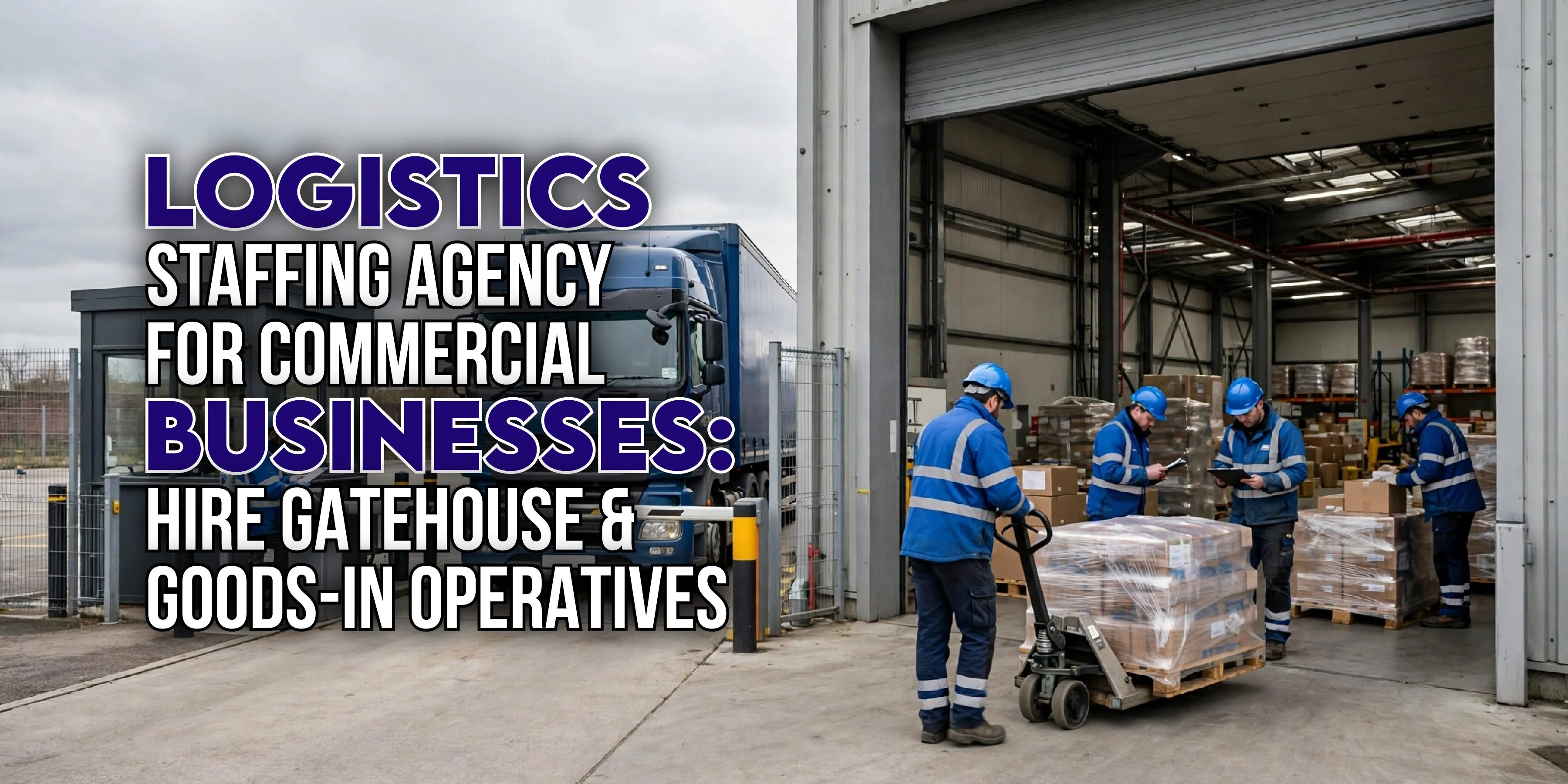
A logistics staffing agency can support commercial businesses with the administrative and operational work surrounding deliveries. Gatehouse teams help organise arrivals, while goods-in operatives support the receiving process. When those teams lack cover or clear handovers, delays at the entrance can become stock discrepancies inside the warehouse.
1st Workforce provides staffing support for logistics and warehouse operations. A detailed enquiry helps separate arrival coordination, receiving tasks and any specialist responsibilities that need their own recruitment brief.
Define the gatehouse role precisely
Gatehouse operative recruitment should start with the tasks the person will actually perform. These may include recording arrivals, checking booking references, communicating with the receiving team and directing visitors according to site instructions.
Keep administrative gatehouse work separate from security duties. If the role involves security functions, explain that explicitly and confirm the appropriate requirements before arranging cover. Do not assume a general logistics assignment includes guarding, enforcement or specialist access decisions.
Describe the goods-in workflow
Warehouse receiving staff need to understand how deliveries move from arrival to an accepted stock record. Your process might involve checking paperwork, counting items, recording visible damage and referring discrepancies to a supervisor.
Specify the products, packaging and typical delivery sizes.
Identify the receiving system or paperwork workers will use.
Explain who can accept shortages or reject a delivery.
Separate physical handling from equipment-operation tasks.
Define where goods wait while discrepancies are investigated.
This makes goods-in staff supply more specific and gives new operatives a clearer understanding of the decisions they can make.
Match cover to the arrival pattern
Look at booked delivery slots and actual arrival times. A busy opening period may need extra receiving support even if the rest of the shift is quiet. Late arrivals can also create a handover problem when the incoming team does not know what has already been checked.
Provide a named contact for changes to delivery timing. Where arrivals are unpredictable, discuss a realistic coverage window rather than relying on workers to extend their shifts without prior agreement.
Keep the two teams connected
Use a shared reference for each delivery so the gatehouse and receiving teams can discuss the same load. Agree how an operative should flag an unbooked arrival, missing paperwork or an unavailable unloading area.
At handover, record which vehicles are waiting, which deliveries remain unchecked and which discrepancies need a decision. Keep personal and commercial information within the site's approved systems.
Review the right operational measures
Track arrival queues, receiving backlogs and the accuracy of delivery records. If queues persist while receiving staff have capacity, the issue may be coordination rather than headcount. Review the process with supervisors before changing the staffing plan.
Can logistics site workers cover both roles?
Sometimes, but only when the duties, training and timings make that practical. Avoid assigning one worker to two locations that need simultaneous cover.
Distinguish logistics administration from security guarding
The term gatehouse operative can describe different work at different sites. Some roles focus on checking delivery bookings, recording arrivals and directing enquiries to the receiving team. Others involve security activities that need a separate assessment of licensing and duties. Define the actual work rather than relying on the title. A logistics staffing brief should not silently include security guarding simply because the person works near an entrance.
Explain the boundary to the agency and the site supervisor. State which decisions the operative may make, which checks follow an established administrative process and when a query must be referred. If security duties are required, identify them explicitly and confirm the appropriate arrangements with a suitable provider. This helps avoid recruiting a person for reception or goods-in support and then expecting them to take on responsibilities outside the agreed assignment. Clear role definition is the first step towards a useful gatehouse recruitment discussion.
Map the connection between entry and receiving
A vehicle's arrival at the gate is only the start of the receiving process. The gatehouse may confirm the booking reference, while goods-in staff establish whether the delivery can be accepted and where it should go. Agree how those teams exchange information and who resolves an exception. The operative should not have to make a commercial receiving decision because the usual contact is temporarily unavailable.
Describe the common exceptions in the briefing. These may include an early arrival, a changed reference or a delivery intended for another business on a shared site. Give the worker a current contact and an approved waiting arrangement while the query is resolved. Record the outcome through the site's system so that the receiving team and the next shift can understand what happened. A consistent process is more useful than relying on personal familiarity with regular drivers, especially when seasonal staff or replacement vehicles are involved.
Define goods-in checks and their limits
Goods-in staff may check quantities, visible condition, references or other information specified by the employer. Explain exactly which checks form part of the role and what record is required. Distinguish recording an observation from accepting a delivery commercially or approving a stock adjustment. Those decisions may remain with an authorised supervisor under the site's procedures.
Use current examples to explain how discrepancies are raised, without sharing unnecessary customer or commercial information during recruitment. A worker needs to know where to place a query and who provides the decision, rather than inventing a workaround to keep the queue moving. If the role includes powered handling equipment or specialist inspection, specify the requirement separately. General goods-in experience does not establish competence for every activity that happens near a receiving bay. A precise brief helps the agency assess candidates against the actual task rather than a broad warehouse title.
Plan around arrival patterns and opening hours
Review when deliveries and visitors arrive, including early starts, late collections and quieter intervals used to complete records. A flat headcount across the day may not reflect the work. Identify periods when gatehouse communication and goods-in processing happen simultaneously, and check whether the proposed staffing can cover both without leaving one task unattended.
Include breaks, handovers and induction in the plan. A single operative assigned to a continuous reception point needs an agreed cover arrangement. If the site changes its opening hours, update the staffing brief and explain how the receiving contacts will remain available. The worker should not be expected to resolve access queries after the authorised decision-maker has left. By connecting the timetable to the actual workflow, employers can request suitable logistics site workers for defined hours rather than adding people without a clear account of the activity they will support.
Prepare systems and records before the start
Confirm which booking, visitor or warehouse system the worker will use and the access required. Provide authorised credentials through the employer's process rather than sharing another person's account. Ensure the worker receives instruction on the relevant functions and knows whom to contact about a problem. Familiarity with a different warehouse system may help, but it does not replace an introduction to the current application and workflow.
Explain how records are corrected and which changes require approval. A mistaken arrival reference should not be silently overwritten in a way that makes the original event difficult to understand. Use the site's approved process for recording queries and updates. Keep information collection proportionate to the task and avoid unofficial copies in personal messaging accounts. Clear system responsibilities help the operative work accurately and make later handovers easier, particularly when several teams use the same delivery information for different operational purposes.
Give the operative a practical site induction
The induction should cover the reporting point, working area, communication methods and the tasks the worker is authorised to perform. Explain how the gatehouse connects with the warehouse, transport office and any separate security team. Provide the relevant site rules and the route for reporting a concern. A worker should not have to discover the limits of their role through conflicting requests from different departments.
Walk through a routine arrival and an exception using the approved process. Confirm who answers a booking query and how the operative contacts them from the assigned position. Where the role involves moving between areas, explain the relevant routes and working arrangements. The end user should provide suitable instruction and supervision for the work. Recruitment support helps identify people, but the site remains responsible for preparing a workable assignment and ensuring the worker understands the tasks they are asked to carry out.
Use a delivery discrepancy scenario in training
Consider a fictional delivery whose reference does not match the booking list. The gatehouse operative records the arrival and refers the discrepancy to the authorised receiving contact. They do not assume that a familiar company name is enough to accept the load, nor reject it on their own if that decision is outside their role. The driver receives the agreed waiting instruction while the query is considered.
Use the scenario to test the information flow. Identify who supplies the decision, how it reaches goods-in and what the operative records. Check what happens if the first contact is unavailable. This is an illustrative exercise rather than an account of an actual assignment. Its value is in revealing missing contacts and unclear authority before a real vehicle waits at the entrance. The resulting instruction should be included in the briefing so that all shifts apply the same process rather than relying on individual judgment about a commercial delivery.
Make handovers useful to the next team
Record deliveries still waiting, incomplete checks and queries requiring supervisor attention. Include the responsible contact and the action already taken. A list of vehicle registrations alone may not explain why a delivery remains unresolved or whether the receiving team has approved the next step. Keep the handover linked to the site's existing records so that it does not become a competing source of information.
The incoming operative should know about temporary changes to access, working hours or contact arrangements. If a system is unavailable, explain the approved interim process and its limits. Distinguish confirmed instructions from information that still needs verification. A clear handover reduces duplicated calls and inconsistent messages to drivers. It also helps supervisors see whether delays arise from staffing, incomplete bookings or another operational issue, allowing the next recruitment request to address the real workload rather than simply increasing the number of people near the entrance.
Assess performance against the agreed administrative role
Useful measures may include record accuracy, timely referral of queries and completion of assigned checks. Do not assess the operative solely on how quickly vehicles pass through the gate if their role requires information from another team. A person who raises a valid discrepancy may be following the process correctly even though the delivery takes longer to resolve.
Review early feedback with the agency using specific examples. Identify whether a problem reflects unclear instructions, missing system access, insufficient experience or a change in duties. The response should match the cause. If the role has expanded beyond the original brief, discuss that change before assuming the worker is unsuitable. A clear performance discussion helps improve future candidate matching and makes it easier to maintain continuity where the assignment works well, subject to the worker's availability and the agreed commercial arrangement.
Prepare the staffing request with clear responsibilities
Provide the postcode, operating hours, expected arrival patterns and the duties for each position. Explain whether you need gatehouse administration, goods-in support or separate people for both. Include systems, essential experience, induction and supervision arrangements. Identify any activities that require specialist competence or a separate provider so that the agency can assess the request accurately.
Agree who manages attendance notifications, timesheets and changes to the assignment. Give the provider a clear operational contact and a person authorised to approve commercial changes. A practical enquiry to 1st Workforce should make it possible to discuss suitable workers and availability against defined requirements. It should not depend on a generic promise that one person can handle every task at a busy entrance. The clearer the boundaries and information flow, the easier it is to integrate temporary support into the site's existing receiving operation.
Request gatehouse and receiving support
Explore our logistics staffing services. Share your postcode, delivery schedule, headcount, systems and role boundaries when you request a quote. Availability and suitable role coverage can then be discussed against your actual requirements.